Reviewed · TOURS
Secrets of Madrid Small Group Tour
What makes this tour so fun is how it turns Madrid’s old streets into a timeline you can actually walk through. I love how the guide connects architecture styles to real shifts in power, from Mudéjar brickwork to Baroque theater and Habsburg sobriety.
I also like the small-group feel. Juan keeps things lively, works in humor (including a cha-ching way of stressing key points), and closes with a recap using a map-in-stone style overview.
One consideration: this is an active walking route through narrow, uneven streets. If you hate lots of steps, or you only want big-ticket indoor sights, you may feel it is more effort than payoff.
Key highlights at a glance
- A compact 2.5-hour walk with 17 major story stops across old and Bourbon-era Madrid
- Small group size (max 10), with time for questions and conversation
- Outside-and-free sights for most stops, with the Royal Palace entry the only paid add-on noted
- Convent and church corners that feel off the beaten path, including a garden that is only open Mon-Fri
- Practical breaks for coffee and facilities built into the route
- A strong guide style, with Juan personalizing the walk and finishing with a clear recap
Why this Secrets of Madrid walk is more than sightseeing
This is the kind of tour that helps you read Madrid while you’re still inside it. Instead of separate stops that never connect, the route keeps pointing you to patterns: which families had power, how faith shaped the city, and how different dynasties left different building styles behind.
I like that it covers both the dramatic and the quietly strange. You get Baroque flair at a church façade that looks like it is performing, then you slip into convent spaces where daily routines have hardly changed in centuries.
And you finish with big royal imagery, not as a random finale, but as the final page of the story. You’re not just seeing monuments, you’re learning why the city keeps reinventing itself.
More of Madrid worth an open tab:
- Madrid: Tour Bernabéu Entry Ticket
★ 4.5 · 21,573 reviews - Madrid: Prado Museum Entry Ticket
★ 4.6 · 17,509 reviews - Madrid: “Emociones” Live Flamenco Performance
★ 4.8 · 12,866 reviews
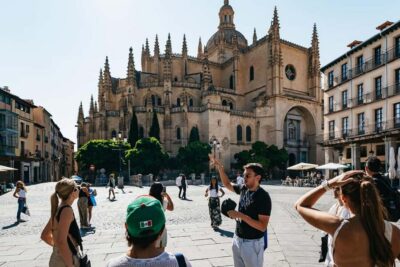
Meet Juan and the small-group format (max 10)
This tour runs with a maximum group size of 10, which changes everything. You are not lost in a crowd, and the guide can actually track your questions.
Juan stands out for energy and clarity. Multiple comments note that he is funny, friendly, and willing to answer questions, and that the pace feels like the right amount of history rather than a nonstop lecture. One review also mentioned that there are no headphones, so you get real back-and-forth instead of tuning out into earbuds.
If you care about culture beyond pure monuments, you’ll likely appreciate Juan’s background and how he sometimes ties in Spanish film industry angles. Even if you do not chase that topic, it adds texture to how he explains daily life and politics.
Price value: what $32.53 covers, and what it does not
At about $32.53 per person for roughly 2 hours 30 minutes, the value comes from two things: time and access. You’re paying for the guide, the organization, and the route that strings together a lot of important Madrid with minimal waiting.
Most of the listed stops are marked as free admission in the experience flow. The one clear exception is the Royal Palace entry, which is not included. That means you can still enjoy the exterior views and the story around the palace, and you decide separately whether you want to add paid palace time.
If your goal is to get your bearings fast and understand what you are looking at, this price can make sense even if you plan to pay for one or two major entries later.
The walking reality: timing, starting point, and what to expect
The tour starts at 10:30 am at Plaza de Puerta Cerrada, and it ends back at the same meeting point. It runs about 2 hours 30 minutes, which is enough to cover a lot of ground through the old core without dragging on for half a day.
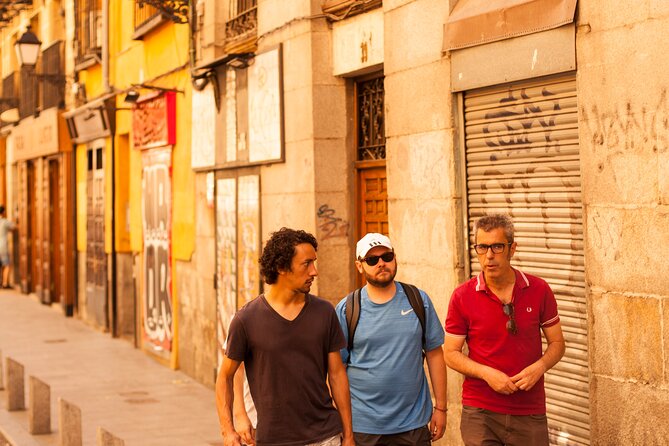
Wear comfortable walking shoes. The route moves through narrow medieval streets, and you will likely deal with uneven stone and some stairs. If you prefer fully flat, wide sidewalks, this is not that kind of tour.
Also note the weather requirement. The experience is stated to require good weather, so if Madrid is having a rough day, you may be offered a different date or a refund.
Still in Madrid, a different sort of afternoon:
- Madrid: Panoramic Route City Tour
★ 4.1 · 12,259 reviews - Madrid: Live Flamenco Show with Food and Drinks Options
★ 4.5 · 9,901 reviews - Avila & Segovia Tour with Tickets to Monuments from Madrid
★ 5.0 · 9,762 reviews - Three Cities in One Day: Segovia, Avila and Toledo from Madrid
★ 5.0 · 8,402 reviews
Plaza de la Villa to Calle de Codo: the medieval city in miniature
You begin in the oldest-feeling layer of central Madrid, where power and architecture overlap. At Plaza de la Villa, you can spot façades that reflect a mix of Mudéjar, Plateresque, and Habsburg influences. This is a good place to train your eye, because you’ll keep seeing these style changes show up again and again later.
A detail worth focusing on: the coat of arms of King Charles II, described as the last Habsburg monarch. Even if you do not memorize dates, it helps you understand that dynasties are not abstract. They literally show up on stone.
Then you slide over to Calle de Codo (Elbow Street). It is one of the city’s narrowest streets, and the sharp bend is exactly why it feels like a pocket of vanished Madrid. This stop is short, but it does something important: it slows your brain down. Narrow streets make you notice shadows, textures, and that slow curve of the medieval plan.
Monasterio del Corpus Christi: convent life and galletas de las Carboneras
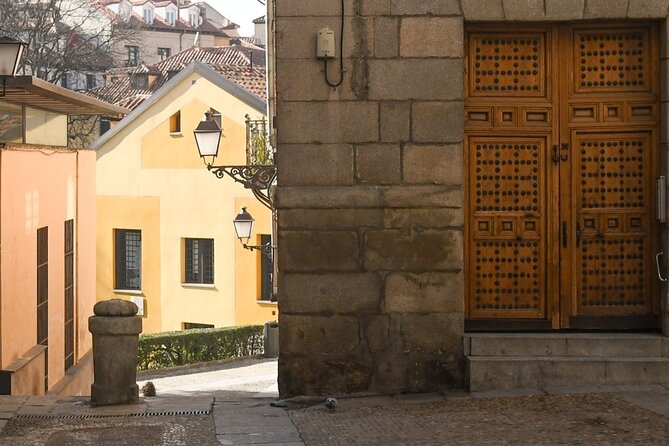
Next you reach Monasterio del Corpus Christi, tucked behind an unmarked door. The real point here is not just the building age, it is what the space preserves: a convent routine that still feels tied to older rhythms.
You’ll hear about cloistered nuns who rarely see the outside world, and how they bake traditional biscuits called galletas de las Carboneras. The sale method is part of the story too, through a small revolving window.
This stop is worth it even if you normally skip religious buildings. It gives you a sense of how Madrid worked at a personal, daily level, not only at the throne-room level.
Basilica de San Miguel and El Huerto de las Monjas: Baroque drama meets quiet air
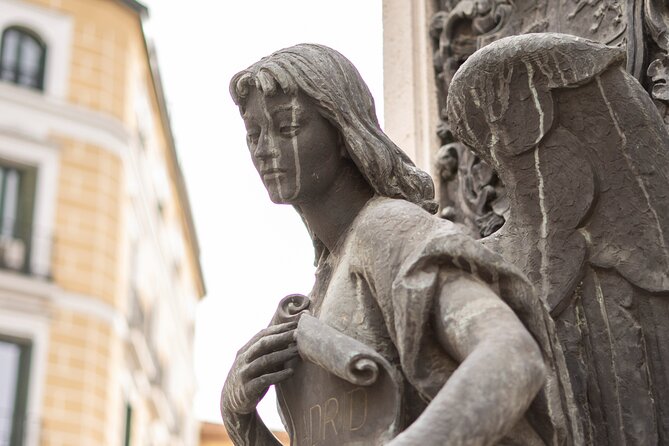
At Basilica de San Miguel, old Madrid turns theatrical. The church rises unexpectedly among narrow streets, with an 18th-century Baroque presence that feels like a stage set. The façade and proportions are described as revolutionary for their time, and it helps explain why the city shifted from austere Habsburg gravity to a lighter Bourbon vision.
Then you slip into El Huerto de las Monjas, a convent garden behind high walls. This is the kind of place where your shoulders drop. The route description highlights that it stays closed on weekends, but is open Monday to Friday for visitors, which makes it a very specific kind of treat.
Practical tip: if you are booking this tour and your dates are flexible, weekday timing can matter here. If the garden is a key reason you picked this tour, a Mon-Fri visit increases your odds of seeing it.
The hidden politics at Calle de Rollo Fountain and Plaza de la Cruz Verde
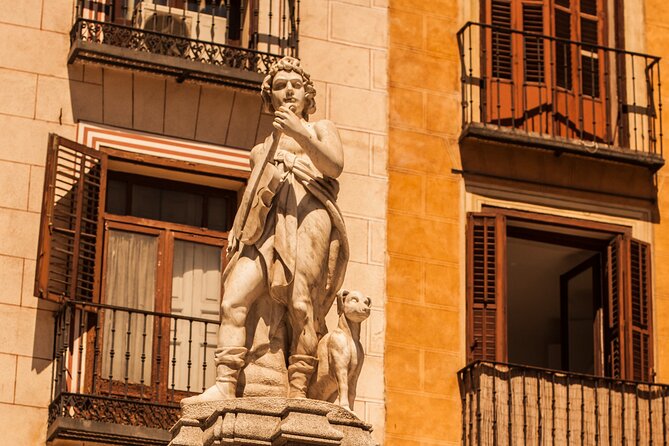
Madrid has a playful edge, and you see that in the story around Casa a la Malicia near the Calle de Rollo Fountain area. In the 16th century, King Philip II ordered a census to tax every new house built in Madrid. Locals, not wanting to pay more, created homes that looked unfinished from the outside, a clever form of civic rebellion.
This is one of those details that makes Madrid feel human. It is policy meeting stubborn creativity.
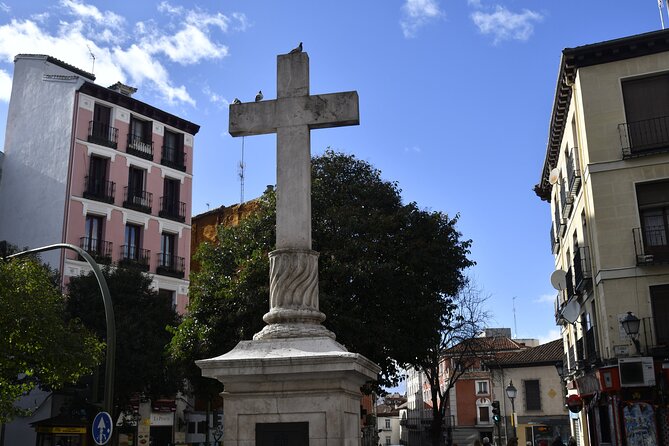
Then the walk turns darker at Plaza de la Cruz Verde. In medieval Madrid, the square was used for public executions before later moves elsewhere, and the green cross tied to the square’s name is described as the emblem carried in solemn Inquisition processions. Today, that fear is gone, and the square is quiet again.
If you care about how power leaves long shadows, this stop is one of the most important on the route. It explains why later architecture, institutions, and public life never feel neutral here.
Jardin del Principe de Anglona and the Vistillas viewpoint
You then reach Jardin del Principe de Anglona, a garden hidden behind high brick walls. The story focuses on the 18th-century setting tied to the palace of the Prince of Anglona, with symmetry, shaded benches, and jasmine scent mentioned as part of what inspired poets and lovers.
This one is short in time, but it resets you. After convents and stone streets, getting a whiff of jasmine in an enclosed space makes the city feel lived-in, not only studied.
After that, the route gives you air and light at Jardines de Las Vistillas. You get an open terrace view toward the Manzanares River and distant mountains. This is a smart way to break up a long day of narrow lanes, and it also helps you understand how Madrid’s center relates to the wider geography.
Mudéjar brick and the oldest-feeling church: Iglesia de San Pedro El Viejo
At Iglesia de San Pedro El Viejo, you get a link to the earlier layers of the city. The church dates to the 14th century and is described as the second-oldest building in Madrid. The brick tower with delicate arches and simple geometry is highlighted as one of the remaining examples of Mudéjar architecture.
Mudéjar is exactly the kind of style tourists miss when they only chase grand palaces. This stop teaches you how cultures mixed in everyday building methods, not just in court politics.
Plaza de la Paja, Calle de Madrid, and Vargas power
Next comes Plaza De La Paja, where you see the Vargas Palace. Built in the 16th century, it belonged to the powerful Vargas family, described as feudal lords of Madrid before the city became the royal capital. Their influence reached into conquest and administration of the Americas, which helps you connect local Madrid to the larger empire story.
You also hear a tradition about San Isidro, now Madrid’s patron saint, working there as a humble servant. That contrast, between saintly simplicity and family power, captures Madrid’s dual soul: spiritual and worldly at the same time.
Then you move to Calle de Madrid, with the story tied to calle de los mancebos and the tragic youths accused in 1217. Whether they were guilty or innocent remains uncertain in the legend, which is part of why the mystery sticks. Nearby, a 15th-century house and remnants of the Christian wall are mentioned, reinforcing that legend and architecture often travel together in this oldest core.
If you like city mysteries, this stop is a strong second act. It keeps the tour human and slightly eerie, without turning it into pure horror.
Calle Mayor and Palacio de Consejos: Counter-Reformation discipline
At Calle Mayor, you look toward the Palacio de Consejos, built in the early 17th century. The style is described as Counter-Reformation, where architecture was used to express faith and discipline rather than sheer display.
You’ll notice references to Habsburg Madrid traits, like brick walls and slate spires, but the point here is the message the buildings sent. It was about moral authority as much as political control, and the Royal Councils administered the empire in that same ideological spirit.
This section is especially good if you want to understand why Madrid’s center can feel both solemn and intensely structured.
Museo de la Catedral de la Almudena and the idea of continuity
At Museo de la Catedral de la Almudena, it may look ancient at first glance, but the key explanation is that the Cathedral of Almudena was completed only in the late 20th century. The façade is described as neo-Habsburg and designed during the Franco era to imitate the sober architecture of the 17th century.
This is a great lesson in historical branding. Even when something is new, it can still be designed to make you feel continuity.
If you love architecture that plays mind games with your sense of time, you’ll enjoy this stop.
Royal Palace exterior views, Philip IV, and a perfect ending at Plaza de Isabel II
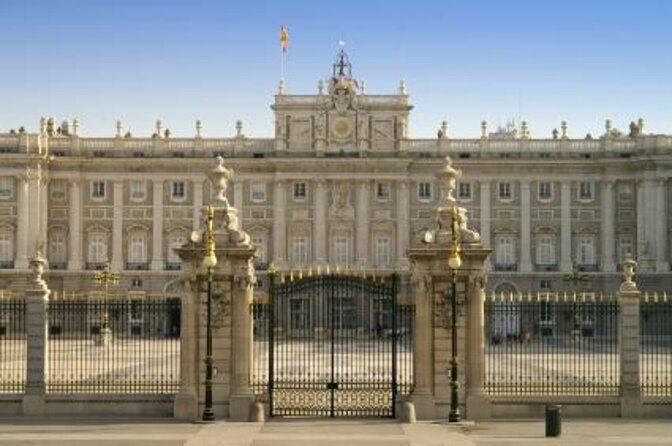
You reach Royal Palace of Madrid from a viewpoint that frames its white stone mass above the Manzanares valley. The story says it was built in the 18th century by the Bourbons to replace the old Alcázar of the Habsburgs, which burned down in 1734.
The tour emphasizes the palace’s ambition, meant to rival Versailles and proclaim Madrid as the heart of a modern empire. Even without paying to enter the palace, the vantage point gives you a strong sense of scale and intent.
After that, you pause at Monumento a Filippo IV in Plaza de Oriente. The statue of King Philip IV is described as a bronze equestrian masterpiece, the first equestrian statue in the world balanced on its rear legs, with a technical miracle credited to Galileo calculations. Whether you get every engineering detail or not, the story helps you see Baroque power as controlled performance.
Finally, you finish at Plaza de Isabel II, between the Royal Theatre and the busy streets of modern Madrid. The ending ties the whole route together, going from medieval lanes to Bourbon grandeur, then landing where music replaces prayer and everyday city life takes over.
Who this tour suits best, and who should consider something else
This tour fits best if you want:
- A tight history framework that helps you understand what you see later on your own
- A small-group pace with room for questions
- A mix of major landmarks and quiet corners, like convent gardens and tucked-away churches
- A route that includes architectural variety, Mudéjar, Baroque, and Habsburg-influenced looks
You might want to choose something different if:
- You want lots of indoor time and ticketed museum rooms
- You prefer minimal walking and minimal stairs
- You are only interested in one or two of the headline sites, like the Royal Palace interior
Should you book the Secrets of Madrid Small Group Tour?
Yes, if you want an efficient way to get the story straight before you start wandering. The price is reasonable for the length and for the fact that most stops are free in the experience flow, with Royal Palace entry listed as not included.
I’d also book it if you like a guide who tells the story with humor and who can explain details clearly. Juan gets repeatedly praised for engagement, pacing, and end-of-walk recap, plus personal touches like learning names.
If your travel dates are flexible, consider booking for a weekday if you care about seeing El Huerto de las Monjas, since it is described as closed on weekends.
FAQ
FAQ
What time does the Secrets of Madrid tour start?
It starts at 10:30 am.
How long is the tour?
It runs about 2 hours 30 minutes (approx.).
How much does the tour cost?
The price is $32.53 per person.
How big is the group?
The maximum group size is 10 travelers.
Is a ticket to the Royal Palace included?
No. The admission ticket to the Royal Palace is not included.
Are there free admissions at the other stops?
The tour description marks the stops as admission ticket free for each of the listed locations, except the Royal Palace entry.
Do I need a mobile ticket?
Yes, the tour includes a mobile ticket.
Is the tour conducted in English?
Yes, it is offered in English.
Is this tour weather-dependent?
Yes. It requires good weather, and if canceled due to poor weather you are offered a different date or a full refund.
Is the meeting point near public transportation?
Yes, the meeting point is near public transportation.
Are service animals allowed?
Yes, service animals are allowed.
Recently reviewed around Madrid
- Madrid: Treasure Hunt Experience★ 5.0 · 4 reviews
- Madrid Spanish Omelet Cooking Class and Bottomless Wine brunch★ 5.0 · 50 reviews
- Avila and Segovia private day trip with hotel pick up from Madrid★ 5.0 · 68 reviews
- Prado Museum Tour with ticket, small group & expert guide★ 5.0 · 6 reviews
- Bernabeu Stadium Private Guided Tour★ 3.5 · 4 reviews
- Spanish Group Course in Madrid, Spain: 20 Lessons★ 5.0 · 11 reviews
- Madrid Bike Tour with Churros and Wine, Ham, and Cheese Upgrade★ 5.0 · 8 reviews
- Ribera del Duero Small Group Tour: Tapas & Wine Tasting★ 5.0 · 43 reviews
Tours, compared.


Avila & Segovia Tour with Tickets to Monuments from Madrid
Read our review →
Segovia and Toledo Tour, Alcazar, and Cathedral
Read our review →
Royal Palace Expert Guided Tour with Skip-the-Line
Read our review →
Toledo Tour from Madrid: Cathedral, Synagogue & St. Tome’s Church
Read our review →
Toledo Half or Full Day Tour with Optional Lunch from Madrid
Read our review →