Reviewed · GUIDED
La Latina to Madrid Guided Tour with Breakfast
Madrid is a city where streets do the explaining. This guided walk takes you through three of the capital’s most characterful neighborhoods, then drops you into the classic Hapsburg core around Puerta del Sol, Almudena, and the Royal Palace, finishing at the always-fun Mercado de San Miguel.
I really like two things about this tour. First, it starts with coffee and homemade cake so you are in a good mood before the walking begins. Second, the small-group vibe matters here, because the guide can actually slow down for questions and side stories (in one small-case booking, the group was just the two of us). The only real drawback is that it packs a lot into about 2.5 hours, so you need comfy shoes and the mindset of a moving stroll, not a long museum stop.
Key Highlights You Should Know Before You Go
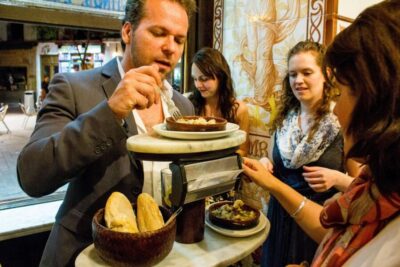
- Breakfast start at Mesón de Paredes (11:00 am) with coffee plus a slice of famous homemade cake
- Three neighborhoods with personality: La Latina, Lavapiés, and Las Letras
- Real Madrid street scenes, not just big monuments: churches, plazas, alleys, markets, and working commercial lanes
- Markets that connect cultures: Antón Martín for gourmet-street-food energy, San Miguel for the cast-iron classic
- A Hapsburg Madrid loop around Puerta del Sol, Almudena Cathedral, and the Royal Palace area
- Free admission is listed for multiple stops, so you are paying mostly for guide time and local context
The Real Value: A Neighborhood-to-Monument Madrid Route
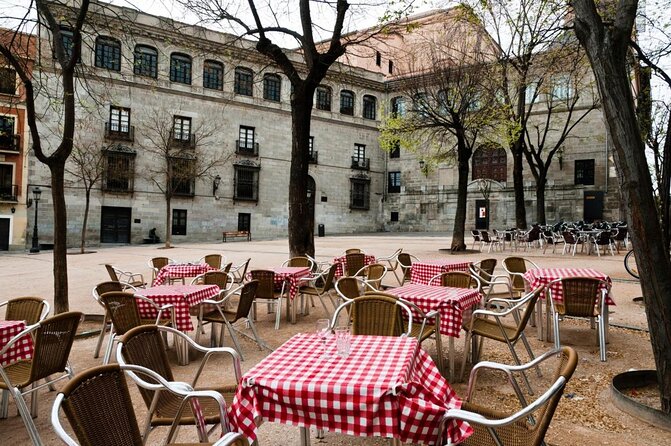
What makes this experience work is the flow. You do not jump from landmark to landmark like a checklist. You start in La Latina with medieval-feeling lanes, shift into Lavapiés where daily life and food culture mingle, then walk into Las Letras, where literature-era names are tied to the street grid. After that, the tour steers you into the more official center of Madrid around Puerta del Sol and the Hapsburg districts.
For me, the best part is that you get practical orientation. Puerta del Sol is not just a photo spot, it is the junction for key streets like Mayor, Arenal, Alcalá, and Preciados, and it connects to Spain’s radial road system. When you leave the tour, you are better able to navigate the city on your own, because you have walked the “how Madrid is laid out” part, not only the “what to see” part.
A few more Madrid tours worth comparing
- Madrid: Royal Palace Expert Guided Tour with Skip-the-Line
★ 4.7 · 6,986 reviews - From Madrid: Guided Day Trip to Toledo by Bus
★ 4.1 · 5,280 reviews - Madrid: Toledo & Segovia Full Day Guided Tour with Alcázar
★ 4.6 · 4,394 reviews
Breakfast First, So You Actually Enjoy the Walk
The tour starts at C. del Mesón de Paredes, 11 in the Centro area, and it begins at 11:00 am. Before you head out into the streets, you get coffee and a portion of homemade cake (carrot cake is specifically mentioned). It is a smart start. Madrid mornings can be deceptive, and having something in your stomach keeps you from rushing your pacing later.
You should also appreciate the tone this sets. Breakfast is not treated like a tiny add-on. It is the warm-up, the moment where you quietly meet your guide and get a feel for how the neighborhoods connect. If your guide is Francisco, you can expect history and fun facts wrapped in natural conversation, with good responsiveness and an easy rhythm.
Practical tip: wear shoes you can walk in for 2.5 hours. The route moves through different micro-neighborhoods, and the charm often comes from narrower streets and small turns.
La Latina: Medieval Streets, a Real Parish Church, and Street-Level Madrid
La Latina is one of those Madrid districts that feels like it has kept its elbows out. The streets are narrow and winding, and the layout is irregular, mostly tracing back to the Middle Ages. What I like here is the way the guide helps you read the neighborhood. You notice how alleys tend to feed into a square, and how life spills outward in small ways, like where people shop, talk, and pause.
A major early stop is the Iglesia Parroquial de San Millán y San Cayetano. The church dates are the kind you remember because they sound like real construction timelines, not vague old legends. It was built by architect Marcos López in 1669 and finished by Francisco de Moradillo in 1761. It is also believed that José de Churriguera and Pedro de Ribera were involved. Even if you skip the deep architectural analysis, the guide’s framing helps you see the church as part of how La Latina grew and organized itself.
One practical bonus: the admission is listed as free for this stop. So you get the feeling of stepping into a lived-in religious landmark without paying extra to access the main experience.
Tirso de Molina Area: Flower Stalls and the Everyday Commercial Side
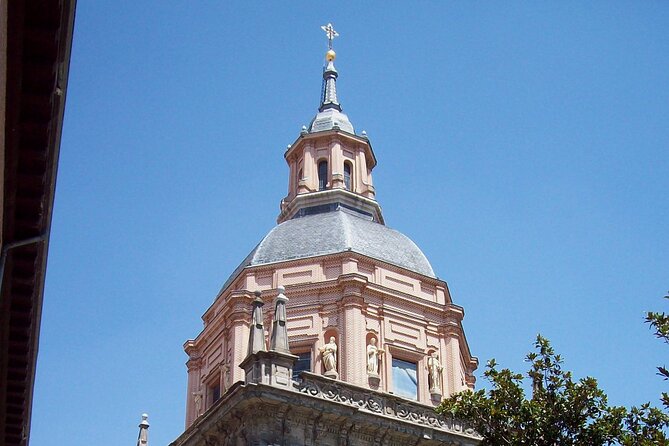
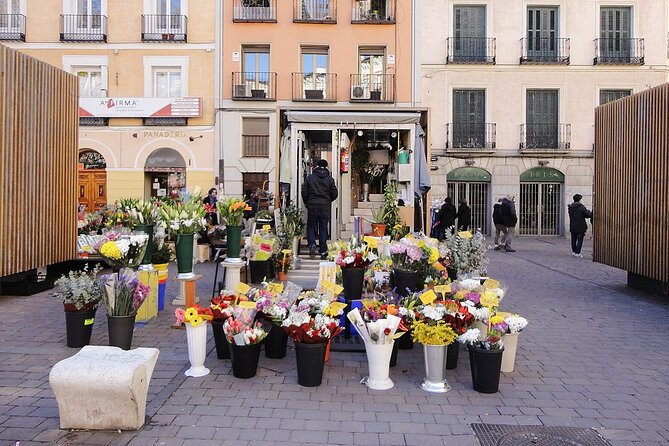
After the church, the tour shifts upward and toward the busier lanes tied to Tirso de Molina Square. This is where the neighborhood shows its daily character. The square area is described as colorful, with flower stalls, and it also features clothing and accessory wholesalers along surrounding streets. Some shops operate like retailers too, so you can browse even if you are not hunting for wholesale bargains.
Why this matters: Madrid is not only grand façades. It is also the working edges of the city, where supply chains and neighborhood customers overlap. You get a more grounded sense of place when you can connect a charming square scene with the local commerce happening a few steps away.
Still in Madrid, a different sort of afternoon:
- Madrid: Tour Bernabéu Entry Ticket
★ 4.5 · 21,573 reviews - Madrid: Prado Museum Entry Ticket
★ 4.6 · 17,509 reviews - Madrid: “Emociones” Live Flamenco Performance
★ 4.8 · 12,866 reviews - Madrid: Panoramic Route City Tour
★ 4.1 · 12,259 reviews
Lavapiés: Corralas, Lower-Class Madrid, and the Antón Martín Market Moment
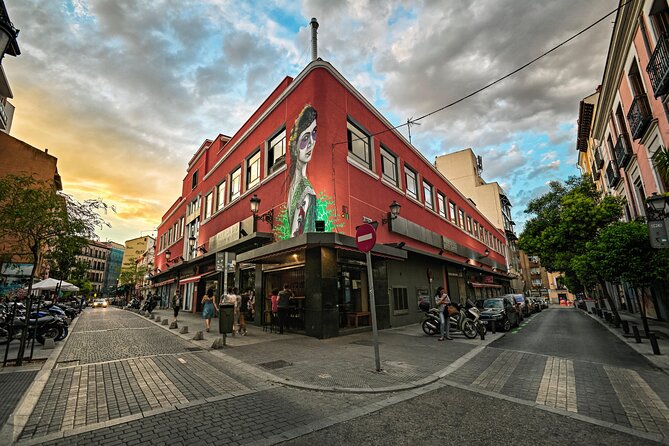
Next comes Lavapiés, and the tour gives you useful context right away. Since the sixteenth century, Lavapiés has been inhabited by lower classes. A key detail is the corralas: apartment blocks arranged around an interior courtyard. That courtyard layout is a big part of why Lavapiés has always felt communal and dense, even when the streets look chaotic at first glance.
Then you hit a very practical and very modern counterpoint: Mercado de Antón Martín. This place is part of a gourmet market trend where traditional stalls sit alongside restaurants. You can expect mostly street-food style service, plus international flavors. The description calls out Spain, Italy, Asia, and Latin America, which is exactly what makes Lavapiés feel like a living neighborhood rather than a themed stop.
The listed admission here is free, so think of it as a guided orientation to where to eat and what to watch for. Even if you do not buy anything, it is a great place to see how people snack and move through a food market as part of everyday Madrid life.
Practical tip: if you plan to eat later in the day, pace yourself here. Markets can tempt you fast, especially when the smells are doing the talking.
Las Letras: Golden Age Literature Names on the Street
Las Letras is the neighborhood where Madrid starts talking in author names. The tour connects the area to Spain’s Golden Age of literature, mentioning Cervantes, Lope de Vega, Quevedo, Tirso de Molina, and Góngora. The big idea is simple: these writers had homes here, which is why some streets pay tribute to them. It turns what could be just another walk through Central Madrid into a “read the city” experience.
A highlight is Galería Canalejas, described as a former Palacio de la Equitativa. It is an exclusive shopping center between Calle Alcalá and Calle Sevilla. The tone changes here, from literary alley vibe to luxury retail energy. Still, it is worth seeing because it shows another side of Madrid, and the guide ties it back to how the city layer-cakes different eras.
The details you get are specific: the center covers 15,000 m² across three floors, with over 40 boutiques featuring fashion, accessories, perfume, and high-end jewelry and watches. Luxury brands listed include Hermès, Cartier, and Rolex. There is also a restaurant and gastronomic concept space connected to Michelin-star chefs.
Even if luxury shopping is not your goal, I like this stop because it reframes the neighborhood. Madrid is a mash-up, not a single mood. The tour helps you notice how quickly the city can switch from something intimate and street-level to something polished and showroom-like.
Puerta del Sol and Hapsburg Madrid: Your Orientation Hub
From Las Letras, the tour moves you to Puerta del Sol, with its semi-circular shape and its role as a junction for many of the city’s busiest streets: Mayor, Arenal, Alcalá, and Preciados. The guide’s emphasis on it being a starting point for major radial roads is useful, because it helps you understand how Madrid expands outward.
You also get a look at Austrias, described as part of Hapsburg Madrid, the oldest part of the city. The tour frames the area around a big central square where you can find sunny terraces, time-honored shops, and street musicians. It also mentions seasonal events hosted there, including a drum parade at Easter and a Christmas market in December.
What to watch for as you walk: street life and street sound. This section is where Madrid starts feeling most like a classic “city center,” and if you are prone to getting overwhelmed, let the guide’s pace settle you. By the time you reach the next landmarks, you are already oriented.
Almudena Cathedral and the Royal Palace Area: Big Names, Real Timelines
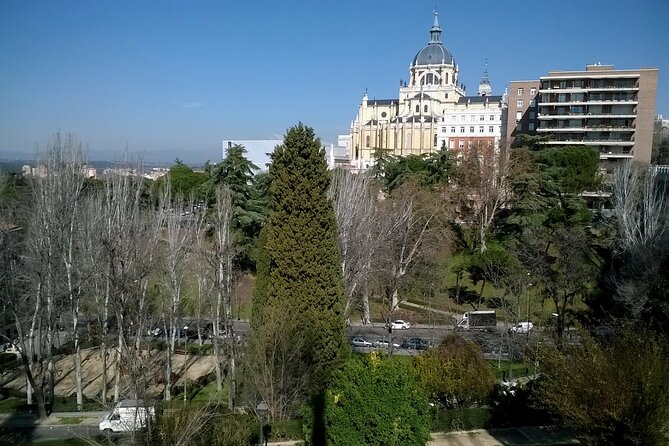
The tour’s monument stretch continues with Catedral de Santa María la Real de la Almudena. The church has a short but twisty planning story, and I like that the guide gives you the timeline instead of only a description of the façade. Plans began in 1879 by Francisco de Cubas, aiming to create a pantheon for late Queen Maria de la Mercedes. Then the foundation stone was laid in 1883, but in 1885 Pope Leo XIII granted a bull for the Madrid-Alcalá bishopric, and the plans changed to become a cathedral.
That kind of detail matters because it gives you a reason to look closely. Instead of thinking this is only a photo stop, you can appreciate it as a project shaped by politics, religion, and civic identity.
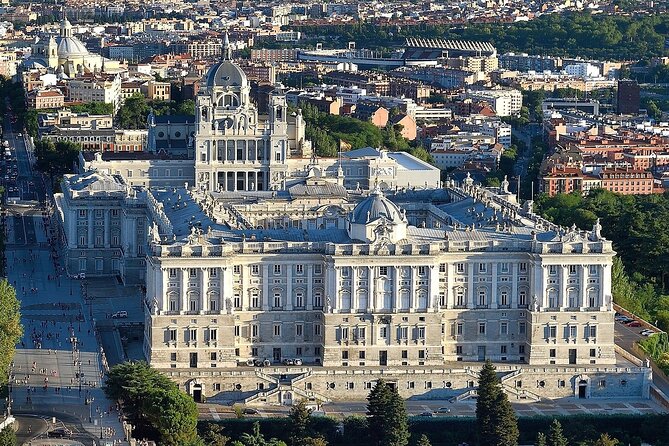
From there, you reach a 1.6-hectare garden planned by José Bonaparte to highlight the Palacio and the Teatro Real. The tour also notes significant restoration work, including direction by Miguel de Oriol in 1997. This is a nice pause point because it breaks the walk into a different visual scale, from dense streets to open green space.
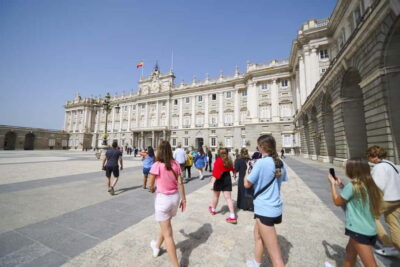
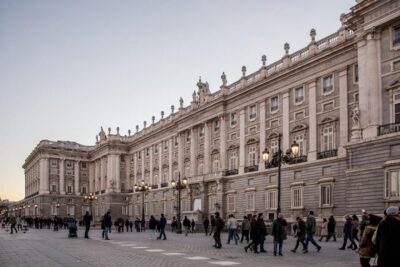
Then comes the Royal Palace. It is described as the home to the Kings of Spain from Charles III to Alfonso XIII. Even though it is no longer used as the royal family home, it continues as their official residence. Again, the guide’s job here is to connect the building to the city’s identity, not just point and move on.
Mercado de San Miguel Finish: Cast Iron Atmosphere and a Last-Mile Win
The tour ends at Mercado de San Miguel, at Pl. de San Miguel, s/n. This market is a real Madrid classic: it opened in May 1916 as a local food market. In 2009, it became Madrid’s first gourmet market, and in 2018 it was relaunched with internationally-renowned chefs.
The building is noted for its cast-iron architecture, and it sits close to Plaza Mayor. That proximity is part of why this ending works. You finish in a place that makes it easy to keep exploring without planning your next move.
Also, you do not need to force the market into a strict schedule. You can browse, grab a drink, or use it as a social cooldown after the walk. The experience ends here, but your Madrid day does not.
Price and Time: Does It Add Up?
At $63.62 per person for about 2 hours 30 minutes, you are paying for a guided route that stitches together multiple neighborhoods, plus a breakfast start. Breakfast alone can easily cost a decent chunk in central Madrid, so you are not just paying for movement. You are paying for context, timing, and a guide who knows how to connect what you see to why it is there.
The other value marker is admission is listed as free for several stops, including the church and the markets/shopping center stops mentioned. That means the main cost is guide storytelling and the structure of the route, not entry fees piling up at each site.
Group size is capped at 25, and one booking case was even smaller. That matters because it keeps questions realistic and the pacing less chaotic. This is also why it is usually booked about 39 days in advance on average. If you want a spot at a convenient time, I would not wait too long.
Who This Tour Fits Best
This tour is a strong match if you like:
- A guided walking route that helps you understand neighborhoods, not just monuments
- Food-market culture without committing to a full-on food tour
- A mix of old Madrid and modern Madrid, from parish churches to gourmet markets and luxury shopping arcades
- Small-group interaction, where you can ask follow-ups instead of getting swept along
It may be less ideal if you want:
- Lots of long indoor time or slow museum pacing
- A tour that focuses only on the biggest tourist sights, with fewer neighborhood details
Should You Book It?
Yes, I think you should book this if you want a smarter first look at Madrid that connects multiple parts of the city. The breakfast kickoff keeps the experience human from the start, and the route makes it easier to understand Madrid’s structure. You also finish in a place that makes continuing your day easy, Mercado de San Miguel is a reliable last stop.
I would choose this over a purely monument-only walk when you care about the “how the city lives” part as much as the “what to photograph” part. Just come with comfortable shoes, because the value here comes from moving through streets where Madrid shows you the story in real scale.
FAQ
What time does the tour start and how long is it?
It starts at 11:00 am and runs for about 2 hours 30 minutes.
What is included with the breakfast?
The tour begins with coffee and a portion of homemade cake (carrot cake is specifically mentioned).
Where does the tour start and where does it end?
It starts at C. del Mesón de Paredes, 11, Centro, 28012 Madrid and ends at Mercado de San Miguel, Pl. de San Miguel, s/n, Centro, 28005 Madrid.
How much does the tour cost?
The price is $63.62 per person.
Is there a limit on group size?
Yes. The tour has a maximum of 25 travelers.
Can I cancel for a full refund?
Yes. You can cancel up to 24 hours in advance for a full refund. If you cancel less than 24 hours before the start time, you do not get a refund.
Recently reviewed around Madrid
- Madrid: Treasure Hunt Experience★ 5.0 · 4 reviews
- Avila and Segovia private day trip with hotel pick up from Madrid★ 5.0 · 68 reviews
- Madrid Spanish Omelet Cooking Class and Bottomless Wine brunch★ 5.0 · 50 reviews
- Prado Museum Tour with ticket, small group & expert guide★ 5.0 · 6 reviews
- Bernabeu Stadium Private Guided Tour★ 3.5 · 4 reviews
- Spanish Group Course in Madrid, Spain: 20 Lessons★ 5.0 · 11 reviews
- Self-Guided Audio Tour – Cervantes Literary Experience in Madrid★ 4.0 · 6 reviews
- Madrid Bike Tour with Churros and Wine, Ham, and Cheese Upgrade★ 5.0 · 8 reviews
Guided, compared.
Royal Palace Expert Guided Tour with Skip-the-Line
Read our review →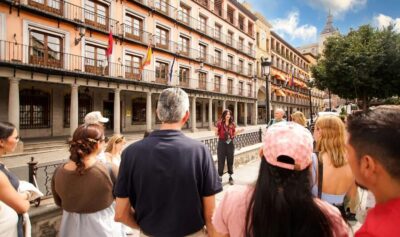
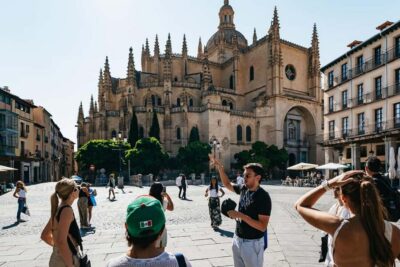
Toledo & Segovia Full Day Guided Tour with Alcázar
Read our review →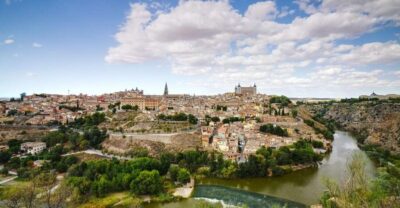
Madrid Welcome Tour with Local Guide in Eco Tuk Tuk Private
Read our review →