
Reviewed · EL ESCORIAL & VALLEY OF THE FALLEN TOURS
El Escorial and Valley of the Fallen Private Tour
This tour is interesting because you get two very different “memory sites” near Madrid in one smooth outing: El Escorial as a royal Renaissance powerhouse, and the Valley of the Fallen as a monument built under Franco. You see how power, faith, and politics shaped Spain, then you head back to Madrid while the day still feels usable.
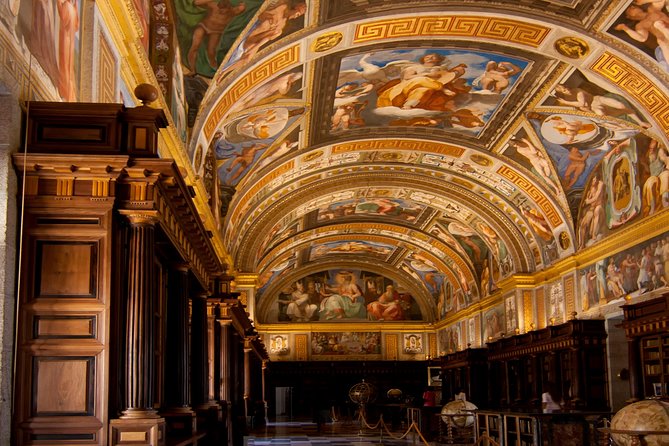
I really like the way your private guide connects the dots between what you see and why it matters. I also love the on-the-ground wow moments at El Escorial, especially the painted ceilings and the basilica experience. In one tour, the guide was Elena, and her energy was a big reason the explanations landed.
One drawback to plan for: you will be doing real walking. If you’re expecting mostly a panoramic ride, or you want more time inside without any guidance, you might feel a bit rushed.
Key things to know before you go
- Small group private feel (max 10 travelers), which helps questions and pacing.
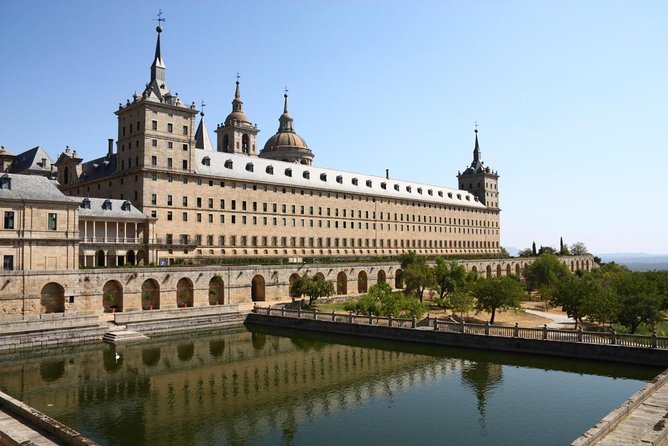
- World Heritage El Escorial visit includes time at the Royal Site of San Lorenzo de El Escorial, with tickets included for that main visit block.
- Valle de los Caídos is optional inside, since the interior visit is presented as a ticket choice.
- El Escorial used to do everything (monastery, palace, pantheon, library, museum, and even school and hospital).
- Comfortable shoes matter because the day includes walking between viewpoints and buildings.
Why El Escorial and the Valley of the Fallen belong in the same half-day
Two stops. Two emotional tones. And that contrast is the point.
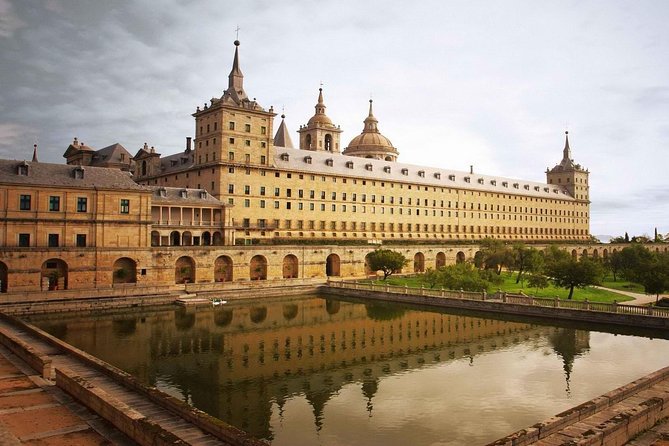
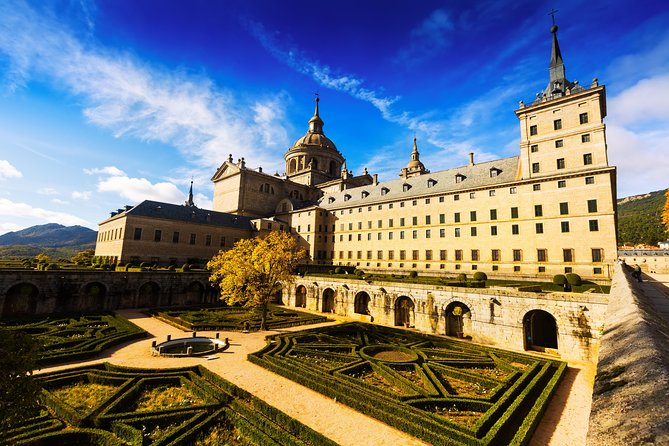
El Escorial was commissioned and run as a royal complex that mixed religion, state power, art, education, and care for centuries. It is not just a pretty monastery. It’s a whole system made of stone, built high in a valley, designed to project Spain’s authority and faith in one place.
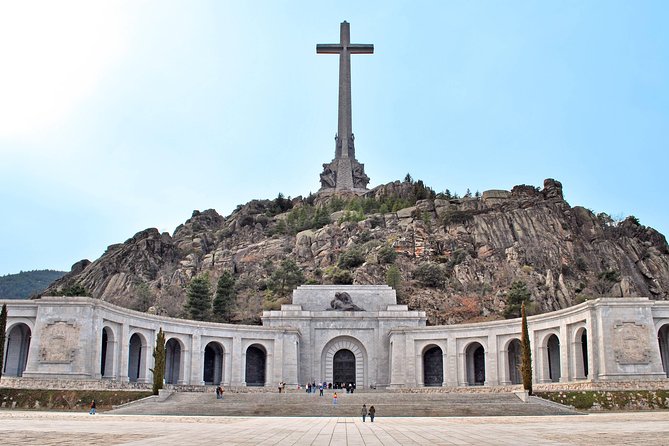
Then you shift gears to the Valley of the Fallen, a Catholic basilica and monumental memorial erected under the Francoist regime. This is a place you approach carefully. You will pay respects and take in the location before moving on. Whether you feel reflective, uncomfortable, curious, or all three, the site is hard to ignore once you’re there.
Having both together can be a powerful way to understand Spain in one day: royal myth-making at El Escorial, then the politics of remembrance at the Valley.
More El Escorial and Valley of the Fallen tours:
- Escorial Monastery and the Valley of the Fallen Tour from Madrid
★ 5.0 · 2,494 reviews - Escorial Monastery and the Valley of the Fallen from Madrid
★ 4.0 · 1,023 reviews - From Madrid: El Escorial and Valley’s Basilica Half Day Tour
★ 4.4 · 638 reviews
Pickup from central Madrid, then out to the Sierra de Guadarrama
The day starts with meeting at Ventas, Ciudad Lineal, Madrid. If your hotel is in central Madrid, you can request pickup, but traffic rules sometimes mean the vehicle cannot stop directly at your hotel door. In that case, your guide will meet you and walk you to the vehicle.
That is one small detail that matters. If you’re planning to start with a quick coffee and you’re staying just outside central zones, build in extra buffer time. The tour is built for a smooth flow, and you don’t want to be chasing the van at the start.
The ride itself is part of the experience. You’re traveling from the city edge toward the mountains, and the scenery shift helps you mentally switch from Madrid’s pace into a more contemplative day.
You should also note the format: it’s offered in English, it’s a private guide, and it’s meant for small groups, up to 10 travelers. That combination usually makes explanations clearer and questions easier.
Stop 1: Valle de los Caídos, what you’ll notice before and after the interior ticket
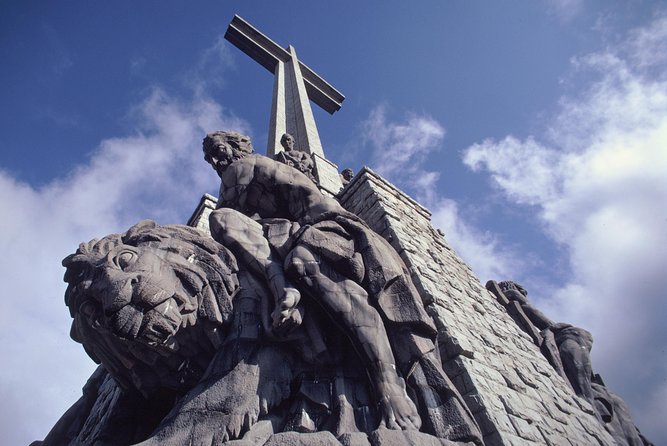
Your first stop is the Valle de los Caídos, also called the Valley of the Fallen. It’s located at Cuelgamuros Valley in the Sierra de Guadarrama, near Madrid. You’ll have about 1 hour here.
The plan gives you control over the interior visit. You can choose to buy tickets and visit inside. That means your experience may feel more like an exterior viewpoint visit if you decide not to go in, or more of a deep, structured visit if you do.
Either way, the key value is what the setting does. You’re not just looking at a building. You’re looking at a monumental memorial built into a landscape, tied to a specific era of Spanish history. Before you choose whether to enter, I’d suggest you take a few minutes just to scan the scale and how the site sits in the valley. It makes the interior feel less random once you step inside, if you go.
Practical note: the tour includes transportation plus tickets for the day’s key sites, but the day plan also notes that admission for the Valley interior is not included in that specific stop description. So, I’d confirm your exact ticket situation at booking so you’re not surprised on arrival.
Stop 2: El Escorial’s Royal Site area, where the complex starts to feel like a city
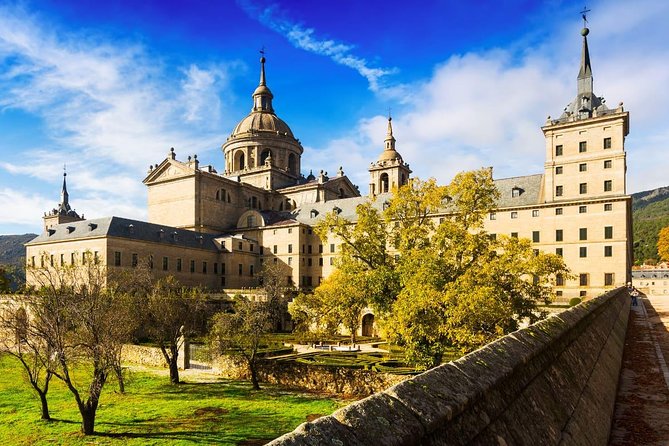
After the Valley, you head to El Escorial, a Royal Site with major cultural weight and an easy-to-miss detail: it sits about 2.06 km up the valley from the town of El Escorial. That elevation and valley placement influence how you experience it. You’re going uphill, and the complex can look different from different angles.
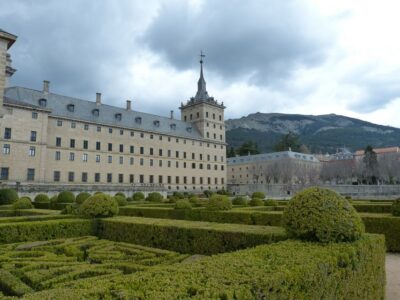
Stop 2 is about 1 hour 30 minutes at the Real Sitio de San Lorenzo de El Escorial area. This is where you start to understand why people call it Renaissance-era in character. You’re not just seeing one chapel or one facade. You’re seeing a system of buildings connected by purpose and design.
This is also where you’ll likely spend time outdoors and in key buildings, including:
- the Gothic cemetery
- photo-worthy views of the basilica built into the side of a mountain
- the monastery founded by the monks of St. Jerome
That basilica built into the mountain is one of those “okay, now I get it” moments. From viewpoints, it reads like engineering. Up close, it turns into atmosphere. It looks carved out of the place it stands, not dropped into it.
If your guide is strong at tying details together (and guides like Elena tend to be), you’ll leave this part with better context than if you had just walked around on your own. One helpful thing: ask your guide what you should prioritize photos-wise. You’ll walk more smoothly when you know where the best angles are and what you’ll be seeing next.
A few more Madrid tours worth comparing
- Madrid Welcome Tour with Local Guide in Eco Tuk Tuk Private
★ 5.0 · 2,936 reviews - Madrid: Private City Tour by Eco Tuk Tuk
★ 4.9 · 2,876 reviews - Madrid Historical Tour with Local Guide in Eco Tuk Tuk Private
★ 5.0 · 876 reviews - Toledo Private Tour with Licensed Guide and Driver from Madrid
★ 5.0 · 637 reviews
Stop 3: The Royal Site of San Lorenzo de El Escorial, Philip II focus and World Heritage status
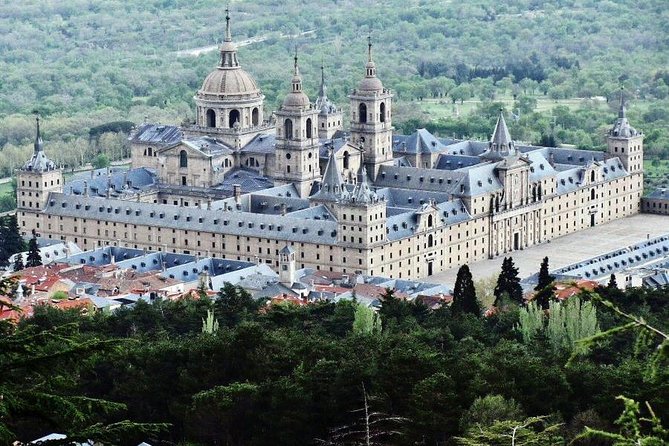
Stop 3 is your longer visit block, around 2 hours, at the Monastery of San Lorenzo de El Escorial. This site has World Heritage status since 1984, and your tour centers on the era of Philip II.
This is the part where the complex often takes over your attention. The monastery is not a single-purpose building. It has functioned as a monastery, basilica, royal palace, pantheon, library, museum, university, school, and hospital. That list is the clue to understanding the architecture. The design had to support all those roles, meaning you can feel layered purposes even as you’re moving through rooms and chapels.
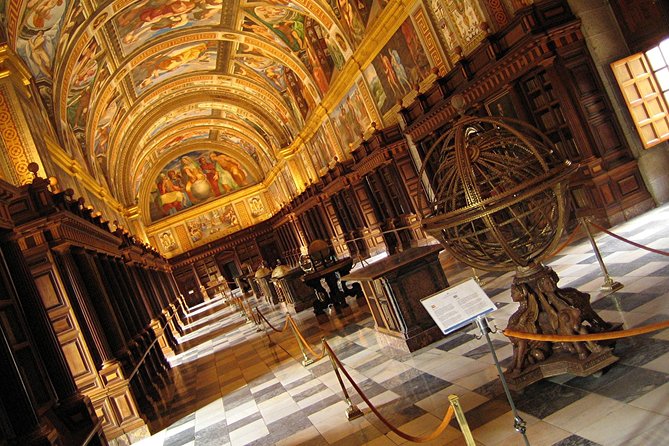
And yes, the ceiling artwork can be jaw-dropping. One guest said the painted ceilings impressed them so much they felt they beat the Sistine Chapel comparison in impact. I can’t promise the feeling will be identical for everyone, but I can tell you why it happens. El Escorial’s scale and lighting make painted ceilings read larger and more physical than you expect. Stand back for a moment before you tilt your head too far. Get your bearings, then go closer.
If you love churches and want the story behind the objects, a good guide here makes a big difference. Some guests have wished there was more guidance inside, or at least an audio guide structure to explain artifacts and artwork once they reached the interior. That’s a real consideration. Your private guide will be guiding, but if you arrive expecting deep object-by-object narration inside every space, you might want to plan for some self-exploration too.
Tickets, walking time, and how to make the most of your 5 hours
The schedule is roughly 5 hours total. The day is built from three main blocks: Valley for about 1 hour, El Escorial’s Real Sitio area for about 1 hour 30 minutes, then the Monastery Royal Site visit for about 2 hours, plus travel time.
The biggest operational lesson is simple: plan for walking. One review-style complaint that should matter to you is the idea that half the day can feel like walking rather than a mostly seated, panoramic coach experience. Even if the day feels efficient, you will still move from place to place.
So here’s how you can keep it enjoyable:
- Wear shoes that you trust on uneven stone and stairs.
- Bring water if you can. Food and drinks are not included.
- If you’re traveling with a toddler or you need frequent breaks, tell your guide your pace preference early in the day.
- Expect that you might spend time inside where you can’t always stop to stare, so it’s worth asking where to prioritize your time.
Also note: monuments can close due to official events. That is not something you can control, but it is a good reason to keep your day flexible and accept that the guide may shift how you experience certain areas.
Value and price: is $132.09 per person worth it?
At $132.09 per person, this tour is priced like a true guided experience, not a bare-bones bus day.
What you’re paying for, in practical terms:
- Private guide attention in a small group (up to 10 travelers)
- Round-trip transport from central Madrid
- Tickets included for the Monastery of El Escorial visit block, and tickets are listed for the Valley of the Fallen as well
Then you’re not paying separately for every entry door while you’re figuring out lines and timing. That matters on a half-day schedule. Even if you’re the type who can manage tickets on your own, the time saved helps you enjoy the actual places rather than wrestling with logistics.
The only caution on value is the walking expectation. If you strongly prefer seated touring, you might feel the money is spent on feet instead of views. But if you enjoy historical sites on foot, and you want your guide to explain how the complex functioned across centuries, the cost starts to feel very fair.
Who this tour suits best
This is a strong match if you want:
- A guided visit that connects what you see at El Escorial with the reign of Philip II
- A structured look at the Valley of the Fallen’s place and memorial purpose
- A small group format where questions feel welcome
It’s also a decent option if you like architecture and art, because you’ll spend real time at the monastery complex. The painted ceiling wow factor is a big reason this tour keeps earning high marks.
It may be less ideal if:
- You need mostly seated time, or you’re hoping for a very light-walking plan
- You want long, unhurried narration inside every room, since some spaces can require you to do part of the looking on your own
Family note: service animals are allowed, but if you’re traveling with children under 11, it’s mandatory that they use a baby car seat, and the provider cannot provide one, so bring your own.
Should you book this El Escorial and Valley of the Fallen private tour?
I’d book it if your goal is a focused half-day that combines two major sites you might not connect on your own. The private guide element is the difference-maker, especially at El Escorial, where the complex’s many functions help you understand why the place is arranged the way it is.
I’d think twice if you’re traveling with someone who struggles with walking or if you want a mostly seated scenic format. In that case, you may feel the schedule is too foot-heavy for what you imagined.
Quick final checklist before you decide:
- You’re comfortable with a 5-hour outing and real walking
- You want a guide to explain what you’re seeing, not just admission
- You’re curious about both royal Spain and Spain under Franco, even if the tone is heavy at the Valley
If that sounds like you, this is a solid pick, and it’s one of the better ways to experience El Escorial without turning it into a self-guided puzzle.
Recently reviewed around Madrid
- Madrid: Treasure Hunt Experience★ 5.0 · 4 reviews
- Madrid Spanish Omelet Cooking Class and Bottomless Wine brunch★ 5.0 · 50 reviews
- Avila and Segovia private day trip with hotel pick up from Madrid★ 5.0 · 68 reviews
- Prado Museum Tour with ticket, small group & expert guide★ 5.0 · 6 reviews
- Bernabeu Stadium Private Guided Tour★ 3.5 · 4 reviews
- Spanish Group Course in Madrid, Spain: 20 Lessons★ 5.0 · 11 reviews
- Self-Guided Audio Tour – Cervantes Literary Experience in Madrid★ 4.0 · 6 reviews
- Madrid Bike Tour with Churros and Wine, Ham, and Cheese Upgrade★ 5.0 · 8 reviews
El Escorial & Valley of the Fallen Tours, compared.
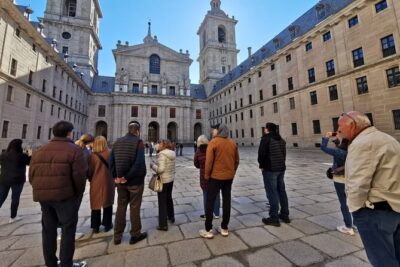
Escorial Monastery and the Valley of the Fallen Tour from Madrid
Read our review →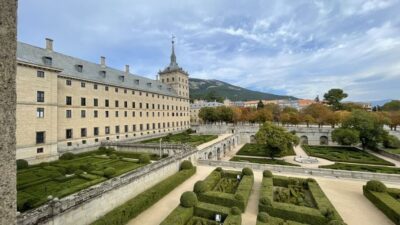
Escorial Monastery and the Valley of the Fallen
Read our review →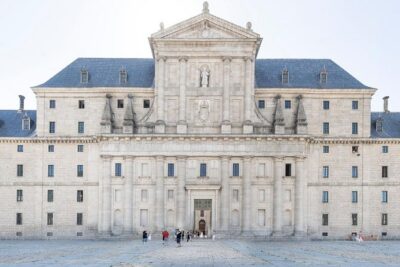
Escorial Monastery and the Valley of the Fallen from Madrid
Read our review →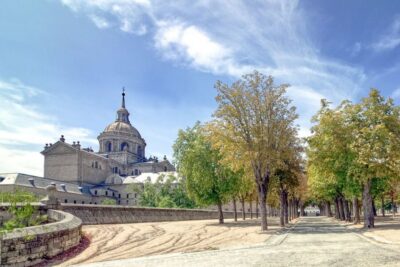
El Escorial and Valley’s Basilica Half Day Tour
Read our review →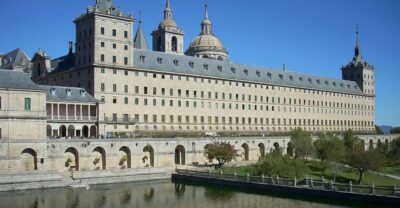

Royal Site of San Lorenzo de El Escorial Entrance Ticket
Read our review →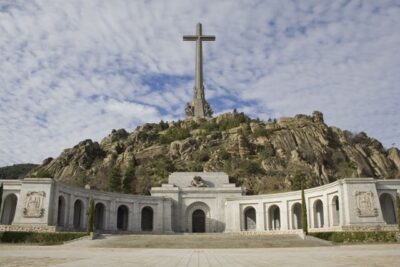
San Lorenzo de El Escorial: Monastery and Site Guided Tour
Read our review →Browse the lists this tour appears in