
Reviewed · EL ESCORIAL & VALLEY OF THE FALLEN TOURS
From Madrid: Escorial Monastery and the Valley of the Fallen
El Escorial and the Valley of the Fallen are two very different places that still feel linked, because both were built to communicate power, faith, and national identity. One is Felipe II’s monumental Royal Monastery, the other is a church carved into rock with a massive granite cross and the graves of Civil War victims.
What I like most is getting skip-the-line access plus a live guide who keeps the story clear. I also love the pace: about 105 minutes inside El Escorial, then around 60 minutes in the Valley, with headset help so you do not miss details even when groups move around.
The main drawback is walking. Expect steps and uneven terrain at both sites, and this tour is not suitable for wheelchair users or people with mobility impairments.
Key points before you go
- Skip-the-line entrances at both El Escorial and the Valley of the Fallen save time for seeing, not waiting
- Headsets make a big difference in loud halls and busy corridors
- A guided route through major El Escorial highlights like the Patio de Reyes and the Pantheon of Kings and Infants
- The Valley visit includes the rock-cut basilica and a chance to absorb the scale of the granite cross
- Clear historical framing from Felipe II to the Spanish Civil War era, typically delivered by guides praised like Beatriz, Cristina, Sergio, and Pilar
- Short half-day format from Madrid, usually under 5 hours total, so you can still enjoy the rest of your day
Why El Escorial and the Valley of the Fallen belong on the same day
If you only see El Escorial, you get one side of Spain’s story: monarchy, religion, and the way architecture can act like propaganda. If you only see the Valley of the Fallen, you get a different side: how Spain tried to narrate its Civil War and its aftermath through monumental design.
Put them together and you start spotting patterns. Same country, same love of grand building projects. But different messages, delivered in totally different visual languages, one in pale stone and courtyards, the other inside a mountain.
I like that your guide connects the dots in plain terms. And based on past groups, guides like Cristina, Beatriz, and Sergio tend to explain what you are looking at in a way that feels practical, not like a textbook. You walk away with a stronger sense of what people wanted these places to mean.
More El Escorial and Valley of the Fallen tours:
- Escorial Monastery and the Valley of the Fallen Tour from Madrid
★ 5.0 · 2,494 reviews - Escorial Monastery and the Valley of the Fallen from Madrid
★ 4.0 · 1,023 reviews - From Madrid: El Escorial and Valley’s Basilica Half Day Tour
★ 4.4 · 638 reviews
Meeting point, bus ride, and how the 5-hour schedule really feels
This is set up as a smooth Madrid half-day. You meet outside the Commercial Gallery on San Bernardo Street 7, at Fun and Tickets. Then you ride an air-conditioned bus with Wi-Fi to reach San Lorenzo de El Escorial, roughly 50 minutes away.
Time on the ground is tightly managed. You get about 105 minutes at El Escorial, then a short 15-minute coach transfer, then about 60 minutes at the Valley of the Fallen. The full loop back to San Bernardo Street 7 comes in around 5 hours total.
That pacing matters because both sites are enormous. El Escorial alone can swallow half a day if you wander without a plan. The bus schedule and guided route keep you moving efficiently, with enough breathing room to stop for photos and look up details you might miss on your own.
One small consideration: there is no time built in for a full sit-down meal. If you want lunch after, plan for it, because food and drinks are not included.
El Escorial: walking into Felipe II’s world (and why the layout is the point)
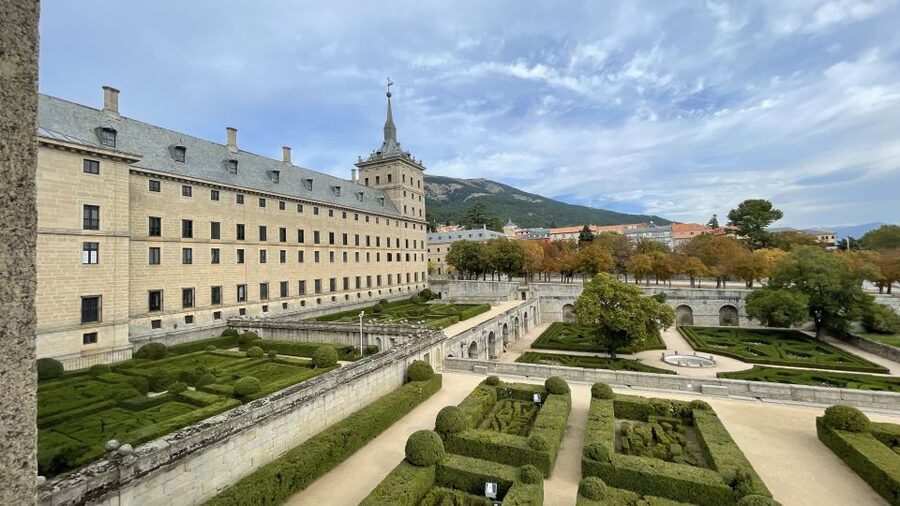
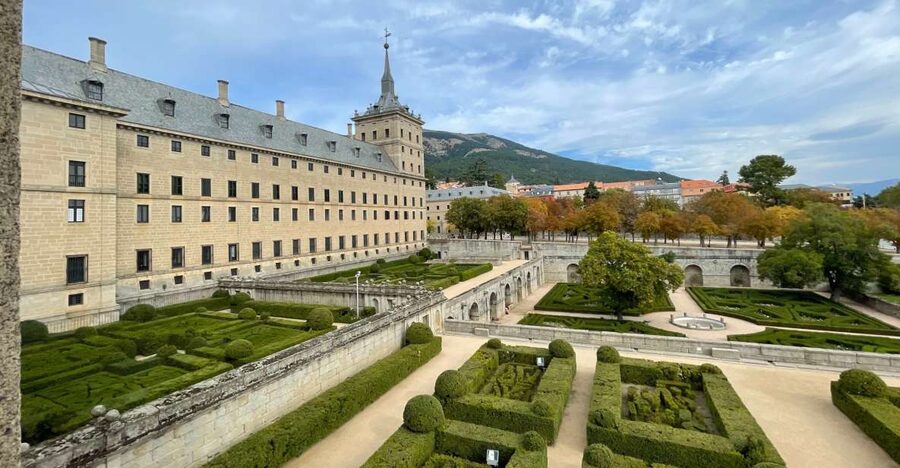
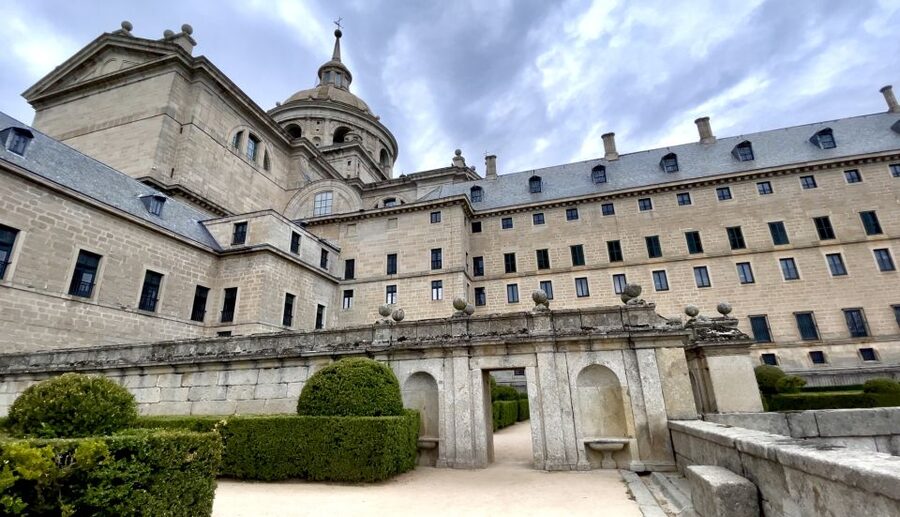
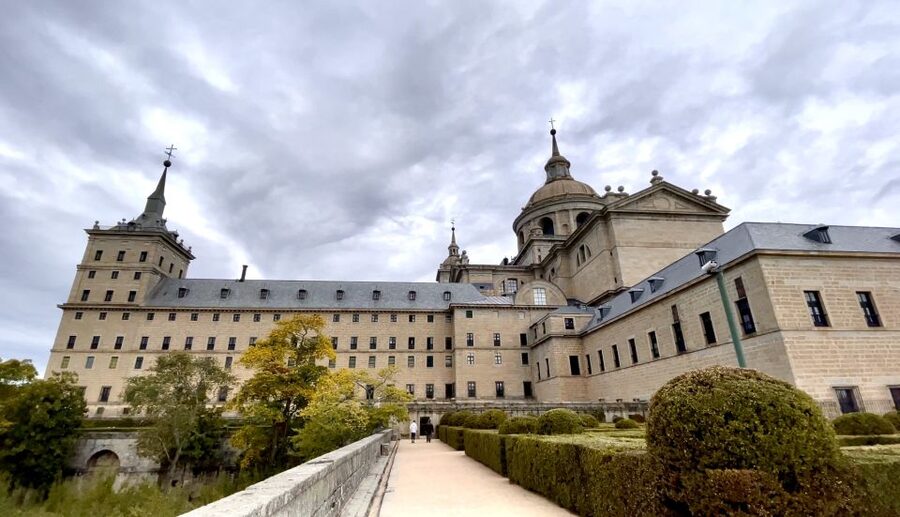
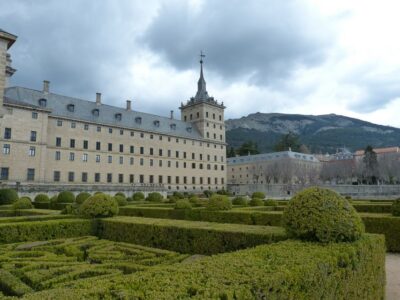
El Escorial, formally the Royal Monastery of San Lorenzo del Escorial, is a place you understand by moving through it. It is not just a church you pass by. It is a whole system: courtyards, halls, cloisters, chapels, and royal spaces arranged to project order and authority.
Right when you arrive, you begin with a quick orientation step at the baths upon arrival, then the main guided walk starts. Thanks to skip-the-line entry through a separate entrance, you avoid the most annoying part of visiting: the waiting.
Patio de Reyes and the monastery’s courtyard rhythm
You start seeing why El Escorial works so well for guided tours. The Patio de Reyes gives you a visual anchor. It sets the tone and helps you understand how the buildings relate to each other.
This is a great area for a first batch of photos. Also, it is where you can start matching what your guide says with what you see, instead of feeling like you are just following a person around.
More day trips from Madrid:
- Avila & Segovia Tour with Tickets to Monuments from Madrid
★ 5.0 · 9,762 reviews - Three Cities in One Day: Segovia, Avila and Toledo from Madrid
★ 5.0 · 8,402 reviews - Toledo Tour from Madrid: Cathedral, Synagogue & St. Tome’s Church
★ 5.0 · 6,784 reviews - Toledo Half or Full Day Tour with Optional Lunch from Madrid
★ 4.5 · 5,807 reviews
Cloister and Chapter Rooms: where daily life meets power
Next you get into spaces like the Cloister and the Chapter Rooms. These are not just pretty. They show how a monastery functions as a community and how the monarchy wanted to be tied to that religious world.
If you like art and architecture, you will appreciate that the route emphasizes key rooms rather than random corners. And if you do not consider yourself an architecture person, this still works because the guide explains what each space was for.
The Basilica (except on Sundays) and the royal scale
You also visit the Basilica, but note that it is except on Sundays. If your visit lands on a Sunday, the tour may adjust, so do not expect the exact same interior access every day.
Even when you are not standing in the most famous part, El Escorial is impressive because it is structured. You feel the plan. The scale is hard to grasp until you are inside, looking at ceilings, altars, and the sheer size of the complex.
Pantheon of Kings and Infants, and the Royal Rooms
Two stops often stand out for visitors because they make the monastery personal. The Pantheon of Kings and Infants connects faith and dynasty in a way that makes Spain’s royal story feel physical. The Royal Rooms shift the mood again, from religious ceremony to the lived world of monarchy.
In reviews, people repeatedly praise the way guides handle this shift. Guides like Rafael and Arantxa are mentioned for explaining not only what these spaces are, but why they were designed the way they were.
A practical tip for El Escorial
Wear comfortable shoes. There are lots of steps, and the terrain can feel uneven. One consistent theme from the feedback is that this tour is doable if you can walk well, but it is not built for mobility limitations. If stairs are a problem for you, you may want a different plan.
The Valley of the Fallen: a rock-cut basilica and a cross you can spot for miles
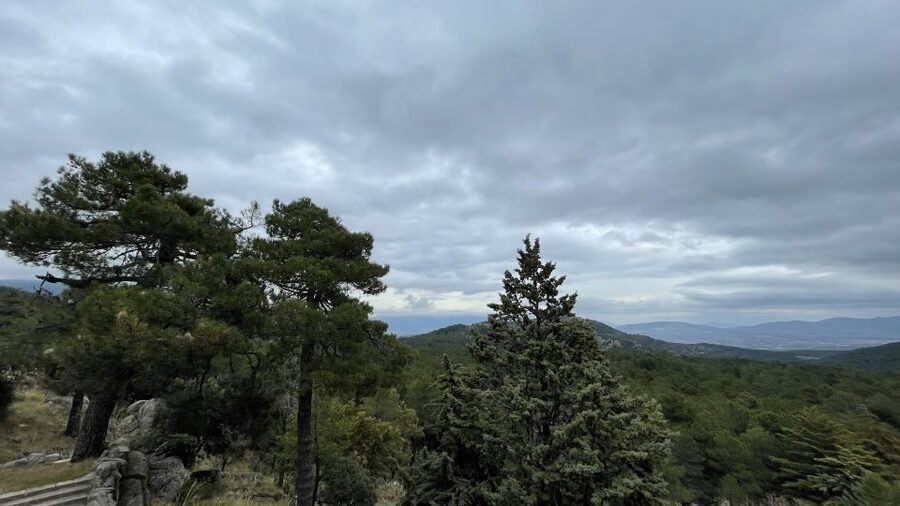
After El Escorial, you transfer about 15 minutes by coach to the Valley of the Fallen, sometimes associated with the area of Peña de Cuelga Muros. The setting alone is dramatic. Then the visit turns deeper, because you are entering a site tied directly to the Spanish Civil War.
The Valley tour focuses on the surroundings and the basilica carved into the rock. This is not a quick stop. You are given time to experience the interior, then to look outward and absorb the scale of the landscape.
33,847 names, and what the monument is trying to communicate
You learn that the basilica serves as the burial place for 33,847 people who died in the Spanish Civil War. That number matters because it turns the building from a symbol into a real place holding real loss.
The message of the monument is controversial, so I appreciate that the guided approach is typically described as respectful and framed through history, not slogans. In past groups, people specifically noted that guides managed the topic in a careful tone, even when discussing a difficult subject.
The basilica in the mountain, and the granite cross
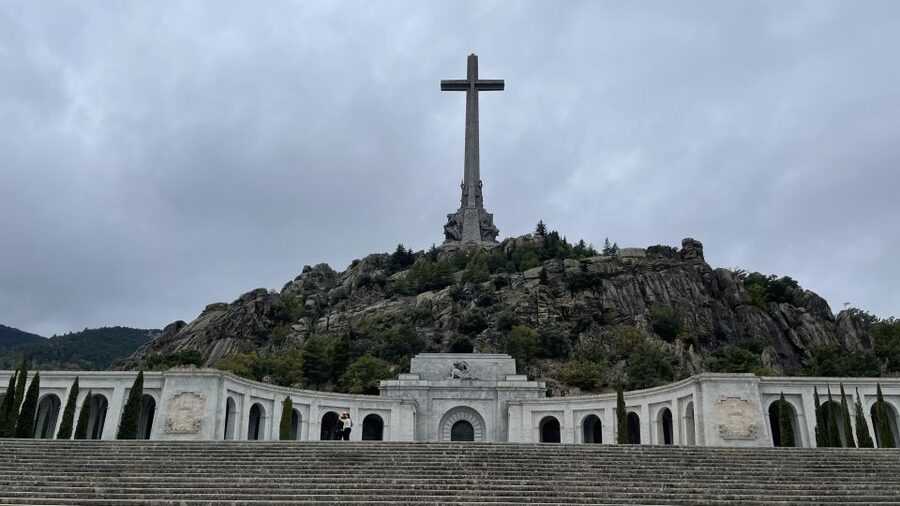
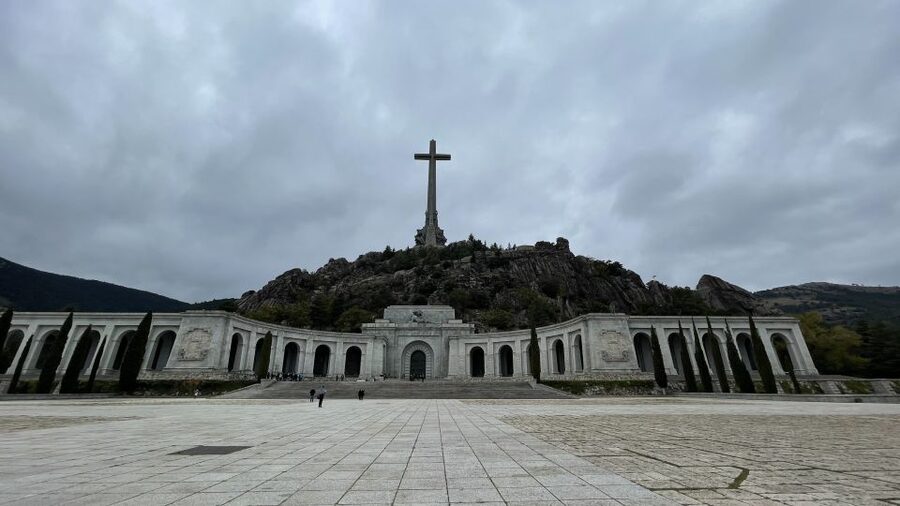
One of the most striking details is the great granite cross, visible from kilometers away. Even if you think you already know what it looks like from photos, seeing it in person changes the feeling. It feels engineered for visibility, like a landmark meant to shape memory across the horizon.
Inside, the rock-cut design does something clever. It makes the church feel like it grew out of the mountain, not like it was placed on top of it. Your guide’s explanations help you notice those design choices instead of just admiring the wow-factor.
A practical tip for the Valley
Build in patience for lines and movement. The site has security and visitor flow, and it is easy to lose time if you rush your photos. Bring a water bottle if you tend to get thirsty, even though drinks are not included. And if you are sensitive to temperature changes, dress in layers, because rock-cut spaces can feel cooler than outdoors.
World Heritage value: what you actually learn from the architecture
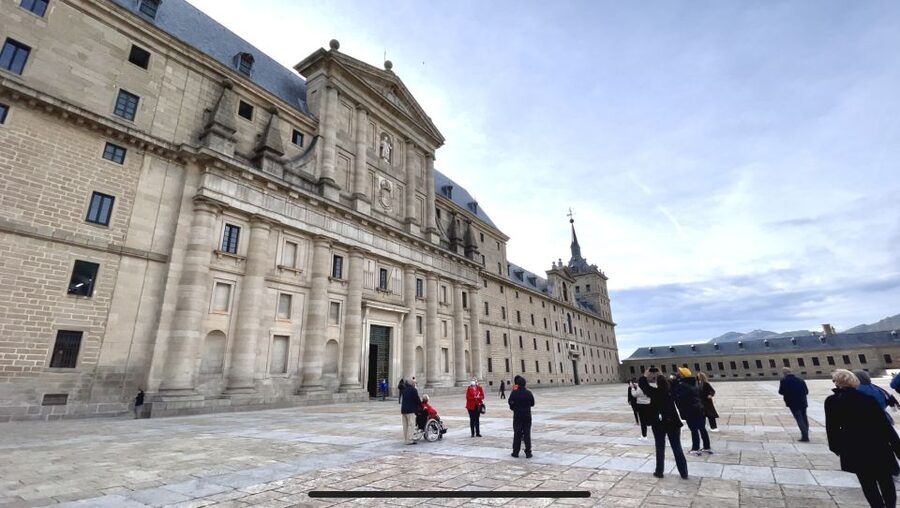
A lot of tours list buildings. This one helps you understand why the buildings matter. El Escorial is tied to Spain’s Golden Age, and your route points you to the structures that summarize the era’s ideological and cultural aspirations.
In plain terms, you see how the monarchy and the church reinforced each other. You also learn how design choices communicated legitimacy: symmetry, hierarchy, and the sense that power has a physical home.
At the Valley of the Fallen, the learning shifts from “how a kingdom wanted to look” to “how a nation tried to narrate trauma and identity.” The basilica carved into rock is a strong example of that idea in architecture form.
What I think makes this tour good value is that it does not treat these as two separate photo stops. It frames them as connected chapters. You go from Felipe II’s carefully planned complex to a 20th-century monument built to control how the past is remembered.
Price and value for about $73 per person
At around $73 per person for a roughly 5-hour outing, the value comes from what is included. You get:
- Round-trip transportation by air-conditioned bus
- Wi-Fi in the bus
- A live guide (English and Spanish)
- Skip-the-line entry tickets for both sites
- Headset equipment to hear your guide clearly
If you tried to do this solo, you would likely spend time and money on getting to San Lorenzo and then onward to the Valley, plus you would still have to line up. Here, the bus schedule and the separate entrances reduce that hassle.
The tradeoff is that you are paying for structure. You are not wandering at your own pace for hours and hours. If you prefer slow museum-style exploring, you might wish you had more time at El Escorial or more time at the Valley.
But if you want the key stops handled efficiently with good explanations, this is a very sensible use of a half-day.
Who should book this Madrid trip, and who should choose differently
Book it if you want two major Spanish history stops without a car, and you like guided context. This is especially useful if you care about monarchy, architecture, and the Civil War era, but you also want the experience to be organized and not chaotic.
You will probably enjoy it most if you:
- can handle a lot of walking and steps
- like seeing big sites in a logical order
- want a guide to translate architecture into meaning
You should choose something else if you:
- use a wheelchair or have mobility impairments (this tour is not suitable)
- need a very low-step, low-walking itinerary
- prefer long independent exploration rather than a set schedule
The overall vibe is educational but not stiff. And judging by the repeated praise for guides like Oscar, Pilar, and Beatriz, the best versions of this tour usually feel both informative and well paced, with time to take photos and absorb what you see.
Final call: should you book this tour?
Yes, if you want an efficient, well-organized way to connect El Escorial with the Valley of the Fallen in one half day. This is the kind of tour that helps the sites click, because you get the why behind the where, not just the view.
I would hesitate only if your mobility is limited or stairs are a deal-breaker. Also, go in with the right mindset for the Valley, it is powerful and controversial. With a good guide and a bit of time, it becomes a meaningful history stop, not just a dramatic photo op.
If that sounds like what you want, this is one of the best uses of time you can make from Madrid.
FAQ
Where is the meeting point in Madrid?
Please meet your driver outside the Commercial Gallery at San Bernardo Street 7.
How long is the tour from start to finish?
The duration is 5 hours total.
What languages are the guide and audio in?
The tour has a live guide in Spanish and English, and headset audio is also available in Spanish and English.
Are skip-the-line tickets included?
Yes. You get skip-the-line entry tickets for both the Monastery of San Lorenzo and the Valley of the Fallen, using separate entrances.
Is food or drinks included?
No. Food and drinks are not included.
Can I cancel and still get a full refund?
Yes, you can cancel up to 24 hours in advance for a full refund.
What should I bring for the visit?
Bring comfortable shoes and comfortable clothes, since there will be walking and stairs.
Is this tour wheelchair accessible?
No. It is not suitable for people with mobility impairments or wheelchair users.
Recently reviewed around Madrid
- Tour en Tuk Tuk por lo mejor de Madrid★ 3.4 · 13 reviews
- From Madrid: Toledo Day Trip with Cathedral and 8 Monuments★ 4.3 · 32 reviews
- From Madrid: Toledo Guided Day Trip with Cathedral Admission★ 4.4 · 79 reviews
- Madrid: Tasty Tapas Tour & Visit to a Terrace with Views★ 4.5 · 118 reviews
- Madrid: Spanish Tapas Tour★ 4.3 · 7 reviews
- From Madrid: Best of Sevilla Day Tour with Train Transfers★ 4.6 · 40 reviews
- Tapas Food Tour with Dinner in Madrid★ 5.0 · 6 reviews
- Small Group Prado Museum Guided Tour with Skip the Line★ 4.2 · 106 reviews
El Escorial & Valley of the Fallen Tours, compared.
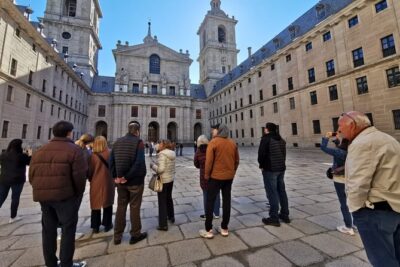
Escorial Monastery and the Valley of the Fallen Tour from Madrid
Read our review →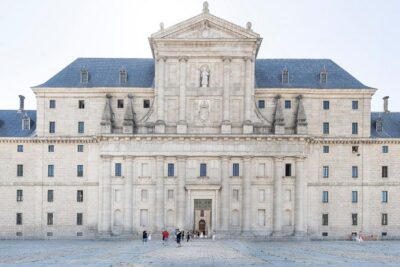
Escorial Monastery and the Valley of the Fallen from Madrid
Read our review →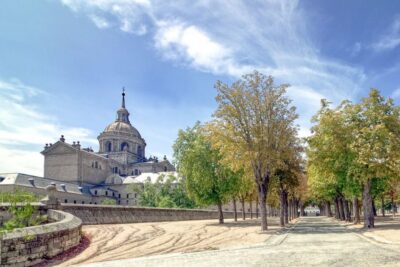
El Escorial and Valley’s Basilica Half Day Tour
Read our review →

Royal Site of San Lorenzo de El Escorial Entrance Ticket
Read our review →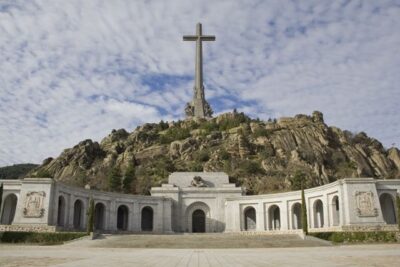
San Lorenzo de El Escorial: Monastery and Site Guided Tour
Read our review →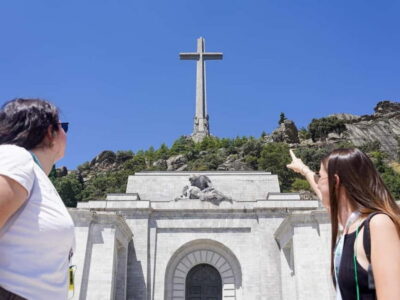
Toledo & Escorial Full-Day Tour + Optional Valley of Fallen
Read our review →Browse the lists this tour appears in