Reviewed · TOURS
Tour “Barrio de las Letras” Spanish Golden Age
This tour is interesting because it turns central Madrid into a living map of Spain’s Spanish Golden Age, with major writers tied to the very streets you’re standing on. Barrio de las Letras is the kind of neighborhood where literature feels physical, like it’s carved into the corners.
I like two things right away. First, you get a 2 hours 30 minutes walking arc that keeps the story moving. Second, the tour is built around standout moments, from witty street art tricks to the place where Cervantes is laid to rest.
One consideration: the stops are short, around 10 to 20 minutes each, so if you want extra quiet time inside buildings or long photo pauses, you may feel a bit time-pressed.
Key points you will care about
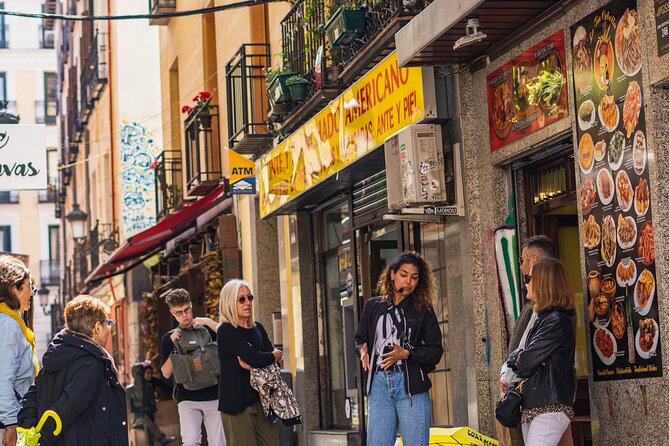
- Small group size (max 20) means more back-and-forth with your guide.
- Mobile ticket keeps check-in simple on the day.
- Cervantes focus lands you at the convent tied to where he is buried.
- Theater and satire themes show up early, not just at the end.
- A strong guide name, Marivic, has been praised for keeping the visit engaging and well explained.
Why Barrio de las Letras Feels Different Than Regular Madrid Walks

Most Madrid sightseeing is about monuments. This one is about context, and it changes how you see the city. You are not just passing by old façades, you are building a mental timeline as you walk.
The Barrio de las Letras links authors, rivalries, and even stage culture to specific street corners. You’ll notice how often the neighborhood becomes a reference point for Madrid itself. Even if you only know a few names, the tour structure makes the story easy to follow, stop by stop, without heavy homework.
The guide also matters. People have highlighted a guide named Marivic for attention and clear knowledge, and that lines up with what you want on a literary tour. You want someone who can turn a street name into a scene.
More of Madrid worth an open tab:
- Madrid: Tour Bernabéu Entry Ticket
★ 4.5 · 21,573 reviews - Madrid: Prado Museum Entry Ticket
★ 4.6 · 17,509 reviews - Madrid: “Emociones” Live Flamenco Performance
★ 4.8 · 12,866 reviews
Starting in Puerta del Sol, Then Learning the Golden Age Lens
You begin near Puerta del Sol, a practical choice because it helps you orient fast. It’s also a smart way to start the Golden Age conversation. From there, your guide frames what the neighborhood means in literary Madrid.
In the first segment, you’ll get a quick setup for what you are about to see: why this area matters, and how the writers’ world worked in daily life. This matters because it turns “pretty streets” into “streets with a job.” By the time you reach the first themed alley, you’ll know what to look for.
Time here is about 15 minutes, so don’t expect deep details. Think of it as your map and your vocabulary.
Calle de la Cruz and the Fun of Trampantojo Street Illusions
Next comes Calle de la Cruz, where the highlight is a trampantojo, basically a street-scale illusion or visual trick. These are the kind of design elements that reward you for slowing down, even for a minute.
What makes this stop valuable is that it’s not just about spotting the trick. You’ll hear the story it hides, and that turns the illusion into a cultural clue. In a neighborhood tied to writers, even a visual gimmick can carry meaning.
Because the stop is brief (around 15 minutes), your best move is to bring your eyes, not your phone battery. Use your phone to capture the scene, then spend a moment in front of the illusion before moving on.
Calle de Álvarez Gato and Sperpentos in the Shadow of Theater
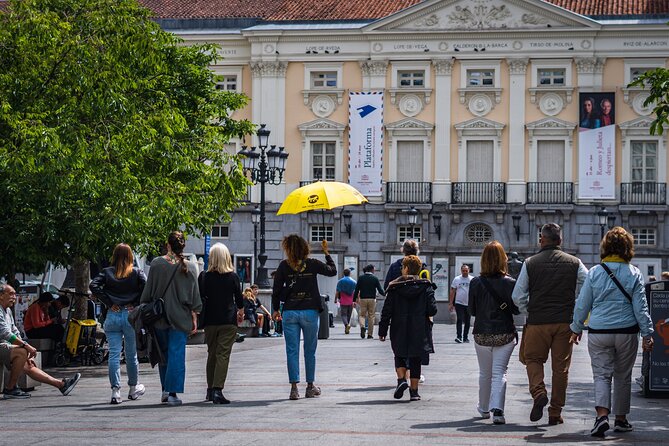
On Calle de Álvarez Gato, you’ll hear about sperpentos linked to Bohemian Lights. Even if you are not fluent in Spanish literary terms, the tour approach helps: you get the term, you get the reference, then you connect it to what you are seeing in the street setting.
Why I like this stop is that it brings literature closer to mood. Sperpentos are not just a label, they point to a particular style of distortion and satire. That can make you look at the neighborhood differently, like the city itself is part of the joke.
Expect another short stop, about 15 minutes. If you want to linger, do it lightly. You’ll likely want that energy for the bigger scenes later.
Still in Madrid, a different sort of afternoon:
- Madrid: Panoramic Route City Tour
★ 4.1 · 12,259 reviews - Madrid: Live Flamenco Show with Food and Drinks Options
★ 4.5 · 9,901 reviews - Avila & Segovia Tour with Tickets to Monuments from Madrid
★ 5.0 · 9,762 reviews - Three Cities in One Day: Segovia, Avila and Toledo from Madrid
★ 5.0 · 8,402 reviews
Plaza de Santa Ana, Statues, and the Theater Soul of the Neighborhood
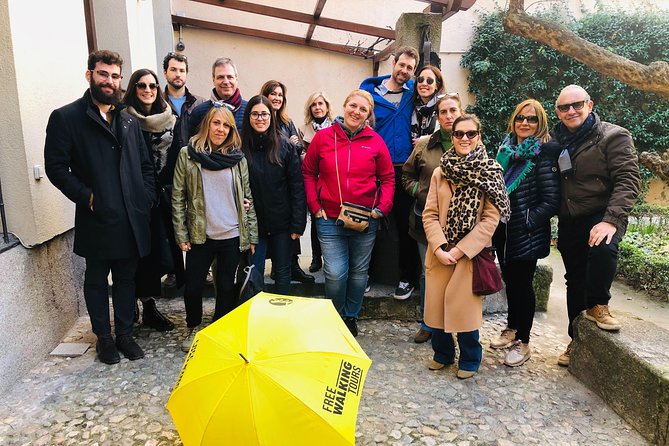
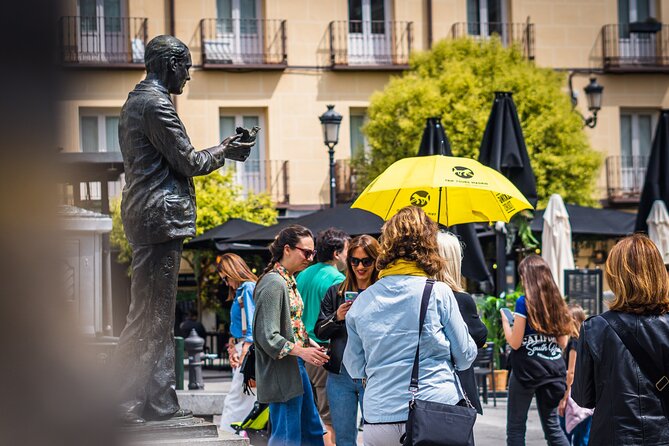
Plaza de Santa Ana is where the tour turns more theatrical. You’ll spend around 15 minutes here, focused on stories connected to statues and the Corral de Comedias culture.
A corral de comedias is a traditional courtyard theater setup, and it’s a key piece of how Spanish plays were staged during earlier periods. The tour uses the square to make that idea feel real. Instead of reading about theater history, you see how a public space supports public performance.
This is also a great stop for context if you like performance art or you’ve enjoyed Spanish drama before. The guide will help you connect names and themes you might have heard, without turning it into a lecture.
If you’re thinking about timing, this is one of those moments when a quick photo is enough. The value is in the explanation you get before you move on.
San Sebastián Church as a National Artistic Historic Monument
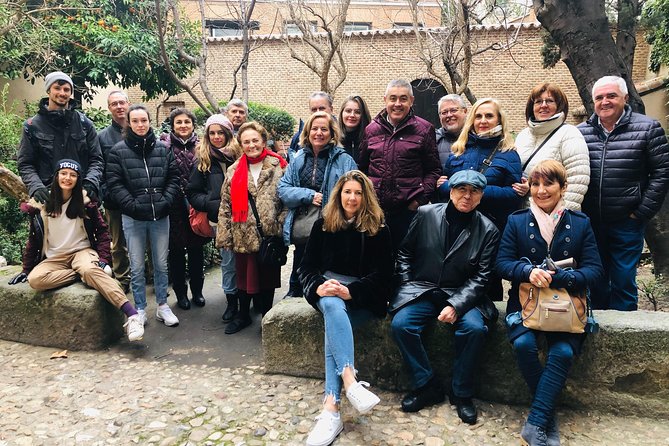
At Iglesia de San Sebastián, you’ll learn about the church as a National Artistic Historic Monument of Spain. This is where the tour adds a layer of architecture and protected heritage, not just literary references.
The stop is about 15 minutes. That short timing is enough for the “why it matters” piece, especially if you’ve been wondering how an area becomes officially significant. A monument status is a clue that people once valued what they built here, and still do.
Tip for your experience: when you’re outside a church like this, take 30 seconds to look up and around, then listen. The best part is when you let your eyes and the guide’s story line up.
Calle de las Huertas: Where the Writers’ Footprints Feel Close
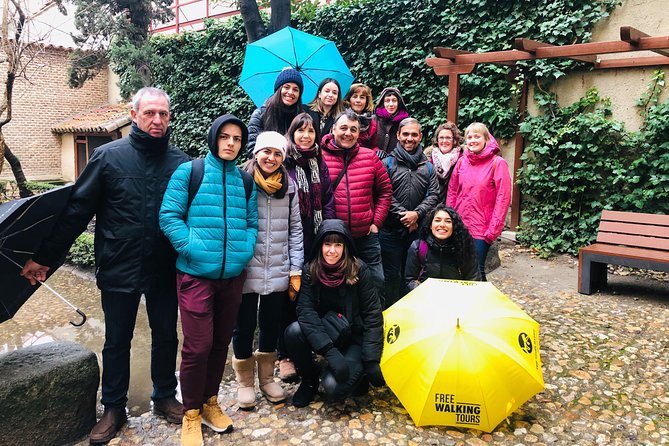
Now you walk Calle de las Huertas, a street where the tour focuses on the lives tied to the Golden Age characters associated with it. This is not a “one landmark, one photo” stop. It’s more like a stroll through a dense layer of references.
The value here is how it builds a sense of community and daily rhythm. You start to understand the neighborhood as a meeting point between work and public life, where literature wasn’t floating in a vacuum. It lived next to errands, neighbors, and conversations.
You’ll have around 20 minutes here, the longest stretch in the middle of the walk (and that’s a clue that the guide wants you to absorb the flow). Use the time to ask questions if your guide invites them, because this is the part where the story can get personal and specific.
The Convento de las Trinitarias Descalzas de San Ildefonso and Cervantes’ Resting Place
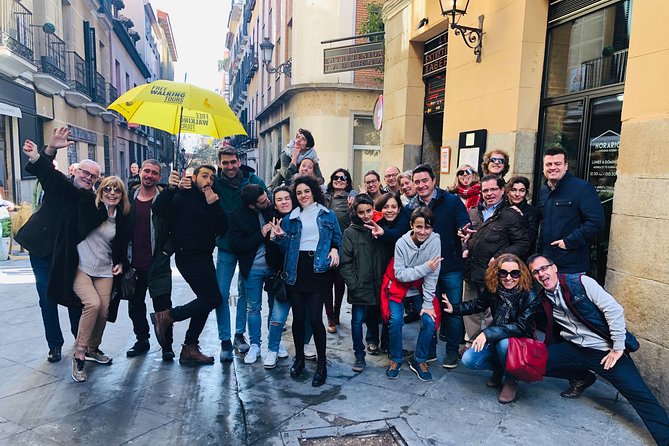
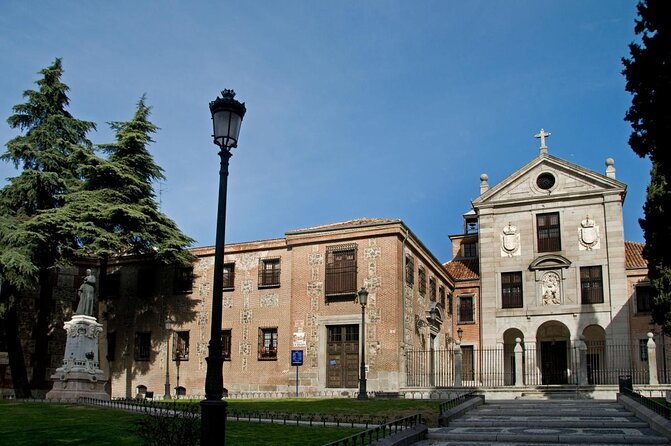
This is one of the core emotional stops: the Convento de las Trinitarias Descalzas de San Ildefonso, where Miguel de Cervantes rests forever. The tour includes admission here, and the time is about 10 minutes.
Even if you are not a hardcore literature fan, this is the moment that often makes the whole tour click. Cervantes is not just a name in a book here. You are in a place that anchors his legacy.
Because the time is short, you’ll get the message without the risk of fatigue. But you should still treat it respectfully. Slow down the pace when you arrive, and give your guide your full attention for those 10 minutes.
If you care about indoor heritage, this stop is also a good reminder that the tour is not only about walking. It’s about placing you in key spaces tied to the writers’ lives.
Calle de Quevedo and the Rivalry That Still Sounds Alive
Next is Calle de Quevedo, where the tour covers what happened between Francisco de Quevedo and Luis de Góngora. Rivalries are a powerful way to teach literature because they turn style into conflict, and conflict into story.
You get about 10 minutes here. That’s enough time to understand the idea and why it mattered culturally, without turning it into a deep academic debate. The guide’s job is to connect the rivalry to the neighborhood’s identity, and it does.
This stop is best for people who enjoy:
- quick explanations with clear takeaways
- personality-driven history
- the drama behind art
If you tend to lose interest when tours become too theoretical, this part usually helps you stay engaged.
Casa Museo Lope de Vega, the Phoenix of Wits, and the Final Payoff
Your walk ends at the Lope de Vega House Museum near Calle de Cervantes, 11. Here you’ll see the house linked to Lope de Vega, often called the Phoenix of the Wits.
The closing stop lasts about 15 minutes, and it’s designed as a flourish. You’ll hear the story behind the nickname and why Lope is remembered that way.
I like how the ending mirrors the tour’s theme. You started with orientation. You built a mental network of writers, rivalry, and performance culture. Now you land on a personal, domestic space connected to one of the era’s key figures.
Practical note: because the tour ends at a museum, plan your next steps nearby. You’ll likely want to continue exploring the area after you finish.
Value and Logistics: A Tiny Price for a Lot of Story
The price is listed as $3.47 per group (up to 6), and it guarantees your place on the tour. That’s a big part of the value story. If you’re traveling with even one or two people, this can work out extremely cheaply compared with private tours.
Also, the group size max is 20, which keeps it from feeling like a moving crowd. Smaller groups are usually where you get better explanations and easier question time.
Time-wise, you are looking at about 2 hours 30 minutes of walking. That’s long enough to feel like you did something meaningful, but not so long that you lose the thread. The tour is paced with short stops, which suits a mix of interests.
Two simple things to remember:
- Snacks are not included, so bring something small if you snack on the go.
- You’ll use a mobile ticket, so have your phone ready at the start.
Who This Tour Is Best For
This works especially well if you want a guided narrative, not just a self-paced wander. It’s also a good fit if:
- you like writers and theater
- you want a short, structured walking tour
- you enjoy street-level history tied to names
If you’re the type who wants long museum hours or you hate walking in the middle of sightseeing days, you might feel limited by the short stop durations. But if you want a “story route,” it’s a strong match.
One more point: the tour notes most travelers can participate, and service animals are allowed. It also says you are near public transportation, which helps if you are combining it with other Madrid plans.
Should You Book This Barrio de las Letras Tour?
I think you should book it if you care about context and you like the idea of seeing Madrid through Golden Age literature instead of only through buildings. The focus on multiple writers, the mix of street illusions, theater culture, and the Cervantes resting place gives the tour range without getting messy.
Skip it only if you know you need long stops, deep indoor time, or you want to read every plaque slowly on your own. With short visits at each stop, you’ll get the highlights, not a full-length academic experience.
If you book, I’d go with one mindset: bring curiosity and let the guide connect the dots. When that happens, Barrio de las Letras stops feeling like a neighborhood name and starts feeling like a story you can walk through.
FAQ
Where does the tour start and where does it end?
It starts at Trip Tours Madrid, Puerta del Sol, Centro, 28013 Madrid, Spain. It ends at Lope de Vega House Museum, Calle de Cervantes, 11, Centro, 28014 Madrid, Spain.
How long is the tour?
The duration is about 2 hours 30 minutes.
Is the ticket for the places included in the price?
Your price guarantees your place on the tour. Admission is listed as free for most stops, and admission is included for the Convento de las Trinitarias Descalzas de San Ildefonso.
What time does the tour begin?
The start time is 11:00 am.
Do I need a printed ticket?
No, it uses a mobile ticket.
Is cancellation free if plans change?
Yes, you can cancel for a full refund up to 24 hours in advance of the experience’s start time.
Recently reviewed around Madrid
- Madrid: Treasure Hunt Experience★ 5.0 · 4 reviews
- Madrid Spanish Omelet Cooking Class and Bottomless Wine brunch★ 5.0 · 50 reviews
- Avila and Segovia private day trip with hotel pick up from Madrid★ 5.0 · 68 reviews
- Prado Museum Tour with ticket, small group & expert guide★ 5.0 · 6 reviews
- Bernabeu Stadium Private Guided Tour★ 3.5 · 4 reviews
- Spanish Group Course in Madrid, Spain: 20 Lessons★ 5.0 · 11 reviews
- Madrid Bike Tour with Churros and Wine, Ham, and Cheese Upgrade★ 5.0 · 8 reviews
- Ribera del Duero Small Group Tour: Tapas & Wine Tasting★ 5.0 · 43 reviews
Tours, compared.


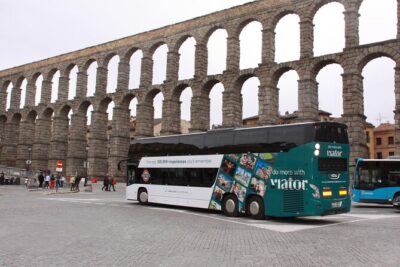
Avila & Segovia Tour with Tickets to Monuments from Madrid
Read our review →
Segovia and Toledo Tour, Alcazar, and Cathedral
Read our review →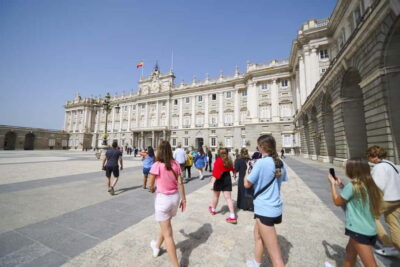
Royal Palace Expert Guided Tour with Skip-the-Line
Read our review →
Toledo Tour from Madrid: Cathedral, Synagogue & St. Tome’s Church
Read our review →
Toledo Half or Full Day Tour with Optional Lunch from Madrid
Read our review →