
Reviewed · PHOTOGRAPHY SESSIONS
Mapfre Foundation Madrid – Photography Exhibitions
Fundación MAPFRE in Madrid is interesting because it treats photography like a serious art form, not just a side display. I like how the museum pairs photography with painting and sketches, so the images make more sense in context. I also like that you get real “see for yourself” time with two headline temporary exhibitions running through May 17, 2026. The one drawback to plan around is simple: this isn’t a guided walking tour with lots of movement, so if you need constant action, you might find it slower than you expect.
You’ll spend the day inside a focused cultural stop in Madrid’s Community region, looking at visual arts and photography from the late 1800s to the middle of the 1900s. You can expect works that range from intimate street scenes to big-name artists like Anders Zorn and Helen Levitt. Plan for a quiet, close-up kind of visit, and you’ll get a lot more out of it.
Key things to know before you go
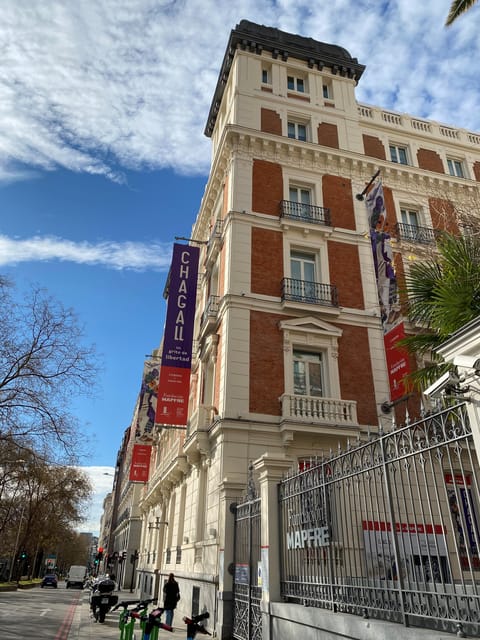
- Two big temporary exhibitions run through May 17, 2026: Anders Zorn and Helen Levitt.
- Audio guide is included, free, in English and Spanish, accessed by QR code in the rooms.
- You connect the dots between sketches, painting, and photography across late 19th century to mid 20th century.
- Helen Levitt’s show is structured, with nearly 200 works split into nine sections.
- Headphones are required, so bring your own or buy a cheap jack model on site.
- One issue to watch for: a small number of people report confusion around whether entry should be free, so check the price at the desk.
Fundación MAPFRE: a photo-focused museum that still feels like art
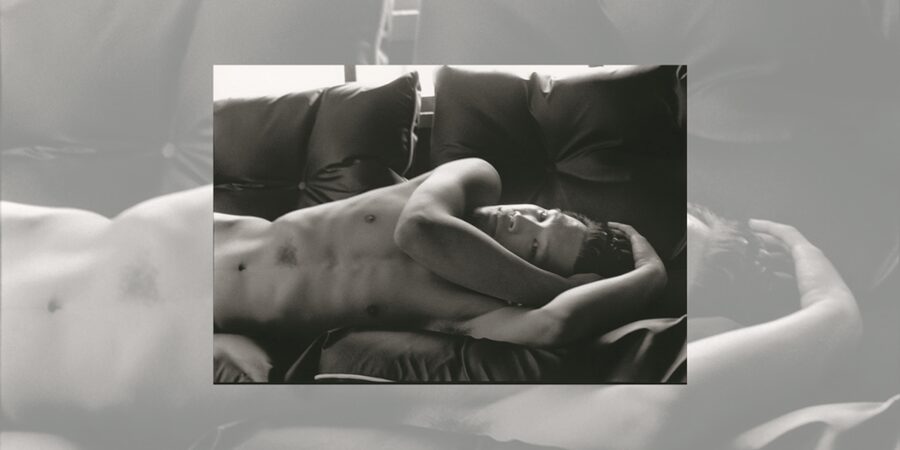
Fundación MAPFRE is the kind of museum visit that makes you slow down. Even if you came for photography, the place is built to show how visual culture evolved. You’re not just seeing separate rooms of unrelated images. You’re seeing how photography can sit beside painting and drawing, and how themes like people, everyday life, and travel keep reappearing in different media.
That matters because it changes how you look. If you’ve only ever seen photos as “documents,” this kind of setup nudges you toward the artist choices: framing, light, composition, and even what gets left out. It also makes the later 20th century street photography feel less like a sudden invention and more like the next step in a longer conversation.
A few more Madrid tours worth comparing
- Madrid: Prado Museum Entry Ticket
★ 4.6 · 17,509 reviews - Madrid: Reina Sofía Museum Entrance Ticket
★ 4.5 · 6,889 reviews - Madrid: Small Group of Prado Museum Tour & Optional Tapas
★ 4.6 · 2,437 reviews
Tickets, QR audio guide, and the headset rule
This visit is priced at about $5 per person, which is excellent value if you like spending a couple focused hours with art. The museum also includes an audio guide in English and Spanish, accessed through a QR code you’ll find in the rooms.
Here’s the practical part you should not skip:
- You need a mobile device with active mobile internet to load the audio guide via QR.
- If you do not have data, you can connect to the free Wi‑Fi available on site.
- Headphones are required so you don’t disturb other visitors.
If you want zero friction, bring your own earbuds. If you forget, you can buy headphones for €1, jack type, at the ticket counter, but you may have to wait depending on availability. For a museum visit that lasts about 1 day, saving time matters. Headphones help you move at your own pace without slowing everyone else down.
Also, exchange your voucher at the ticket desk when you arrive.
Your main event: Anders Zorn traveling through art and places
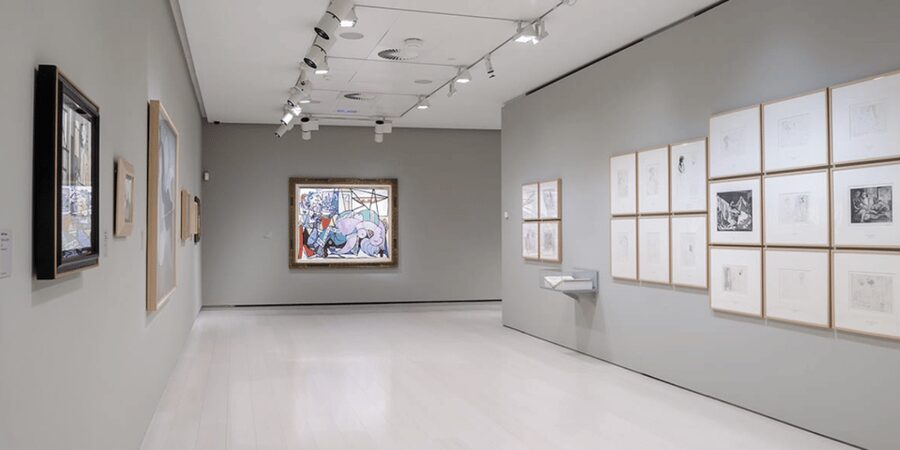
Until May 17, 2026, one of the major temporary shows is Anders Zorn. He was born into a humble background and became famous across Europe and beyond, especially as a portraitist. The show is built like a career timeline, and it does a smart job of connecting skill to travel, then travel back to subject.
What you’ll likely notice first is how wide his tools were. The exhibition highlights his work across oil, watercolor, and printmaking, not just one medium. That gives you a fuller sense of why Zorn mattered. He wasn’t only good at making a likeness, he was good at choosing the right technique for the moment.
The exhibition also tracks movement in a way that helps you understand style changes. It follows his early watercolors, his period in England, then Paris, where he consolidated his reputation and absorbed influence tied to Impressionism. After that, the show opens up to his time in the United States, then his return to Mora, where he focused on everyday Swedish life.
One of the most interesting details in this exhibition is that it includes Spanish works and an artistic connection with Joaquín Sorolla. If you’ve ever wondered how European painters and artistic circles cross-pollinated across borders, this gives you a concrete thread to follow while you’re looking.
How to look at this show for maximum impact
Don’t rush the timeline. Instead, pick 2 to 3 works and ask yourself:
- What medium is being used, and does it make the subject feel more intimate or more public?
- How does the light feel different from room to room?
- Where do you see the “everyday life” focus starting to become central?
If you do that, the exhibition feels less like a checklist of famous dates and more like a story of an artist learning what to do with each place.
Still in Madrid, a different sort of afternoon:
- Madrid: Tour Bernabéu Entry Ticket
★ 4.5 · 21,573 reviews - Madrid: “Emociones” Live Flamenco Performance
★ 4.8 · 12,866 reviews - Madrid: Panoramic Route City Tour
★ 4.1 · 12,259 reviews - Madrid: Live Flamenco Show with Food and Drinks Options
★ 4.5 · 9,901 reviews
Helen Levitt: nearly 200 works of 20th century street life
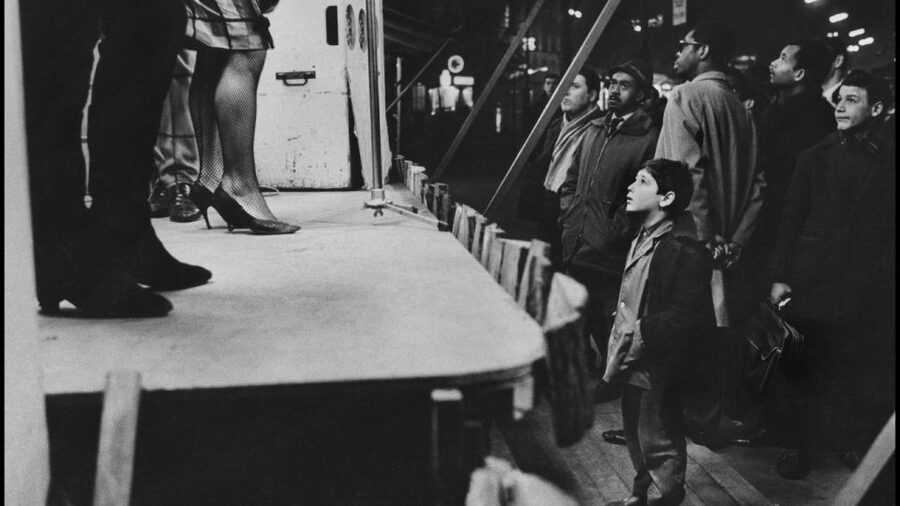
The other headline temporary exhibition is Helen Levitt. This show focuses on her long career and her highly personal way of observing urban life. She began photographing at the end of the 1930s, with a fascination for New York streets, and her images center on children playing, everyday gestures, and scenes from working-class neighborhoods.
The exhibition brings together nearly 200 works across nine sections. That structure is a big deal, because Levitt’s career does not feel like one uniform style. It evolves. You’ll likely see a progression from her early photographs into later work that stretches toward more cinematic approaches, while still keeping that street-level attention.
This is also where photography fans can get something rare: a sense of social commitment without turning the images into speeches. Levitt’s work has warmth and patience. You end up feeling like you watched the street for long enough to earn trust, even though you’re only seeing still images.
A simple way to enjoy the nine sections
Instead of trying to read every label, choose a rhythm:
- Spend more time in the sections that focus on children and daily street moments.
- When you hit sections that feel more experimental or cinematic, slow down and look at how framing changes.
Levitt is not just “a photographer of New York.” You’ll see how her eye becomes a style, then how that style becomes a way of thinking about people.
How the permanent displays connect photography, painting, and sketches
Beyond the temporary exhibitions, the museum is designed around the idea of connections. The broader displays focus on the period from the late 19th century through the mid 20th century, with works spanning painting, photography, and sketches.
This matters because it changes what you take home. If you’ve only seen photography exhibitions that focus on the images alone, you might miss how artists learned from each other or how documentary instincts became artistic composition.
You may also notice that some displays can spark strong associations. One visitor pointed out that the experience reminded them of the mood of Hieronymus Bosch in a way that felt like the art logic of Leonora Carrington, meaning strange, imaginative, and playful in the way it blends ideas. You do not need to chase that exact reference to enjoy it. The point is that the museum can set up moments where imagination collides with observation.
And if you’re already deep in Zorn, you’ll likely appreciate how the overall mix keeps you from treating the photography as a separate universe. The medium swap from room to room helps you notice technique and theme, not just subject.
Pacing your 1-day visit without feeling rushed
This isn’t a checklist tour. It’s a museum day, so pace is everything. Since your ticket is valid for 1 day, I recommend a practical flow:
- Start with whichever temporary exhibition you’re most excited about.
If you’re a Zorn fan, do his show first while your attention is sharp. If you’re a Levitt fan, do her show first so you can savor the nine-section structure.
- Take breaks that reset your eyes.
Photography can be emotionally steady but visually constant. Step away when you feel your brain smoothing everything together.
- Finish by using the permanent rooms as a meaning-making bridge.
When you’ve seen Zorn and Levitt, the permanent displays help you see longer timelines, and they make it easier to understand why these artists fit into a wider artistic world.
If your schedule is tight, you can still do this as a solid one-day visit. But if you like to look closely, plan on spending real time inside both temporary exhibitions. That’s where the show’s “point” lives.
What you actually get for the money at about $5
Let’s talk value plainly. For around $5, you get:
- entry to the exhibitions,
- a free audio guide in English and Spanish via QR,
- and a museum setting that connects visual art forms across time.
That’s a strong deal, especially in Madrid where major exhibitions can be pricey. The audio guide can turn a rushed visit into a guided-feeling visit. And headphones being required means you can listen privately, which helps you enjoy art without holding up other people.
The only financial caveat is the earlier one: a small number of people report confusion about being charged when entry should have been free. I cannot say why that happened, but you can protect yourself by confirming the price at the ticket desk when you arrive, before you assume it matches an online deal.
Should you book this Fundación MAPFRE photography experience?
I think you should go if you want a museum day with strong visual art choices and clear photography focus, without spending a fortune. You’ll probably be happiest if you:
- like photography that tells a story, not just pretty images,
- want to see how photography relates to painting and sketching in one place,
- enjoy artist retrospectives with a timeline feel, like Zorn’s career arc,
- and appreciate urban observation, like Levitt’s decades of street work.
Skip it or rethink your expectations if you need a very structured guided group tour with lots of movement. This is a good day trip, but it’s still a gallery experience. You’ll get more out of it if you’re comfortable looking slowly.
If you’re a photography lover who also likes art context, this is an easy yes. For about $5, with a free audio guide and two major temporary exhibitions running through May 17, 2026, you’re getting serious attention for a modest price.
FAQ
How much does the Mapfre Foundation Madrid photography exhibition cost?
The price is listed as about $5 per person.
How long is the visit?
The experience is valid for 1 day.
Are there temporary exhibitions right now?
Yes. Until May 17, 2026, you can enjoy two temporary exhibitions: Anders Zorn and Helen Levitt.
Is the audio guide included, and what languages are available?
Yes. The standard ticket includes an audio guide available in English and Spanish.
How do I access the audio guide?
The audio guide is accessed through a QR code available in the room. You need a mobile device with active mobile internet, or you can connect to the free Wi-Fi network in the space.
Do I need headphones?
Yes. Headphones are required to avoid disturbing other visitors. You can bring your own or purchase jack-type headphones for €1 at the ticket counter.
Is the venue wheelchair accessible?
Yes. The activity is wheelchair accessible.
Recently reviewed around Madrid
- Tour en Tuk Tuk por lo mejor de Madrid★ 3.4 · 13 reviews
- From Madrid: Toledo Day Trip with Cathedral and 8 Monuments★ 4.3 · 32 reviews
- From Madrid: Toledo Guided Day Trip with Cathedral Admission★ 4.4 · 79 reviews
- Madrid: Tasty Tapas Tour & Visit to a Terrace with Views★ 4.5 · 118 reviews
- Madrid: Spanish Tapas Tour★ 4.3 · 7 reviews
- From Madrid: Best of Sevilla Day Tour with Train Transfers★ 4.6 · 40 reviews
- Tapas Food Tour with Dinner in Madrid★ 5.0 · 6 reviews
- Small Group Prado Museum Guided Tour with Skip the Line★ 4.2 · 106 reviews
Photography Sessions, compared.
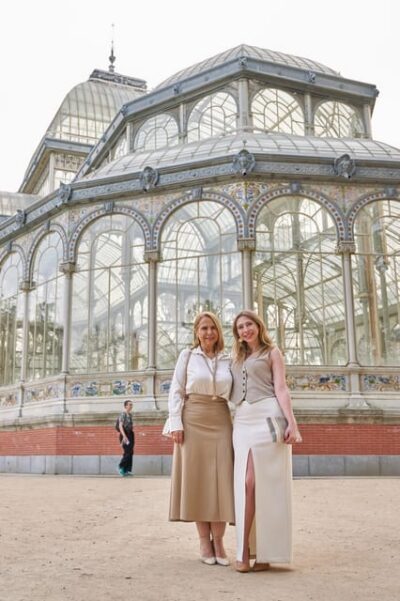

Private Photo Tour with a Professional Photographer
Read our review →
Private Photoshoot with a Professional Photographer
Read our review →
Browse the lists this tour appears in