
Reviewed · PRADO MUSEUM TOURS
Madrid: Prado Museum 3-Hour Private Tour
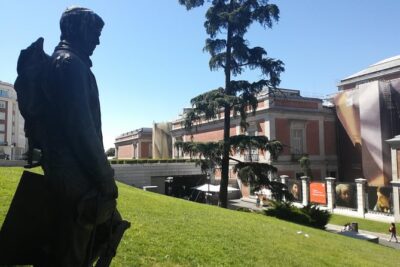
The Prado is one of Europe’s great art collections, but it can also feel like a maze. What makes this experience interesting is that it turns a giant museum visit into a tight, guided story starting at the Monument to Goya. I love the private pace, and I love that you can shape the highlights around what you actually want to see, whether that’s Goya’s dark themes or Ribera’s anatomical drawings.
Two things that really stand out in the way this tour is delivered are the guide style and the focus. Guides like Enrique and Marta are repeatedly praised for energy, clear explanations, and not rushing you. One possible drawback to consider is that the Prado’s main collection centers on older art, so if you’re hunting for modern or contemporary painters, you may find you still want another museum for that.
Key things that make this Prado tour worth your time

- Monument to Goya start: You begin with context before you even enter the museum.
- Skip-the-line entry: More looking, less waiting.
- Goya and Ribera in depth: Black Paintings themes and Ribera’s anatomical work are major anchors.
- A hidden 19th-century focus: You get access to an area tied to the El Casacón genre.
- Art-historian narration: Your guide connects paintings to Spain’s politics, royals, and historical shifts.
- Private group flexibility: You can customize what you linger on, and you will have a guide who can adjust on the fly.
Why the Monument to Goya matters more than you think

If you’ve ever walked into a museum and immediately felt lost, you’ll understand why this tour starts at the Monument to Goya. It’s a clever move. Instead of treating the Prado like a random wall of masterpieces, you start with a person who shaped Spanish art, and the guide uses that entry point to set the tone for the visit.
This matters because the Prado isn’t just famous for individual paintings. It’s famous for how Spanish history shows up in art, again and again. Once you have that lens, the museum feels less like a checklist and more like a conversation between artists and the world they lived in.
Starting outside also helps with flow. You get time to orient yourself, then step inside with purpose. That small setup can be the difference between trying to “see everything” and actually understanding what you’re seeing.
And yes, the guides are a big part of that. Several guests highlight guides like Enrique and Marta for turning complex art history into something that feels human, with energy and stories that connect.
More Prado Museum tours in Madrid:
- Madrid: Prado Museum Entry Ticket
★ 4.6 · 17,509 reviews - Madrid: Small Group of Prado Museum Tour & Optional Tapas
★ 4.6 · 2,437 reviews - Madrid: Prado Museum Guided Tour with Skip-the-Line Ticket
★ 4.5 · 2,018 reviews
The Prado in 3 hours: what a private plan changes
The Prado is huge. Even with the best intentions, it’s easy to spend your time walking and then realize you spent seconds in front of paintings that took years to create. A private 3-hour plan is built to solve that.
Here’s what you can expect from the structure:
- You’ll get a guided visit inside the museum for the full 3 hours.
- You get skip-the-ticket-line entry, which helps you stay focused on art instead of queue logistics.
- Your group is private, so the guide can pace you, explain at the speed you like, and choose the best path through the galleries.
Pricing is per group, and it’s not cheap on paper. But you’re paying for two things that add up fast at the Prado: entrance fees and a local art historian guide for your set time. Many museums include a guide in the price, but the quality and usefulness vary wildly. The repeated 5-star feedback here is that the guide’s explanations stick because they’re organized around meaning, not just facts.
One practical note from guest feedback: in at least one case, the tour ran about 45 minutes longer than scheduled because the guide kept the conversation going. That’s not a promise, but it does suggest that the guide pacing is flexible rather than rigid.
Your art historian guide: what people get right most often

This is where the tour earns its consistently high marks. Guests named guides including Enrique, Marta, Ana, and Ángel. The common thread is how they teach: with passion, with clarity, and with pacing that keeps you from feeling herded.
What you’ll likely notice:
- The guide does not just point. They explain why a painting looks the way it does, and how it connects to Spain’s story.
- The tone tends to be conversational. More than one guest notes that the experience felt like a back-and-forth learning moment, not a lecture.
- The guide adjusts based on what you want. The tour is explicitly customizable, and one guest even requested a focus on Spanish artists.
This matters because the Prado can be intimidating. Even if you love art, it’s hard to know what to look for if you don’t have someone translating the clues. A good guide helps you see brushwork and symbolism without turning it into homework.
If you like asking questions, this kind of format is your friend. The best parts often come when you pause and ask why something was painted that way, or what was happening in Spain at the time.
Stop 1: the walk-up at the Monument to Goya

The tour begins at the Monument to Goya. That first step sets expectations. You’re not starting inside and hoping you’ll find the right route and the right paintings. You’re starting with the historical figure that can anchor the whole experience.
You can think of this as your “orientation chapter.” The guide ties Goya to what you’re about to see. And the Prado’s collection is perfect for that approach because it spans different eras and styles while staying rooted in Spain’s changing identity.
Even the walking part is not filler. Guests report a pleasant walk to the Prado with helpful context about Madrid and its history along the way. That background makes later details in the galleries feel less random.
If you arrive a little early, take a moment to slow down and look around the area. The start point is designed to make you think about art as part of real life, not just museum objects behind glass.
A few more Madrid tours worth comparing
- Madrid: Reina Sofía Museum Entrance Ticket
★ 4.5 · 6,889 reviews - Madrid: Prado Museum Guided Tour With Fast Access
★ 4.8 · 1,785 reviews - Prado Museum Small Group Tour with Skip the Line Ticket
★ 5.0 · 1,738 reviews - Royal Palace & Prado Museum Skip the Line Guided Tour
★ 4.5 · 1,347 reviews
Inside the Prado: a guided 3-hour story across Spanish art

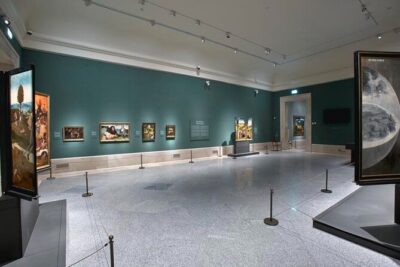
Once you enter the Prado, you’re in for a guided circuit that focuses on exceptional works rather than a full museum marathon. The tour’s sweet spot is depth. You’ll see major artists and themes, and you’ll also learn what to notice when you’re standing in front of the painting.
The highlights your guide is likely to build around include:
- Major works connected to Goya
- Works by Ribera, including anatomically focused drawings
- Other important painters from different periods
- A special look at 19th-century paintings tied to the El Casacón genre
You should also know the Prado’s strengths are older art. One guest specifically pointed out that the Prado’s core collection does not center modern or contemporary painters. If that’s your main interest, you may still want to plan a second museum like Reina Sofía for that later work. But if you want the foundations of Spanish painting, this is a strong place to start.
A useful way to think about the tour is this: the guide connects art style to what was happening around the artists. When that works, you start noticing patterns you would otherwise miss, like shifts tied to monarchy, religion, and political pressure over time.
Goya and Ribera: the themes that make the Prado feel personal

Two artists come up again and again for a reason: their work has a way of grabbing you emotionally, then challenging your brain with technique and symbolism.
Goya’s Black Paintings themes are a highlight. Even without a deep background, you can usually feel the mood in these works. With a guide, you get the historical and psychological context that explains why those images hit so hard.
Ribera’s anatomical drawings bring a different kind of power. This is where the guide’s explanations can completely change your reaction. You stop seeing only the subject matter and start noticing how observation, form, and realism combine.
Guests repeatedly describe the tour as energizing and engaging, especially during the Goya period. That matters because it can be easy to drift through masterpieces when you’re tired or overwhelmed. Here, the guide keeps the momentum by linking each work to the larger story of Spanish art and history.
You will likely leave with a different habit of looking. You’ll start asking the right questions in front of paintings, like:
- What does the artist want you to notice first?
- How does the style match the subject?
- What was going on in Spain that could shape the work?
A look at the hidden corner: the El Casacón 19th-century area

One of the most distinctive parts of this tour is that it includes a hidden area of the museum to see 19th-century paintings tied to the El Casacón genre. That’s not the kind of detail you usually find if you just walk in and wander.
Why this matters is simple: genre paintings can be a shortcut to understanding everyday life and social attitudes, and those attitudes often connect back to larger historical shifts. The guide helps you interpret what you’re seeing instead of treating it like a random detour.
This kind of access also makes the tour feel more specific. You’re not only doing the standard highlight reel. You’re getting a chance to see how the Prado’s collection holds different kinds of storytelling, from royal and religious themes to more scene-based, human subject matter.
If you like variety, or if you think of museum visits as more than just “spotting famous works,” this section is a big value add.
Customizing your route without losing the plot

The tour is designed to be customizable. That doesn’t mean you’ll lose structure. It means the guide can adjust what you spend time on, based on what you’re interested in.
In practice, customization usually shows up as:
- lingering longer over Spanish artists if that’s your priority
- choosing the most relevant works connected to the periods you care about
- pacing the visit so you don’t feel rushed
One guest described a request to focus on Spanish artists, and the guide tied chronological Spanish history directly to the artists. That’s exactly what you want if you find Spanish monarchy and political history a lot to hold in your head. It becomes a scaffolding for art, not an overwhelming list of names.
Also, you get language options. The live guide is available in Spanish, English, French, and Italian. That’s worth checking up front, because your language choice affects how easily you can participate, ask questions, and follow the connections.
Price and value: what $351 buys you in the real world

At $351 per group, this tour is firmly in the “pay for quality” category. But it can still be a great value if you care about getting the most out of a short museum window.
Here’s what your money is paying for, based on what’s included:
- Entrance fees
- A local art historian guide for 3 hours
- Skip-the-ticket-line entry
- A private group format
That combination matters at the Prado. Without a guide, you risk spending time deciding what to see, then seeing it too briefly to absorb meaning. With a guide, you get a directed path and explanations that frame the works so you remember them later.
Also, private tours reduce friction. You can stop when something catches your eye. You can ask why a work feels unsettling. You can shift the pace if your group includes someone who wants more time in front of fewer paintings.
One guest even noted the tour lasted about 45 minutes longer than expected. Again, not something you can count on, but it’s a sign that the guide is committed to making the time count.
Who should book this Prado private tour, and who might not
This tour is a great match if you:
- want a focused Prado experience in 3 hours
- love Spanish art, especially Goya and the surrounding historical themes
- want help learning how to look at paintings with technique and story in mind
- appreciate a private guide who can tailor the visit to your interests
It may be less ideal if your top priority is modern or contemporary painting. The Prado is not built around that. If you want that later story, you’ll likely want to pair this with a museum that specializes in modern collections.
It also helps if you enjoy conversation. Reviews consistently highlight guides who keep things lively and engaging without making you feel on a clock.
And one more practical detail: for groups of more than 5, you’ll receive headphones so you can hear the guide. For most private groups, that’s a non-issue, but it’s good to know if you’re bringing a larger party.
FAQ
FAQ
What is the duration of the Prado private tour?
It lasts 3 hours, and starting times vary. The experience includes a guided visit inside the museum for that time.
Where does the tour start?
The starting location is the Monument to Goya, then you head to the Museo del Prado for the guided portion.
Is the tour a private group?
Yes. It is a private group experience, with a live local art historian guide.
What languages are available for the live guide?
The guide is available in Spanish, English, French, and Italian.
What does the tour price include?
The price includes entrance fees and the local art historian guide. You also get skip-the-ticket-line entry.
Can children enter for free, and what do I need to bring?
If you have 2 adults with 2 children younger than 18, the children enter for free, but you should book just for 2 people and let the supplier know about the minors. All children must show proof of age at the ticket office. Bring a passport or ID card.
Should you book this Prado 3-hour private tour?
If you want the Prado to feel like a story you understand, rather than a museum you sprint through, I’d book it. The strongest reasons are the private format, the art historian guidance, and the specific focus that includes Goya and Ribera, plus that less obvious access tied to El Casacón. You also get skip-the-line entry, which keeps the day smooth.
I’d think twice only if modern or contemporary art is your main goal. In that case, treat the Prado as the older foundations, then add a second museum for the later chapters of art history.
If your group includes adults and kids, it’s also a good pick. Reviews mention that guides manage the pacing well even with younger visitors, which is exactly what you want in a museum this big.
Recently reviewed around Madrid
- Tour en Tuk Tuk por lo mejor de Madrid★ 3.4 · 13 reviews
- From Madrid: Toledo Day Trip with Cathedral and 8 Monuments★ 4.3 · 32 reviews
- From Madrid: Toledo Guided Day Trip with Cathedral Admission★ 4.4 · 79 reviews
- Madrid: Tasty Tapas Tour & Visit to a Terrace with Views★ 4.5 · 118 reviews
- Madrid: Spanish Tapas Tour★ 4.3 · 7 reviews
- From Madrid: Best of Sevilla Day Tour with Train Transfers★ 4.6 · 40 reviews
- Tapas Food Tour with Dinner in Madrid★ 5.0 · 6 reviews
- Small Group Prado Museum Guided Tour with Skip the Line★ 4.2 · 106 reviews
Prado Museum Tours, compared.
Small Group of Prado Museum Tour & Optional Tapas
Read our review →
Prado Museum Guided Tour with Skip-the-Line Ticket
Read our review →
Prado Museum Small Group Tour with Skip the Line Ticket
Read our review →
Royal Palace & Prado Museum Skip the Line Guided Tour
Read our review →
Prado Museum Guided Tour with Skip-the-Line Ticket
Read our review →Browse the lists this tour appears in