Reviewed · TOURS
Madrid: Hidden Street Art Tour
Madrid street art is good at feeling spontaneous, but in Lavapiés it also feels organized, intentional, and downright historical. This tour focuses on how graffiti and urban art grow street by street in one of Madrid’s most art-minded neighborhoods, with guides who are artists or art historians guiding the story. Lavapiés is the kind of place where the walls explain the city back.
I love the small-group setup, because you walk like a local and you have room to ask questions without getting swept along. I also like the local gallery stop at the end, since it connects what you saw outside to how the scene is supported inside.
One heads-up: at the gallery, the art you fall for is not included, so plan on paying if you want to buy.
Quick hits
- 2-hour walk built for foot-friendly momentum in Lavapiés
- Big murals and tiny hidden details, not just the obvious photos
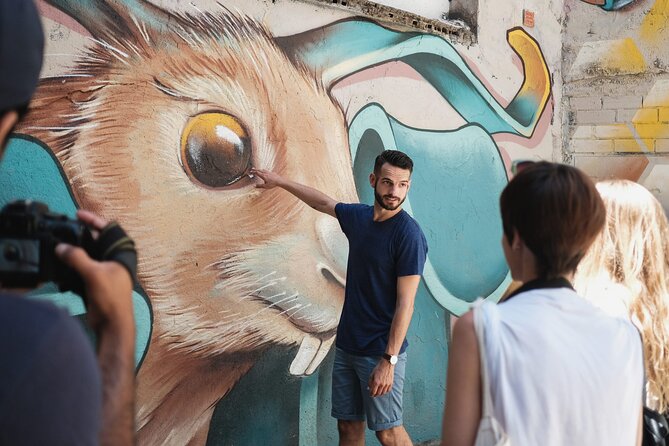
- Artist or art historian guide who explains the meaning behind the art
- Small group of up to 10, so the pace stays low-key
- Finish at a local gallery, where you can meet local artists
- Learn to read street art styles, from tags to paste-ups and urban sculpture
Why Lavapiés is the right place for Madrid street art
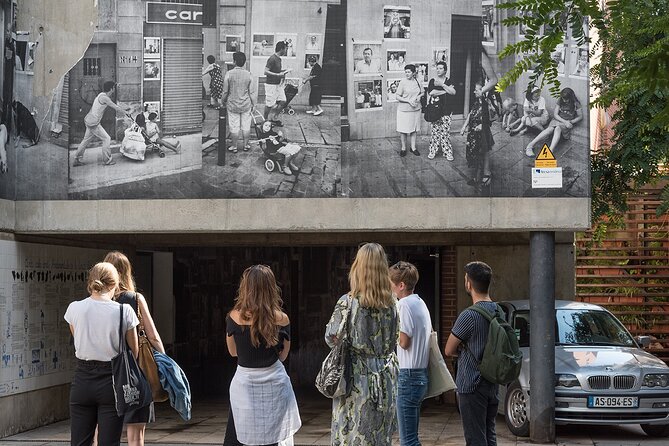
If your idea of street art is mostly about pretty walls and cool colors, this tour helps you see the other side too: street art as communication. Lavapiés is a neighborhood where you can feel layers of culture, migration, nightlife, and everyday life rubbing shoulders, and that mix shows up on the façades. The tour keeps you walking in that real rhythm, not hopping between far-flung landmarks.
What makes this area especially smart for a street art walk is that you do not just see one style. You see scale changes, like a huge mural that dominates a corner, followed by small work tucked into a less obvious spot. You also see how pieces belong to a moment, then get updated by new artists over time. The goal is to help you notice the difference between a throwaway tag and work with craft, concept, and context.
The neighborhood also gives you the social angle. You’re rubbing shoulders with locals away from the main tourist circuit, which means you are seeing street art where it lives, not where it’s staged.
More of Madrid worth an open tab:
- Madrid: Tour Bernabéu Entry Ticket
★ 4.5 · 21,573 reviews - Madrid: Prado Museum Entry Ticket
★ 4.6 · 17,509 reviews - Madrid: “Emociones” Live Flamenco Performance
★ 4.8 · 12,866 reviews
Meeting in front of Portomarín, and how to get your street-art eyes on
The tour meets in front of the Portomarín restaurant. If you arrive a few minutes early, you can duck in for a coffee or a refreshment and get warmed up for the walk.
Right away, you’ll get a sense of how your guide thinks about street art. This is not a lecture, it’s a guided street scan. The guides, who are artists or art historians, help you slow down just enough to see the choices behind the work: composition, symbolism, references, and the kind of message the artist is trying to land. That matters because street art is often read too fast, especially when you’re taking photos.
The group stays small, limited to 10 participants, so you’re not trying to photograph over shoulders the whole time. You also get more chances to ask, like why a certain symbol shows up in multiple places, or how different artists build their signature look.
Calle de Argumosa to Reina Sofía, art history right next to street art
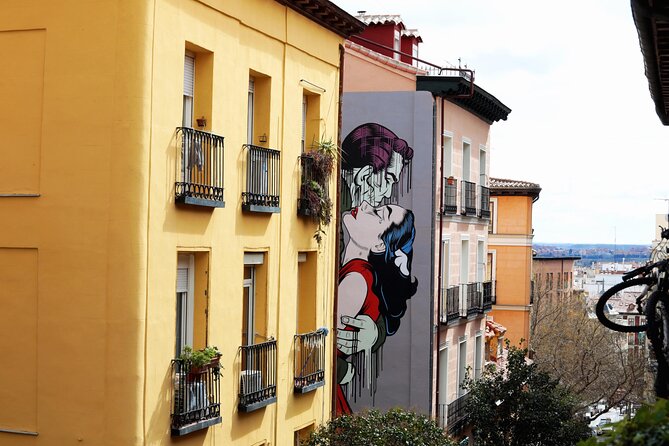
After the start, the walk heads to Calle de Argumosa for about 10 minutes. This part of the tour is a warm-up, a way to get your eyes calibrated. Even in a short stretch, you start learning the language of the walls, so when the tour turns toward more major murals later, you know what to look for.
Then you pass by the Museo Nacional Centro de Arte Reina Sofía. The stop here is brief, but the payoff is a good comparison moment. Museums can teach you how art is discussed and preserved, while street art shows you how art is made for the public, in real time, on real buildings. Even just seeing the museum as you walk helps you connect the street pieces to broader art conversations, without making the tour feel like a detour into something unrelated.
This is one of those quiet benefits that you only feel if you pay attention. You start to notice how street art borrows techniques from painting and graphic design, then translates them into something more immediate, more conversational, and often more political.
Mercado de Antón Martín, where everyday Madrid meets urban art
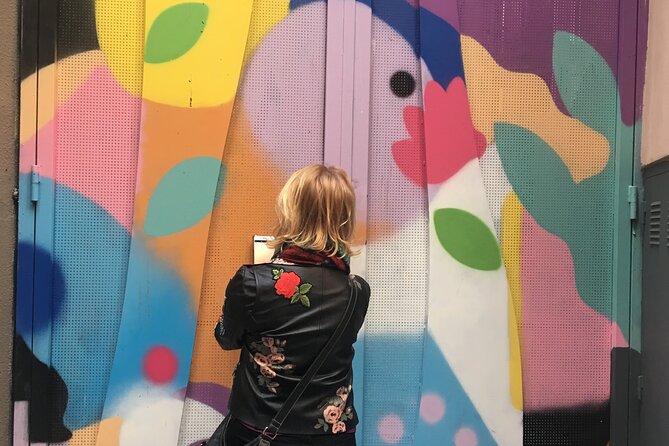
Next you reach Mercado Antón Martín for around 10 minutes. A market is a smart stop on a street art tour, because it reminds you that this neighborhood is not only visual culture. It’s daily life. You’re walking through Lavapiés, not only viewing it.
Markets also help you understand the audience for street art. These walls are built for people who pass by every day, people who might shop, eat, and talk right under the art. That’s different from art that’s locked behind museum rules.
Use this time to look up, not just ahead. You often catch details that are easier to see when you slow down near people and activity. It’s also a good place to reset your pace and hydration, since your total walk is about 2 hours.
Still in Madrid, a different sort of afternoon:
- Madrid: Panoramic Route City Tour
★ 4.1 · 12,259 reviews - Madrid: Live Flamenco Show with Food and Drinks Options
★ 4.5 · 9,901 reviews - Avila & Segovia Tour with Tickets to Monuments from Madrid
★ 5.0 · 9,762 reviews - Three Cities in One Day: Segovia, Avila and Toledo from Madrid
★ 5.0 · 8,402 reviews
Trampantojo cerámico de Lola Gil, a practical lesson in illusion and craft
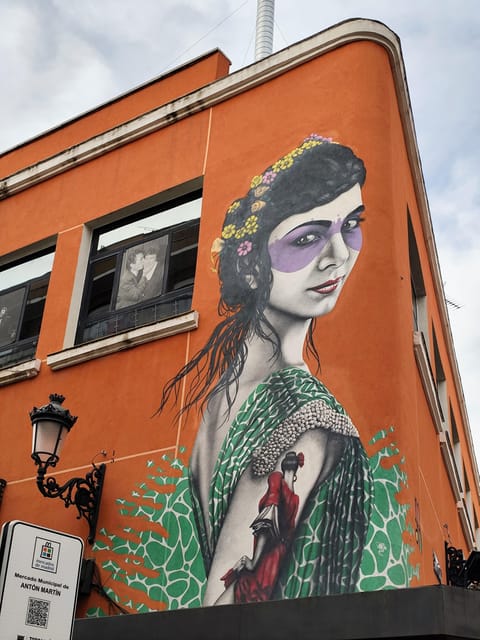
One of the most interesting stops is the Trampantojo cerámico de Lola Gil, where you’ll spend about 10 minutes. A trampaantojo is essentially a trick of appearance, a visual illusion that uses design and craftsmanship to make you see something that is not quite what it seems.
Why this matters on a street art tour is simple: you start seeing that street art is not only about spray paint and letters. It can include ceramic work, optical tricks, and approaches that feel closer to fine art and graphic design than to graffiti culture alone. Even if you do not know the technical terms, your guide helps you recognize the thinking behind the piece.
This stop also gives you a contrast to the bigger murals you’ll see later. Big walls often grab attention first. Tricky illusion art can reward you for looking longer. Together, they build a fuller picture of what street art in Madrid can be.
Calle de Embajadores, the walk where the murals feel earned
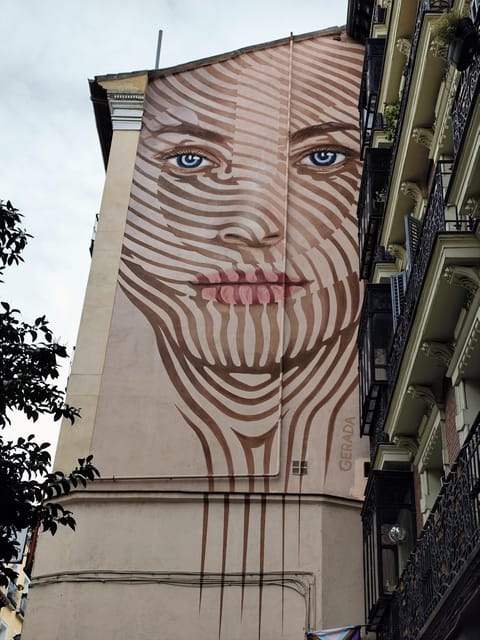
Calle de Embajadores takes up about 20 minutes of walking and sightseeing. This is where the tour starts to feel like its core, because you’re in a stretch where street art can be both prominent and layered.
You’ll see some of the biggest murals by internationally famous artists. But the tour’s real trick is that it doesn’t treat famous names as the entire story. You learn what the artists are working with, what symbols might be doing, and what cultural references can be tucked into the paint. That makes the murals more than Instagram backdrops. They become something you can interpret.
Just as important, you also look for the hidden pieces that are not the obvious guidebook picks. These are the smaller works, the details that might be a meter off the main line of sight, or the piece that looks like it was added by someone who knows the neighborhood’s rhythms. The guide helps you spot them, and then you learn how to separate styles, like tags and paste-ups, and how urban sculpture fits into the mix.
A small-group walk helps here. You are not just running from one wall to the next. You get time to stand and read a corner, and you can keep up without the group turning into a traffic jam.
The style decoder your guide teaches you, tags to paste-ups and beyond
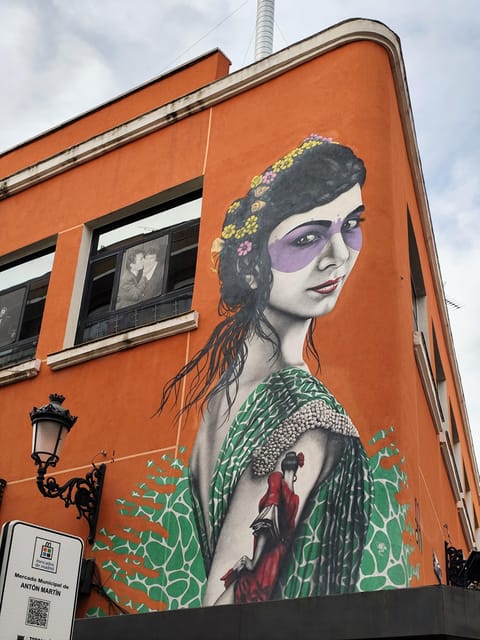
One of the most practical parts of this tour is the skills you leave with. You’ll learn how to decipher hidden messages on walls and how to recognize different street art styles.
Even if street art is new to you, your guide’s approach makes it manageable. You’ll get pointers for things like:
- How tags differ from larger written pieces in intent and skill
- What paste-ups tend to communicate, and how their look can shift depending on who made them
- How urban sculpture changes the way a space is used, because it becomes part of the neighborhood street view, not just an image
This is more than trivia. Once you learn a few visual cues, every walk in Madrid becomes more interesting. You stop seeing walls as blank backgrounds and start seeing them as a layered message board. That is the kind of learning that pays off immediately, long after the tour ends.
And because the guide is an artist or art historian, the explanations stay grounded. You’re not just being told what’s cool. You’re being told why it exists and what it’s referring to.
Finishing at a local gallery, where street art turns into community
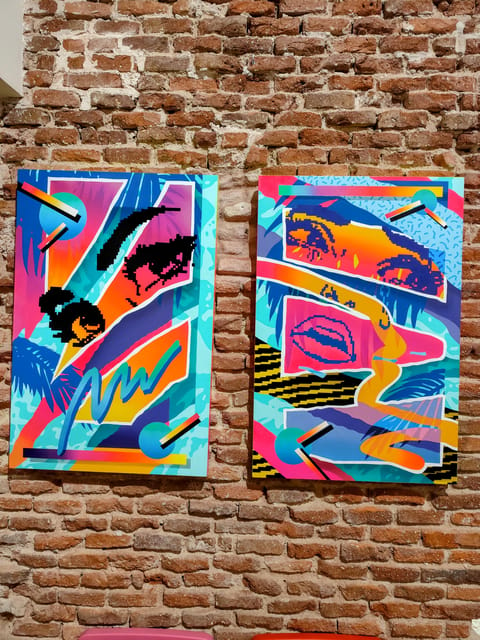
The tour ends with a visit to a local art gallery in the Lavapiés neighborhood. This is a key part of the value equation, because it connects outdoor street work to the broader art scene.
You might get the chance to meet local artists during the gallery visit. That’s the part I think most people underestimate. Seeing street art on a wall is one thing. Meeting the people connected to it turns it from decoration into real creativity and real livelihoods.
There is also a straightforward way to think about this stop. You’re not forced to buy anything, but the gallery is part of the experience, and the art there is available. If you fall in love with a piece, you pay for it yourself. Plan for that possibility if you like collecting.
Price and value: does $33 make sense for a 2-hour street art tour?
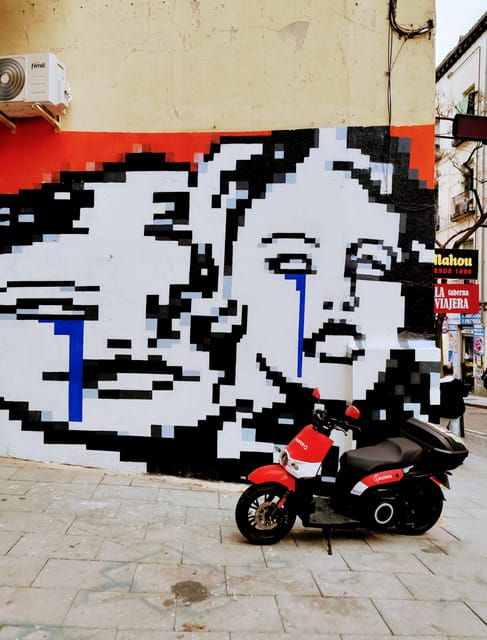
At about $33 per person for a 2-hour tour, this lands in a reasonable zone for what you get, especially in Madrid where walking experiences can range widely.
Here’s what you’re paying for that matters:
- A small group of up to 10, which keeps the experience personal
- Guides who are artists or art historians, meaning the talk is tied to the art itself
- A route that includes both major murals and less obvious pieces
- A finish at a local gallery, which goes beyond photo stops
Could you wander Lavapiés on your own for free? Yes, but you’d be missing the “how to read the walls” layer. Street art is visual, but meaning is selective. A good guide helps you notice what you’d otherwise skip, and you end up with a better understanding, not just more photos.
One more value note from the vibe of the tour itself: the walking pace is kept comfortable. People have described it as the right pace for hot afternoons, which is exactly what you want in a 2-hour neighborhood walk.
Who should book this Lavapiés street art tour
This is a great fit if you want:
- A guided walk in an authentic neighborhood, not a museum-style circuit
- Learning that feels practical, like how to recognize tags, paste-ups, and other street art styles
- A balance of big mural moments and small details you’d miss alone
- A final stop that connects street art to the local art community
It’s also a smart choice if you’re traveling with someone who wants something beyond monuments but still likes structure and explanation. The tour gives you both visuals and context, so you’re not choosing between a “pretty walk” and a “lecture.”
If you only want major famous murals and nothing else, you might find the hidden-detail approach takes a little extra time. But if you enjoy looking closely, that’s the point.
Should you book it, yes or no?
If you like walking, looking up, and learning to read street art, book this. The small group size, the guide’s background, and the gallery finish make it more than a photo hunt. You’ll leave with a mental filter for what you’re seeing, and that makes your next day in Madrid more fun.
Skip it only if you want a fast hit of the biggest names with minimal explanation. This tour is built for understanding, not just sightseeing speed.
If you do book, wear comfy shoes and bring a curious mindset. Lavapiés rewards you when you slow down, and this guide helps you do exactly that.
FAQ
How much does the Madrid: Hidden Street Art Tour cost?
The price is $33 per person.
How long is the tour?
The tour lasts 2 hours.
Where does the tour start?
You meet in front of the Portomarín restaurant.
What language is the tour guide?
The tour is in English.
How big is the group?
It is a small group, limited to 10 participants.
What is included in the price?
You get a curated route of the best street art and a local guide’s expertise.
Is wheelchair access available?
Yes, the tour is listed as wheelchair accessible.
Is visiting the local gallery included?
Yes, the tour ends with a visit to a local gallery.
Is there anything not included?
Any art you decide to buy at the gallery is not included.
FAQ
Can I cancel for a full refund?
Yes, you can cancel up to 24 hours in advance for a full refund.
Is there a reserve and pay later option?
Yes, you can reserve your spot and pay nothing today.
Recently reviewed around Madrid
- Tour en Tuk Tuk por lo mejor de Madrid★ 3.4 · 13 reviews
- From Madrid: Toledo Day Trip with Cathedral and 8 Monuments★ 4.3 · 32 reviews
- From Madrid: Toledo Guided Day Trip with Cathedral Admission★ 4.4 · 79 reviews
- Madrid: Tasty Tapas Tour & Visit to a Terrace with Views★ 4.5 · 118 reviews
- Madrid: Spanish Tapas Tour★ 4.3 · 7 reviews
- From Madrid: Best of Sevilla Day Tour with Train Transfers★ 4.6 · 40 reviews
- Tapas Food Tour with Dinner in Madrid★ 5.0 · 6 reviews
- Small Group Prado Museum Guided Tour with Skip the Line★ 4.2 · 106 reviews
Tours, compared.


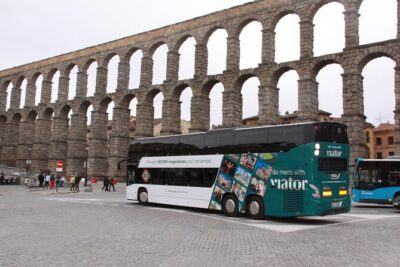
Avila & Segovia Tour with Tickets to Monuments from Madrid
Read our review →
Segovia and Toledo Tour, Alcazar, and Cathedral
Read our review →
Royal Palace Expert Guided Tour with Skip-the-Line
Read our review →
Toledo Tour from Madrid: Cathedral, Synagogue & St. Tome’s Church
Read our review →
Toledo Half or Full Day Tour with Optional Lunch from Madrid
Read our review →