
Reviewed · TOLEDO DAY TRIPS
Guided Tour of Underground Toledo
Underground Toledo turns the city streets into a map of the past, leading you into five buried places most people never see. I love how the tour tells the Three Cultures story using actual subterranean rooms, and I love the tight timing of about 20 minutes per stop. The main drawback is simple: it is not for people with mobility impairments, and audio recording is not allowed.
One standout is the guide. In my reading of the experience, the guide Mónica is praised for keeping things clear even when Spanish is limited, and for adjusting to a visitor using a cane.
Logistics are also straightforward. The tour starts at Plaza de Zocodover, look for the green umbrella, and you finish at Plaza Amador de los Ríos.
Key things to know before you go
- Exclusive underground access that is only possible with an accredited guide
- A real sense of daily life across medieval Christian, Muslim, and Jewish worlds
- Holy Brotherhood dungeons with preserved spaces and the famed Mangas Verdes jailers
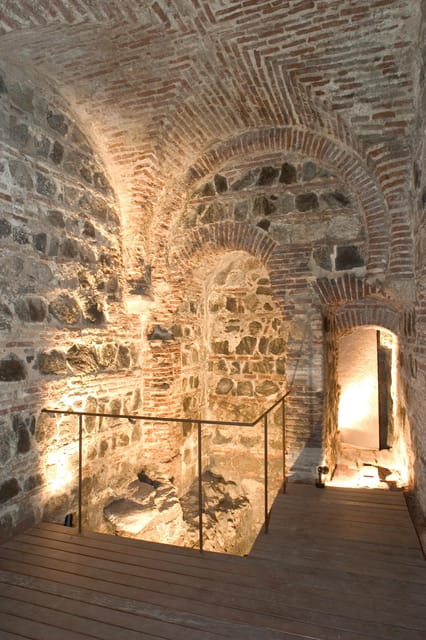
- Cenizal hammam visit tied to 10th-century hygiene and ritual life
- Casa del Judío miqvé dating to the 14th century, with legend plus history
- Roman Baths of Toletum staged as one of the largest in Hispania
Underground Toledo: what makes it worth your time
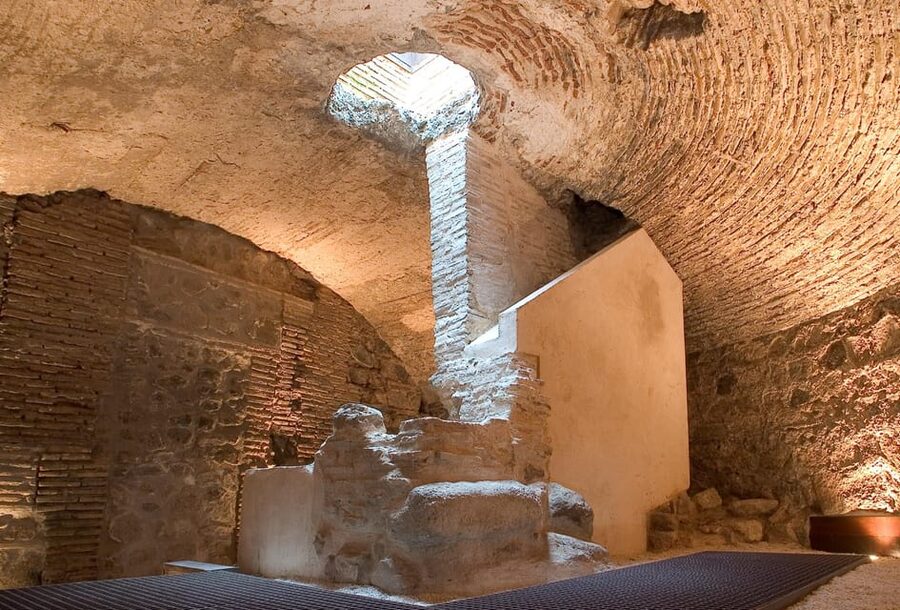
Toledo is famous for seeing history on top of the ground, in churches and viewpoints. This tour does the opposite. You follow the story beneath the streets, in spaces that were built for detention, bathing, water storage, ritual, and daily routines.
What makes it work is the mix of themes. You do not just walk from one landmark to another. You connect systems that kept people alive and moving, like how water was sourced and how neighborhoods handled hygiene. Then you layer in the human side, from prisoners living conditions to community rituals in the Jewish quarter.
The format also helps. Each stop is guided and stays short, so you are not stuck in one tight underground room for the full 2 hours. That makes it easier to absorb what you see, without getting mentally overloaded.
More Toledo day trips from Madrid:
- Guided Walking Tour of Immortal Toledo
★ 5.0 · 1,116 reviews - Toledo Private Tour with Licensed Local Guide
★ 5.0 · 884 reviews - Toledo: City Sightseeing Hop-On Hop-Off Bus Tour & Extras
★ 4.3 · 683 reviews
Where the tour starts, and how to find your guide
You meet in the center of Plaza de Zocodover, and you are looking for the guide holding a green umbrella. This matters because the meeting point is in the middle of a busy square. Arrive a few minutes early so you can spot the umbrella fast and start on time.
The tour is guided live, in Spanish, and it lasts about 2 hours. Starting times vary, so check availability for the day you want. The good news is that the structure is consistent, so you can pick a time that fits your schedule without worrying that the content changes.
You should also plan for a finish around Plaza Amador de los Ríos. The walk is part of the experience, since Toledo is compact and everything ties together once you connect the underground sites with the street-level story.
Stop at the Holy Brotherhood dungeons in Posada de la Hermandad
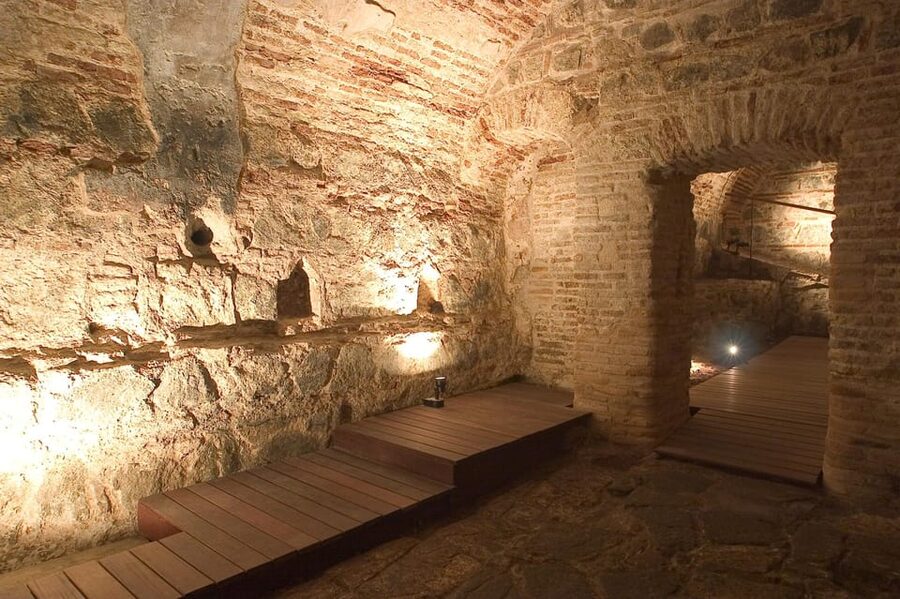
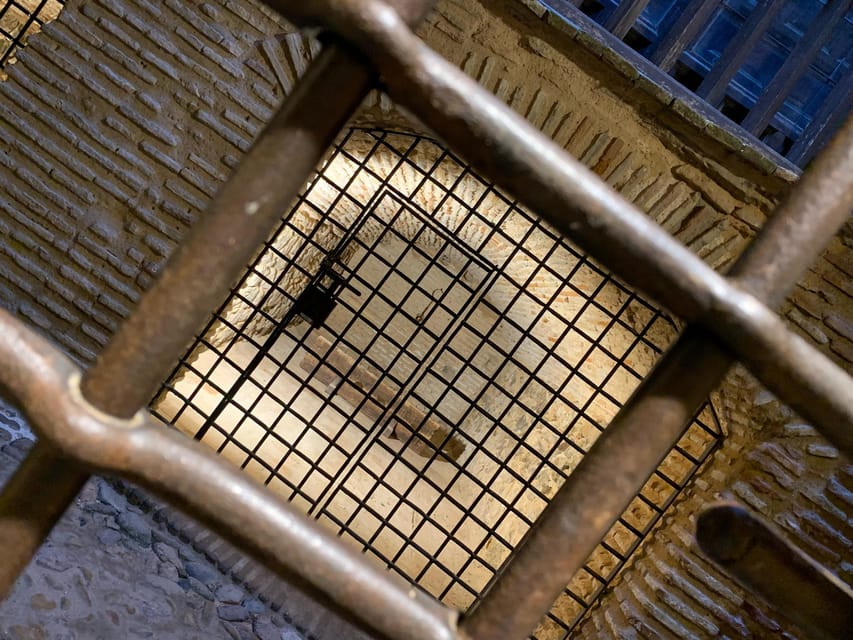
Your first underground look is into the Middle Ages, at Posada de la Hermandad. Here you visit the dungeons of the Holy Brotherhood, described as the only ones still preserved in Toledo.
This is not a generic dungeon stop. You get a guided walk that focuses on daily life for prisoners, not just dramatic stone walls. You also meet the Mangas Verdes, the famous jailers associated with this setting.
One practical note: dungeons can be damp and low-light. Even with a guide, you will want your eyes ready and your phone away, since audio recording is not allowed. If you are the type who likes to listen closely, this stop rewards that instinct.
What I like about starting here is the emotional baseline. After you understand the idea of confinement and justice, the rest of the tour feels more purposeful. Bathing spaces, ritual spaces, and water storage suddenly read as part of how people managed life, order, and survival.
Cenizal Baths: stepping into a 10th-century hammam
Next comes the Baños árabes del Cenizal, where the tour takes you down into the Cenizal Baths. This is the Muslim-era portion, tied to the 10th century, and it is framed as an authentic hammam experience.
Expect more than a tour of arches and stone. The guide explains hygiene practices, religious rituals, and social life connected to bathing. That combination is what makes this stop click. It is one thing to see a historic bathroom. It is another to understand it as a place where health, belief, and community intersected.
The underground setting changes the feel. You are not thinking about a modern shower or a spa. You are picturing a routine that helped people stay clean in a time without today’s plumbing. When the guide talks through that logic, it becomes easier to see why this kind of space mattered.
A drawback to consider: you may be moving in and out of tight passages and stairways, depending on how your group is paced. The tour is not suitable for wheelchair users and is not meant for people with mobility impairments, so take that seriously when you decide.
A few more Toledo tours worth comparing
- Madrid: Full-Day Guided Tour of Toledo with Cathedral Visit
★ 4.6 · 647 reviews - Night Guided Tour of Magical Toledo
★ 4.5 · 459 reviews - Toledo: Cathedral Tour with a Local Guide
★ 4.4 · 390 reviews - Toledo Private Tour with Local Guide. Pick up in Madrid optional
★ 5.0 · 277 reviews
Plaza del Salvador and the Well of the Savior story
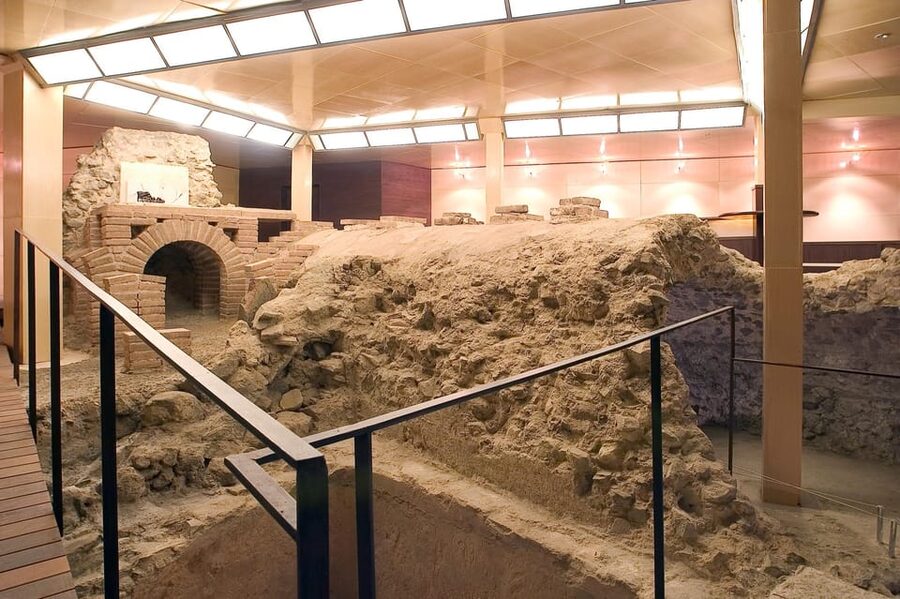
From the baths you move toward Plaza del Salvador, where you visit the Pozo del Salvador. Here the guide makes a smart point that I wish more tours would do: it helps you understand the difference between a well and a cistern.
The tour explains why both mattered for daily survival on the Toledo rock, especially when drought hit. The story is not just technical. It connects infrastructure to fear and planning. When the city has less water, people stop thinking about convenience and start thinking about storage and access.
This is also the stop where underground space feels most practical. You are seeing engineering that kept the city functioning. It is a quieter kind of excitement than dungeons or baths, but it is the kind that sticks, because once you understand water management, you notice it in other parts of the city’s layout.
If you like facts with context, this is the stop to listen hard. The details about obtaining drinking water under pressure make the rest of the tour feel less like separate “culture exhibits” and more like one continuous city story.
Casa del Judío: the 14th-century miqvé and the community life behind it
You then head to the Casa del Judío, which is tied to the Jewish quarter of Toledo. The highlight here is a miqvé dating back to the 14th century, visited under guided interpretation that blends legend and history.
This is a meaningful shift from the practical water talk. Water comes up again, but with a different purpose. A miqvé is not mainly about drinking or bathing for hygiene. It is a ritual space, and the guide frames it as part of community life.
This stop is a great reminder that the same city infrastructure can mean different things depending on religion, custom, and neighborhood. The tour’s structure makes that contrast easy to notice.
Also, this is one of the best places to ask questions. If Spanish is a challenge for you, you can still get a lot from watching how the guide connects objects to practices. One review notes that Mónica adapted well when the group did not understand much Spanish. That suggests she keeps explanations grounded and flexible.
Roman Baths of Toletum: your final underground time machine
The tour ends by visiting the Roman Baths of Toletum. This is framed as one of the largest in Hispania, and it is designed to transport you back to Roman life.
Here the guide helps you visualize day-to-day routines in a bathing culture built by the Romans. You are not only looking at ruins. You are hearing a guided explanation that links the size of the baths to the importance of public bathing in Roman society.
Starting with medieval dungeons and finishing with Roman baths creates a time loop effect. You start with later conflicts and daily punishment, then you move back toward earlier layers of the city. After that, your sense of Toledo becomes more stacked and less linear.
This last stop is also a good “memory anchor.” Once you have seen ritual water and practical water, then Roman bathing feels like one more interpretation of water, health, and social life across centuries.
Accredited access: why the underground sites feel special
The headline is access. These underground spaces are described as areas that can only be visited with an accredited tour guide. That matters because underground sites are often sensitive, sometimes fragile, and usually not open as casually as street-level monuments.
So you are not just paying for a guide. You are paying for a guided entrance to places that are otherwise off limits. That is the core value here.
And for me, this is where the price makes sense. At $15 per person for a 2-hour guided tour that includes entrance to five underground stops, you are getting a lot of time in guided interpretation plus access. It is hard to find many Toledo activities that give you this much structure at this cost.
The other value is coherence. The tour keeps returning to themes like water, ritual, and how people organized life. That makes each stop feel like part of one story rather than a checklist.
What to expect from the walking pace and format
The tour is a walking experience with guided entrances at each site. Each stop runs about 20 minutes guided, so you spend a good chunk of the total 2 hours underground or just transitioning between underground entrances.
You should be comfortable with stairs and uneven footing in old underground spaces. That is not a dramatic warning. It is the reality of historic Toledo.
Language also matters. The tour is live and in Spanish. If you read enough Spanish to follow the basics, you will likely keep up. If not, you can still benefit, especially if your guide explains clearly and adapts to the group, as Mónica is noted for doing in reviews.
One more rule: no audio recording. If you like to record lectures for later, plan to take notes instead. A quick notebook habit can work wonders here.
Who this tour is best for
This tour is best for you if you want Toledo to feel like a living city, not just postcards. You will enjoy it most if you like learning how everyday life worked, from hygiene routines to water storage to community ritual.
It is also a strong fit for people who enjoy guided storytelling over self-guided wandering. With underground spaces, it can be hard to know what you are looking at. Here, the guide gives you the missing context.
It may not be the right choice if you need wheelchair access or you have mobility impairments. The tour explicitly notes it is not suitable for wheelchair users, and that is a big enough limitation to take seriously before you commit.
If you are traveling with a cane, the key detail is that Mónica has been described as caring and adaptable. Still, do not assume it will be universally comfortable. The safe choice is to judge the route and your own ability to handle stairs and underground passages.
Price and value: $15 for five underground experiences
At $15 per person, you are paying for two things: access and interpretation. The access part is the main cost driver, because these are special underground spaces that are not just open for casual visits. The interpretation part matters too, because underground sites only make sense when someone explains the why behind the stones.
Is it a luxury tour? No. It is a well-focused city walk with structured stops. But value is not only about comfort. It is also about getting meaningful content for the time you spend.
If you are budget conscious and still want a “wow” factor, this is one of the better bets in Toledo. You get five separate underground experiences in 2 hours, and each stop has a theme that connects to the city’s Three Cultures story.
Should you book Underground Toledo?
Yes, if you want Toledo to go beneath the surface. This tour is for people who like the city explained through real underground spaces, not just surfaces and skylines.
Book it if you care about the Middle Ages and want to see preserved Holy Brotherhood dungeons, and if you want a structured look at Muslim-era bathing, Jewish ritual water, practical water storage, and Roman baths. The stop-by-stop format makes it easy to follow, and the guide Mónica is singled out for being personable and adaptable.
Skip it if mobility is an issue for you, since the tour is not suitable for wheelchair users and is not set up for mobility impairments. Also skip any plan that depends on audio recording, because recordings are not allowed.
If that sounds like you, lock in a time, show up at Plaza de Zocodover with the green umbrella, and let Toledo’s underground layers tell the story you can’t get from the street alone.
FAQ
What is the duration of the Guided Tour of Underground Toledo?
The tour lasts about 2 hours.
Where does the tour start?
The meeting point is Plaza de Zocodover, and you should look for the guide in the center of the square with a green umbrella.
Where does the tour end?
The tour finishes at Plaza Amador de los Ríos.
What underground sites are included?
The tour includes guided visits with entrance to five underground areas: Posada de la Hermandad (Holy Brotherhood dungeons), Baños árabes del Cenizal (Arab baths), Pozo del Salvador (well/cistern area), Casa del Judío (Jewish miqvé), and Termas Romanas (Roman baths).
Is the tour guided in English or Spanish?
The live tour guide provides the experience in Spanish.
Can I record audio during the tour?
No. Audio recording is not allowed.
How much does it cost?
The price is $15 per person.
Is the tour refundable if my plans change?
Yes, you can cancel up to 24 hours in advance for a full refund.
Recently reviewed around Toledo
- TOUR TOLEDO 3 CULTURAS ⭐⭐⭐⭐⭐★ 4.8 · 16 reviews
- TOUR “ TOLEDO TODO EN UNO ”★ 4.6 · 67 reviews
- Tour of the Inquisition and Witchcraft in Toledo★ 3.3 · 13 reviews
- The Enchanted City: A Mysterious Tour of Toledo★ 4.2 · 29 reviews
- TOLEDO: Private Tour With Official Guide★ 5.0 · 6 reviews
- Toledo: Three Cultures Walking Tour in Spanish★ 4.4 · 66 reviews
- Toledo: Private Walking Tour with a Local Guide★ 5.0 · 5 reviews
- Toledo : Private Walking Tour with a Pro guide★ 4.6 · 4 reviews
Toledo Day Trips, compared.

Three Cities in One Day: Segovia, Avila and Toledo from Madrid
Read our review →
Segovia and Toledo Tour, Alcazar, and Cathedral
Read our review →
Toledo Tour from Madrid: Cathedral, Synagogue & St. Tome’s Church
Read our review →
Toledo Half or Full Day Tour with Optional Lunch from Madrid
Read our review →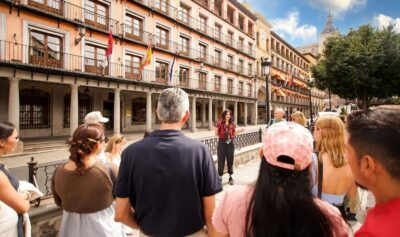
Toledo & Segovia Full Day Guided Tour with Alcázar
Read our review →

Toledo Tour & Vineyard Walk with Wine Tasting from Madrid
Read our review →Browse the lists this tour appears in