
Reviewed · DON QUIXOTE WINDMILL TOURS
Don Quixote Quest Experience in Madrid
This Don Quixote Quest experience is interesting because it mixes Madrid walking with a game-style scavenger mission you control. You download the apps, follow the on-screen prompts, and you get a route that feels a lot more playful than a standard stroll. I like that it is offline, so you can keep your phone ready without hunting for signal.
Two more things I like: it is private just for your group, and it is built around major literary and art landmarks tied to names like Goya and Cervantes. One possible drawback is that clues depend on street-level details, and if construction is active, some instructions can feel a bit out of date, so you may need to slow down and improvise.
Key things to know before you go
- Offline play with the app: you do not need internet to run the game.
- Start any time, pause anytime: the game is flexible, and you can resume later.
- Private game-meets-tour format: it is just for your group, not a big shared bus crowd.
- Writer-focused route: you hit sites connected to Cervantes and Lope de Vega, plus monuments around the final stretch.
- Free for kids: it is designed as a family-friendly activity.
- Construction can change small details: if you see barriers, follow the closest safe path and keep going.
Don Quixote Quest in Madrid: private game meets literary landmarks
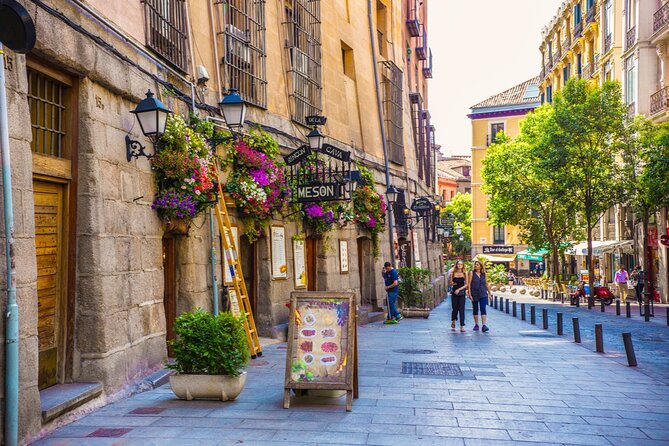
If you like Madrid but you also like figuring things out yourself, this format is a good match. Instead of listening to a guide talk start to finish, you get challenges that nudge you to look up, look closer, and move through the center at a steady walking pace. The game covers a compact stretch in Centro, then funnels you toward Plaza de Sta. Ana.
The feel here is part independent travel, part guided structure. You choose your start hour, you can take breaks, and the whole thing is designed to take about two hours. That is long enough to feel like you actually explored, but short enough that you can still do museums, tapas, or a second walk after.
And because it is tied to Spanish writers and artists, you are not just collecting points. You are also picking up quick, useful context about what you are seeing. Expect the prompts to connect you to major names, with Cervantes and other Golden Age figures on the path, plus connections to Goya mentioned in the overall concept.
More Don Quixote windmill tours:
- Madrid: Don Quixote de la Mancha Windmills & Toledo Tour
★ 4.9 · 254 reviews - Tour of the Don Quixote Windmills of La Mancha and Toledo with Lunch
★ 5.0 · 209 reviews - Windmills of Don Quixote Wine Tour & Tasting from Madrid
★ 5.0 · 85 reviews
Value check: is $8.40 per person worth it?
At $8.40 per person, this is one of those Madrid activities that costs less than a single museum ticket, yet can structure a full walking block. You are paying for two things: a self-guided route and the game mechanics that keep you moving. That is often the difference between a random walk and a walk that makes you notice the city.
Here is where the value really shows up for most people:
- If you already know you will be walking anyway, the game gives that walking a purpose.
- If you do not want to pay for a live guide or you prefer to go at your own speed, the prompts replace some of that structure.
- If you are traveling with family or friends, the game keeps everyone engaged without forcing a single pace.
It also helps that the tour is always bookable and open 24/7, every day. That means you can slot it into a day that already has plans, instead of rearranging your whole schedule. Add the private group setup, and you get a smoother experience than you would with large shared tours.
Starting any hour with a mobile ticket and offline play
This is a mobile ticket experience, and the key convenience is that you can play offline. So if you arrive with limited data, or you just hate Wi-Fi hunting, you are covered.
Timing is also unusually flexible. The game is available to book and open all day, from 12:00 AM to 11:59 PM. In real life, that means you can do it in softer light at your convenience, or fit it between other attractions.
The “take a break and resume later” approach is underrated. The route is compact, but Madrid street life is not perfectly predictable, especially near major plazas. If you get hungry, want a quick coffee stop, or need a bathroom break, you do not have to abandon the plan. You can pause, continue later, and still finish the loop.
One more practical note from experience with self-guided games: keep your phone battery in mind. Offline mode helps, but the app still needs power. Bring a small portable charger if your days run long.
From Plaza Mayor to Plaza de Sta. Ana: the route, stop by stop
The walk starts at C. del Marqués Viudo de Pontejos, 17, Centro, 28012 Madrid, Spain. It ends at C. del Príncipe, 2, Centro, 28012 Madrid, Spain, and the game itself finishes in the middle of Plaza de Sta. Ana by following the precise instructions inside the app.
The whole thing takes about two hours, but the game gives you permission to go slowly. That is important, because each stop is about observation, not speed.
Still in Madrid, a different sort of afternoon:
- Madrid: Tour Bernabéu Entry Ticket
★ 4.5 · 21,573 reviews - Madrid: Prado Museum Entry Ticket
★ 4.6 · 17,509 reviews - Madrid: “Emociones” Live Flamenco Performance
★ 4.8 · 12,866 reviews - Madrid: Panoramic Route City Tour
★ 4.1 · 12,259 reviews
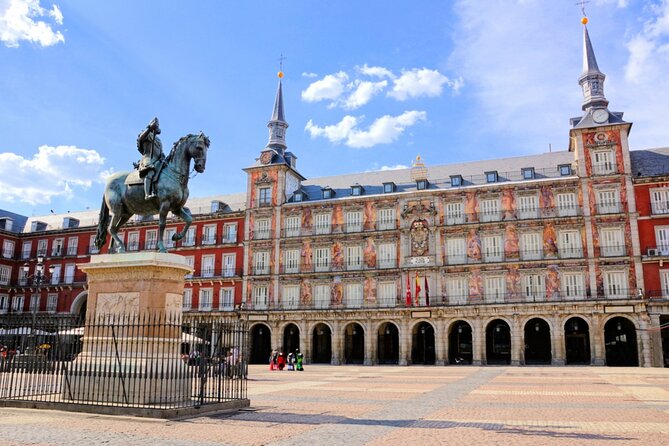
Stop 1: Plaza Mayor, the center of Old Madrid
You begin at Plaza Mayor, Madrid’s big central public square. It used to be the core of Old Madrid, and it dates back to the reign of Philip III. If you stand in the right spot, you get a “here is Madrid” overview fast.
At this first challenge, you look around to find the answer to the prompt so you can move on to the next location. The nice part is that Plaza Mayor is open and easy to read from a distance, so you can figure out the game rhythm quickly without feeling lost.
Puerta Cerrada area: the city wall memory
Next up, the game focuses on the Puerta Cerrada story. This is tied to a Christian wall of Madrid, with the idea that a gate opened there during the Middle Ages and Renaissance, then was demolished in 1569 around the time of Isabel de Valois’s entry into the city as wife of Felipe II.
What to do here: slow down and look for details the prompt points you toward. This is the kind of stop where the lesson is not just what happened, but how cities layer their past. Even if you only catch a few small clues, you start seeing Madrid as a built-over timeline.
The 1926 square tied to the customs area and early banking
Then you move to a square created in 1926 after the demolition of several buildings around Old Customs and adjacent areas. The prompt context also mentions the Convent of the Trinitarios Calzados and the fish market of Almidón, then shifts to the palace of the Five Major Guilds built in the 17th century.
Later, that palace became tied to the Bank of Isabel II. When it merged with the bank of San Carlos, it helped give rise to the first headquarters of the Bank of Spain. Today, the description says that at the start of the XXI century it houses the General Directorate of the Treasury.
This stop is useful because it explains how administrative power can move into historic buildings. In other words, you are not just seeing stone. You are seeing how Madrid’s systems changed.
Iglesia de San Sebastián on Calle de Atocha
The route then brings you to Iglesia de San Sebastián, a 16th-century church located on Atocha Street, number 39. The name comes from a devotional chapel found along the route to the Basilica of Nuestra Señora de Atocha, founded in 1541.
For the game, you again look around to find the prompt answer and move forward. For you, this is a good moment to notice the way Madrid churches often connect to walking paths and older devotional routes. Even if you have seen plenty of churches elsewhere, the “why it is called that” angle is a quick way to keep the stop from feeling generic.
House-Museum of Lope de Vega: writing life in plain sight
Next is the House-Museum of Lope de Vega, in the former home of Lope de Vega. The sixteenth-century house was bought by the writer in 1610.
This is a strong stop for anyone who likes literature and wants something more grounded than a quick landmark photo. You are not just learning a name. You are stepping into the idea of where a Golden Age writer lived, at least through the museum lens.
In the game, you look around for the answer, then continue. The museum connection matters because you can then decide whether you want to spend extra time there on your own after the quest ends.
Cervantes childhood home museum: Don Quixote in the real world
After Lope de Vega, the game leads you to the childhood home of Miguel de Cervantes Saavedra, now housing a museum dedicated to him. This museum recreates customs, traditions, and everyday life from the 16th and 17th centuries.
The museum also includes a major bibliographic collection, with editions of Cervantes’s work from different periods and languages, shown in a temporary exhibition room. The description also lists ongoing activities such as workshops for children and teenagers, conferences, plays, and musical shows.
For me, this is one of the biggest “why do this at all” moments, because it turns your game clues into a doorway. You do not have to guess about whether Cervantes is an important figure. The museum itself is built to show you the scope, not just the headline.
Cervantes burial at the convent, and the 2015 forensic find
Then the route points you toward the burial story. Cervantes was buried at a convent in 1616. His remains were temporarily transferred elsewhere in 1673 during rebuilding, and then they were lost until forensic scientists discovered them in 2015.
This is a great prompt subject because it adds a modern twist to something that sounds purely historical. For you, it also explains why cities can keep secrets for centuries and then reveal them later.
In practical terms, expect the challenge to focus on visual details nearby that connect to the story. Keep your eyes open and do not rush the reading.
Plaza de Sta. Ana: monuments, terraces, and the finishing point
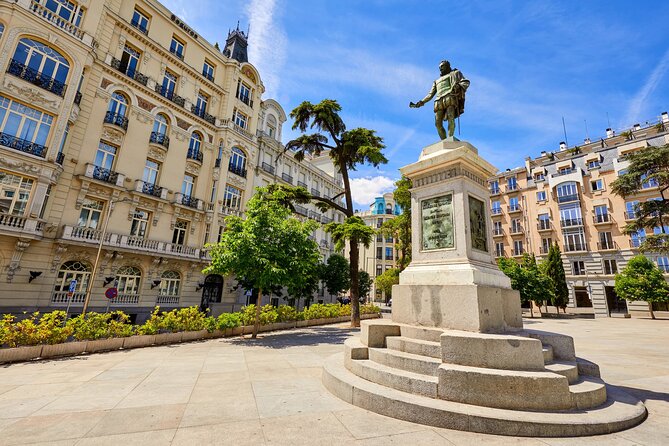
The game ends in the middle of Plaza de Sta. Ana. This square includes monuments to Pedro Calderón de la Barca and Federico García Lorca, along with restaurants, cafes, and tapas bars. The terraces cover most sides of the plaza, so it is a natural place to pause after two hours of walking.
Even if you do not make it through every stop in one continuous stretch, the ending is rewarding because Plaza de Sta. Ana is built for lingering. You can wrap up the quest, then grab a drink or a snack and watch the square for a while.
What this experience is best at, and who should enjoy it
This is one of those Madrid activities that works on multiple travel styles.
If you are traveling with friends, it is a fun way to keep conversation going while everyone looks around. It also creates natural “meet back here” moments because each prompt sends you to a new location.
If you are traveling with kids, the value rises. It is free for kids, and the game format helps younger travelers stay focused. You are not trying to hold attention by explaining everything. The prompt structure does that for you.
If you are a literature or arts fan, you get the payoff of writer and artist connections. The route includes major stops tied to Cervantes and Lope de Vega, plus monuments in the final plaza for Calderón de la Barca and Federico García Lorca. The experience is not a classroom lesson, but it gives you enough context that you can choose what to explore deeper later.
And if you are a resident, it is still useful. The whole idea is that you can find corners and stories you might miss in a typical day. Madrid is full of small details, and the game trains your attention on them.
A quick reality check: clues, construction, and staying relaxed
The best version of this experience is when the street view matches the prompts cleanly. The only thing that can mess with your pace is construction or street changes. The route depends on you looking around and matching the challenge to what is physically there.
So here is how to stay in control:
- Slow down at each stop and read the prompt once or twice before you sprint.
- If you hit barriers, keep moving safely and look for the closest matching detail, then continue.
- Plan for the possibility that one instruction might not perfectly match what you see.
This is not a reason to skip the quest. It is just a reason to treat it like an interactive city walk, not a lab experiment.
Should you book Don Quixote Quest in Madrid?
I think it is a strong book if you want a low-cost, flexible Madrid activity that gets you seeing real places, not just ticking boxes. The offline setup, the private group feel, and the ability to start any hour make it easy to fit into a day that already has plans.
Book it if:
- you like games or you want a playful way to explore Centro
- you are traveling with family and want everyone involved
- you want a structured route without paying for a live guide
- you are curious about Cervantes and other writers, even if you are not a hardcore literature person
Skip it if:
- you hate phone-based self-guided prompts
- you need a fully guaranteed, construction-free route with no improvising
- you want deeper museum time as the main event, since this is a game with walking time, not a museum ticket package
If you are on the fence, do this on a day when you have a little buffer after it. Two hours flies by fast, and Plaza de Sta. Ana is a perfect place to keep the evening rolling.
FAQ
How long is the Don Quixote Quest experience in Madrid?
The game takes about 2 hours, though you can take your time.
Where does the experience start and end?
It starts at C. del Marqués Viudo de Pontejos, 17, Centro, 28012 Madrid. It ends at C. del Príncipe, 2, Centro, 28012 Madrid. The game finishes in the middle of Plaza de Sta. Ana based on the in-app instructions.
Do I need an internet connection to play?
No. You can play offline and you do not need internet connection.
What ticket do I receive?
You get a mobile ticket.
Is it a private experience?
Yes. It is private, meaning only your group participates.
Can I start at any time of day?
Yes. The experience is open 24/7, and you can start at any hour.
Is it good for kids?
Yes. It is free for kids, and it is designed as a family-friendly activity.
Is there a physical guide with you?
No. This is a game-meets-tour format, and the experience does not include a physical tour guide.
What if I need to take a break?
You can take a break at any time and resume later.
What is the cancellation policy?
You can cancel for free up to 24 hours in advance for a full refund. If you cancel less than 24 hours before the start time, it is not refunded.
Recently reviewed around Madrid
- Madrid: Treasure Hunt Experience★ 5.0 · 4 reviews
- Madrid Spanish Omelet Cooking Class and Bottomless Wine brunch★ 5.0 · 50 reviews
- Avila and Segovia private day trip with hotel pick up from Madrid★ 5.0 · 68 reviews
- Prado Museum Tour with ticket, small group & expert guide★ 5.0 · 6 reviews
- Bernabeu Stadium Private Guided Tour★ 3.5 · 4 reviews
- Spanish Group Course in Madrid, Spain: 20 Lessons★ 5.0 · 11 reviews
- Self-Guided Audio Tour – Cervantes Literary Experience in Madrid★ 4.0 · 6 reviews
- Madrid Bike Tour with Churros and Wine, Ham, and Cheese Upgrade★ 5.0 · 8 reviews
Don Quixote Windmill Tours, compared.
Don Quixote de la Mancha Windmills & Toledo Tour
Read our review →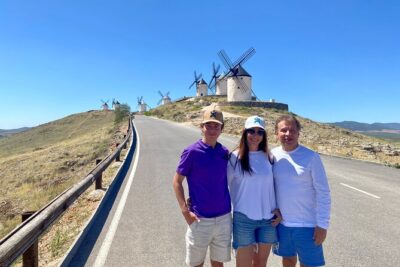
Tour of the Don Quixote Windmills of La Mancha and Toledo with Lunch
Read our review →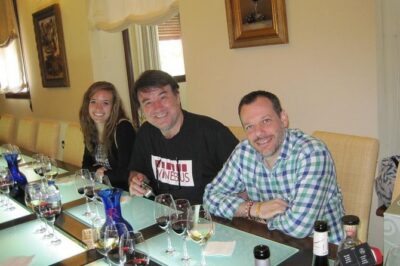
Windmills of Don Quixote Wine Tour & Tasting from Madrid
Read our review →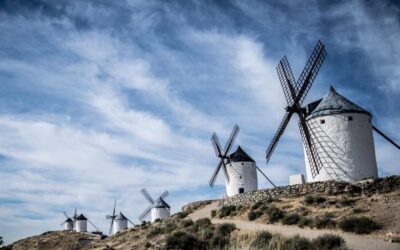
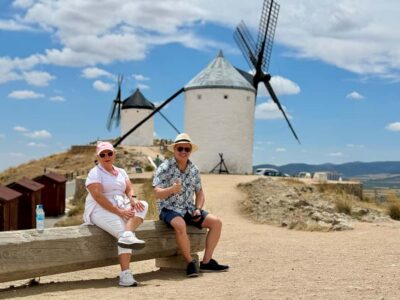
Toledo, Windmills, Winery Small Group Tour with Lunch from Madrid
Read our review →
Influential Toledo & Bookish Consuegra, Full Day Tour from Madrid
Read our review →
Browse the lists this tour appears in