
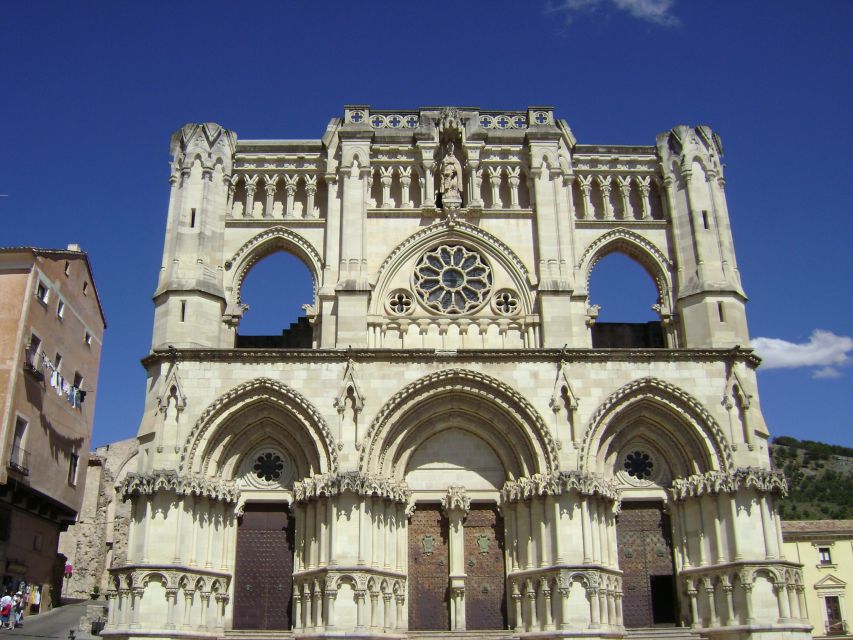
Reviewed · CUENCA DAY TRIPS
Cuenca: Medieval Old Town
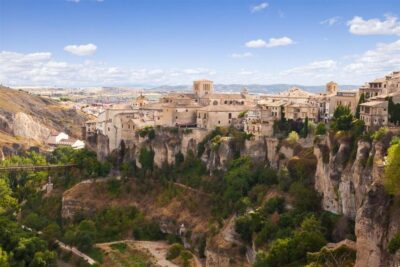
Cuenca’s medieval old town is fascinating because the whole place seems built to cling to a cliff, like the city is perching in the Eagle’s Nest. You get the drama up close, with UNESCO status granted in 1996 for good reason. It is the kind of stop where the streets make instant sense, even if the architecture looks a little too unreal.
I particularly love the panoramic gorge views over the Júcar and Huécar rivers. I also like how the tour focuses on the hanging houses and other medieval details, so you leave with more than a postcard memory.
One consideration is that the tour runs only in Spanish, so if you do not have conversational comfort, you might feel less connected. Also, it is not suitable for wheelchairs or people with mobility impairments because the old-town streets are not set up for that.
Key Highlights You’ll Notice Fast
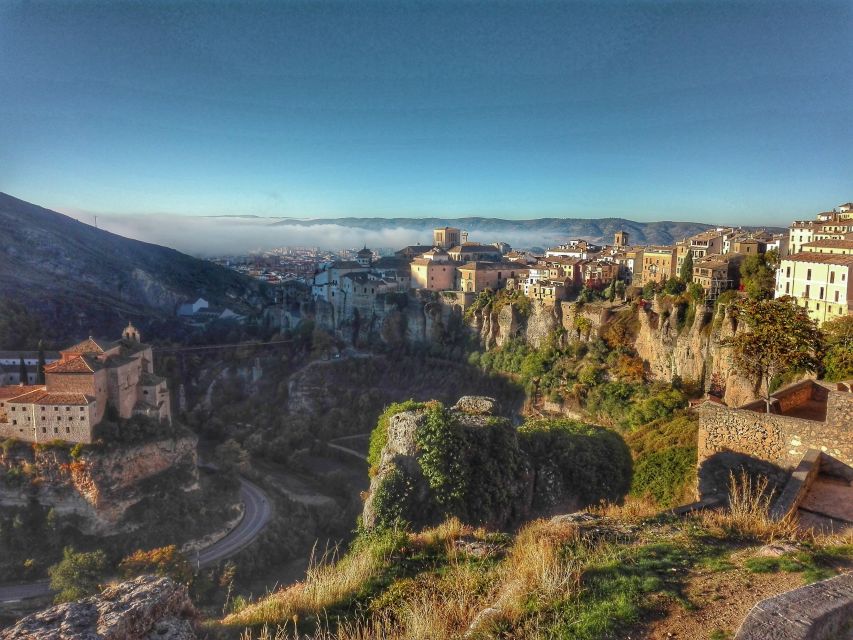
- Hanging Houses that look impossible, perched over the drop
- Júcar and Huécar gorge panoramas from strategic viewpoints
- UNESCO-listed medieval core and what the protection actually means on the ground
- Church and ecclesiastical architecture that adds context to daily life
- A 16th-century 12-story apartment story that reframes what you think the city was like
Why Cuenca Feels Like the Eagle’s Nest (Even in a Short 2 Hours)
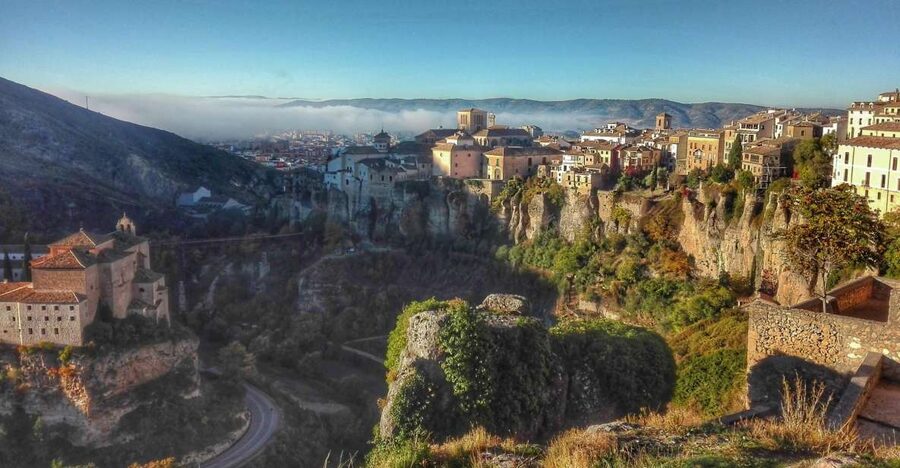
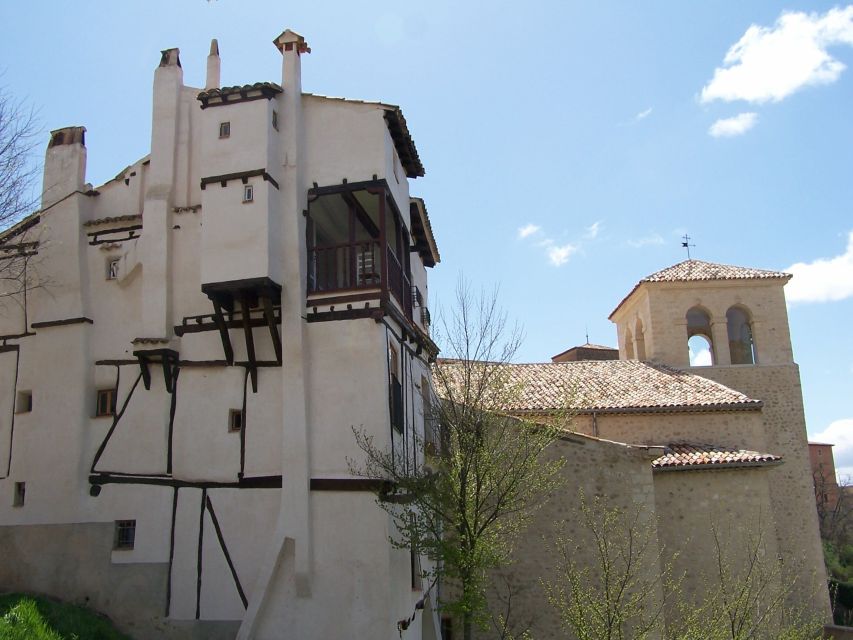
Cuenca is perched on a natural rock, and the slopes fall away into deep gorges carved by the Júcar and Huécar rivers. That setting is not scenery on the side, it is the organizing logic of the whole old town. When you walk there, you start to understand why buildings needed to be clever, compact, and stacked in ways that look strange until they make total sense.
This guided walk is a smart way to grasp the city quickly. In two hours, you get the big visual beats: the dramatic drop, the carved-out streets, and the “how did they build this?” architecture. Then you add local context about medieval life, and suddenly those angles and terraces feel purposeful rather than random.
The “Eagle’s Nest” nickname is useful because it sets expectations. You are going to be moving through a town built on ledges and levels, with viewpoints woven into the route. If you like historic places where geography shapes the human story, this fits your style.
More Cuenca day trips from Madrid:
- Madrid: Cuenca Day Tour with or without Enchanted City
★ 4.8 · 398 reviews - Tour from Madrid to Cuenca and the Enchanted City
★ 4.5 · 191 reviews - Cuenca and the Enchanted City Full Day Tour from Madrid
★ 5.0 · 70 reviews
Meeting Point Below Cuenca City Hall Arches, Look for the Red Uniform
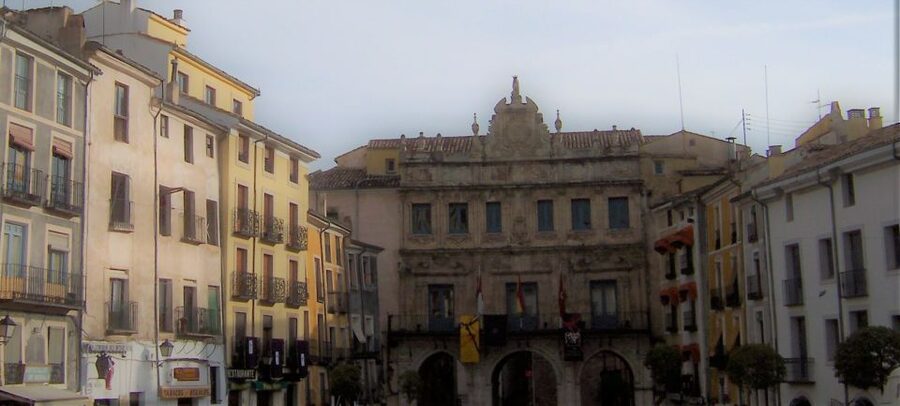
Start is easy to find if you go in calm and arrive early. Meet just below the arches of Cuenca City Hall, next to the tourist office, and look for guides wearing a red uniform. Do not show up right at the start time. Aim to be there at least five minutes early so you can join the group without rushing.
No pickup service is offered, so you will want to reach the city center on your own. Once you are there, the guide will steer you into the maze of narrow streets and keep the focus on what matters: key landmarks, the hanging architecture, and the best chances for those gorge panoramas.
It helps to set a small mental goal. Try to plan what you want most: views, hanging houses, or the story behind the tall apartments. With that in mind, you will follow the guide’s pacing better and ask clearer questions when you want more detail.
A UNESCO Medieval Core Walked Through One Human Story at a Time
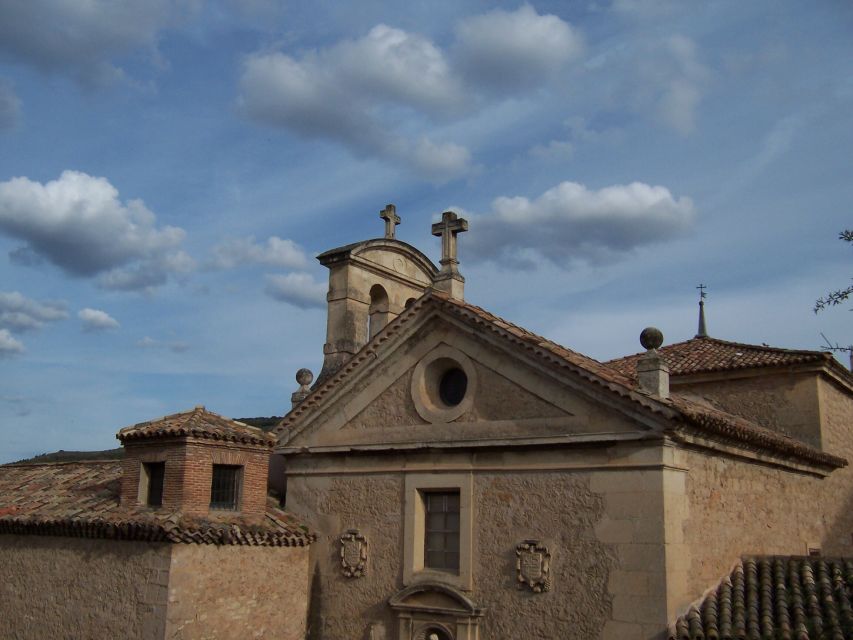
Cuenca’s UNESCO designation in 1996 is not just a label. It is a recognition that the medieval city plan and its architecture are still readable today, even when you are walking quickly. The tour’s job is to make that “readability” happen for you, by pointing out what to look for and tying it to the city’s setting.
You will get an overview of how the old town developed on the rock and why buildings took shape the way they did. As you move street to street, the guide explains how ecclesiastical architecture and everyday spaces fit together. That matters, because Cuenca is not only pretty. It is a working example of how medieval communities organized their lives in limited space.
I also like the rhythm of a guided walk here. Instead of stopping at one landmark for too long, you keep progressing, so the city stays in motion. If your Spanish is solid, you will catch more of the nuance. If your Spanish is rusty, you can still rely on the visual guideposts: hanging structures, church forms, and cliffside viewpoints.
Hanging Houses and Narrow Lanes, Where the City Looks Literally Suspended
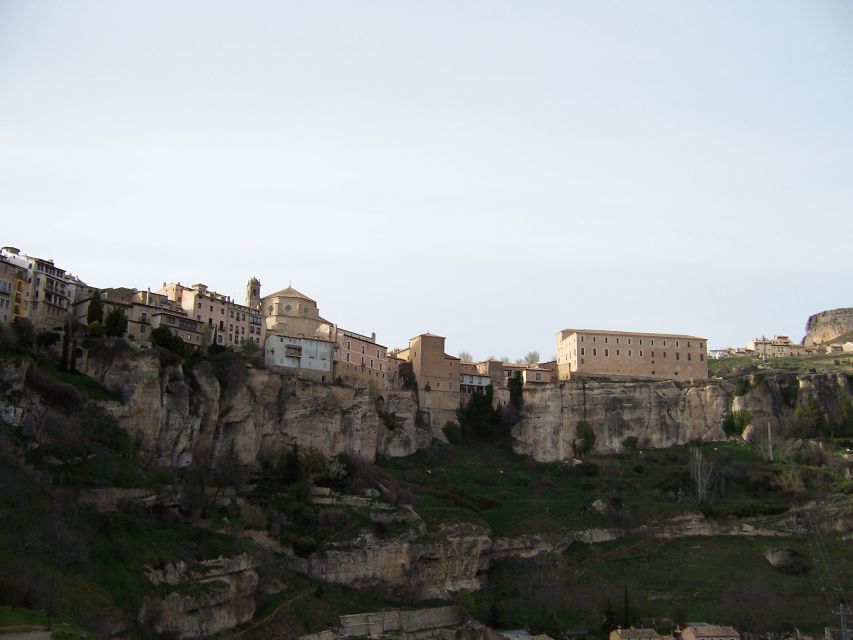
The star element of the experience is the hanging architecture. Cuenca’s hanging houses feel implausible at first glance, because they appear to float over the drop. On this tour, you get them as a concept and as a physical reality, with the guide showing you what makes them work in practice.
What you will likely notice is how the town’s layers create built-in “stages.” Streets shift to new levels, doorways and windows line up in ways that feel theatrical, and you keep getting angled views of the gorges below. The guide helps you see those relationships rather than treating each building as an isolated photo spot.
This is also where the guided aspect pays off. Without context, you might just say cool, then move on. With a Spanish-speaking guide, you get explanations for the layout, and you start to understand why the old town feels engineered for its cliffside life.
One practical note: a negative comment about the experience mentioned that the pacing can include times where the group is standing still, and that a best-view area was missed if the route did not include a certain crossing. So, if you have a strong preference for maximum walking and maximum views, you can ask the guide early to keep the group moving toward viewpoints.
Still in Madrid, a different sort of afternoon:
- Madrid: Tour Bernabéu Entry Ticket
★ 4.5 · 21,573 reviews - Madrid: Prado Museum Entry Ticket
★ 4.6 · 17,509 reviews - Madrid: “Emociones” Live Flamenco Performance
★ 4.8 · 12,866 reviews - Madrid: Panoramic Route City Tour
★ 4.1 · 12,259 reviews
Júcar and Huécar River Views That Make the City’s Layout Click
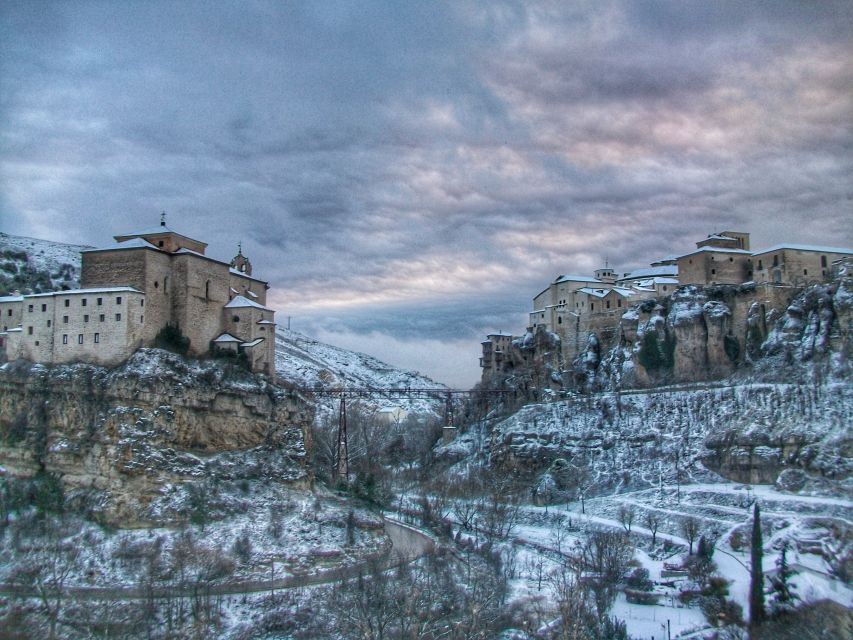
The views are a major reason people fall for Cuenca. The city sits above deep gorges, and you can see that depth from key panoramas. On this tour, you get perspective over the Júcar and Huécar rivers, which are the natural forces carving the setting you are walking on.
These viewpoints are valuable because they help you connect the street plan to the land. When you understand what is below, the ledges and levels stop looking random. You realize the town is designed to work with the rock and the drop, not against it.
If you like taking photos, this is your window. I recommend having your camera ready before you reach the viewpoint, because brief stops can happen quickly in a two-hour format. Wear comfortable shoes, because you are moving between levels on old streets and not on flat sidewalks.
Also, keep your expectations realistic. Views are not just one wide shot. You will likely see multiple angles as you weave through the narrow lanes. That is the best way to understand a cliff town like this, because it shows the gorges as a three-dimensional feature of daily life.
Ecclesiastical Architecture and the 12-Story Apartment Story in the Same Breath
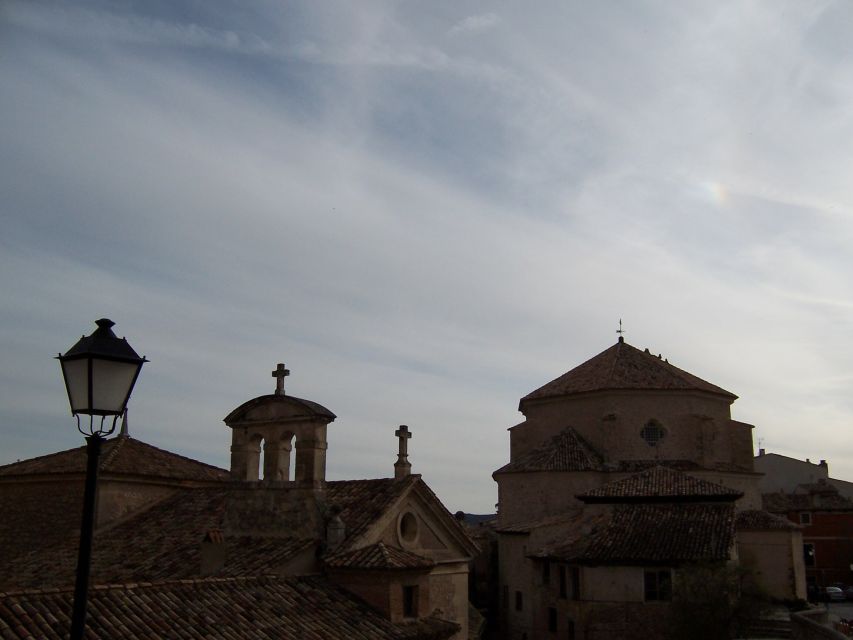
Cuenca is not all cliff drama. The old town also has impressive ecclesiastical architecture, and the tour uses those landmarks to explain the city’s structure and priorities. Churches and religious buildings here help you see how community life was organized beyond just the houses hanging over the void.
Then comes one of those details that flips your thinking: the story of the highest apartments in Europe in the 16th century, said to be 12 stories tall. Even if you only remember that one fact, it changes how you picture the city. Instead of thinking medieval towns were only low, sprawled, and separate, you start to see vertical living as a practical response to the rock and limited space.
What I like about pairing ecclesiastical buildings with that apartment story is that it keeps the tour human. Buildings are not just architecture, they are evidence of how people adapted. One clue to that adaptation is vertical construction, which makes sense when you have dramatic drop-offs and narrow room to expand outward.
If you are the type who loves “how did they manage that” questions, this section will land. If you prefer purely visual exploration, you will still benefit, because these explanations add meaning to what you are seeing in stone and street alignment.
Practical Tips for a Smooth Spanish-Only Walk (and Who It Fits)
This tour is live guided and conducted only in Spanish. If you speak enough to follow history explanations, you will get more out of the hanging houses, the UNESCO context, and the apartment story. If you do not, you can still enjoy the architecture, but you will have to rely more on visuals and less on verbal detail.
Comfort matters here because the route is not designed for wheelchair users or people with mobility impairments. The old town streets are narrow and uneven, and you will be moving between levels. I would not treat this as a low-effort sightseeing add-on. Think of it as a proper walking experience in medieval conditions.
One thing that impressed me from the guide reports: the experience can work for families, including at least one situation where a one-year-old in a stroller joined without major issues. That does not mean it will be easy for every stroller, but it does suggest the guide can adapt and keep the group moving with common-sense pacing.
Guides also sound like a big part of why people rate the tour highly. Names mentioned include Ángela, noted for professionalism and humor, and Raúl, praised for steering a group well even when it is larger. In other words, you are not just buying a route. You are buying someone who can translate the city into something you can actually grasp while walking.
Should You Book This Cuenca Medieval Old Town Tour?
If you want a short, guided way to understand Cuenca’s medieval core, this is a solid choice. At $10 per person for two hours, it is good value if you care about architecture plus context, not just photos. The hanging houses and gorge panoramas do the heavy lifting visually, while the guide’s explanations help you connect the dots.
I would especially recommend it if you like places where geography drives design, and if the idea of Cuenca perched above the Júcar and Huécar gorges excites you. It also suits you if you want a structured walk that hits the main points without making you plan route details on your own.
Skip it or consider another option if you need an English tour, or if you require wheelchair-friendly surfaces. Also, if you hate time spent standing around, be aware that the tour includes explanation moments, and pacing can vary.
FAQ
Is this tour in English?
No. The tour is only conducted in Spanish.
How long is the Cuenca Medieval Old Town guided tour?
The duration is 2 hours.
Where do I meet the guide?
Meet just below the arches of Cuenca City Hall, next to the tourist office. Look for guides wearing a red uniform.
How much does it cost?
The price is $10 per person.
Is pickup service included?
No pickup service is included.
Is the tour suitable for wheelchair users or people with mobility impairments?
No. It is not suitable for people with mobility impairments, including wheelchair users.
What is the cancellation policy?
You can cancel up to 24 hours in advance for a full refund.
Is there a pay-later option?
Yes. You can reserve now and pay later, and you do not pay anything today.
Recently reviewed around Madrid
- Tour en Tuk Tuk por lo mejor de Madrid★ 3.4 · 13 reviews
- From Madrid: Toledo Day Trip with Cathedral and 8 Monuments★ 4.3 · 32 reviews
- From Madrid: Toledo Guided Day Trip with Cathedral Admission★ 4.4 · 79 reviews
- Madrid: Tasty Tapas Tour & Visit to a Terrace with Views★ 4.5 · 118 reviews
- Madrid: Spanish Tapas Tour★ 4.3 · 7 reviews
- From Madrid: Best of Sevilla Day Tour with Train Transfers★ 4.6 · 40 reviews
- Tapas Food Tour with Dinner in Madrid★ 5.0 · 6 reviews
- Small Group Prado Museum Guided Tour with Skip the Line★ 4.2 · 106 reviews
Cuenca Day Trips, compared.
Tour from Madrid to Cuenca and the Enchanted City
Read our review →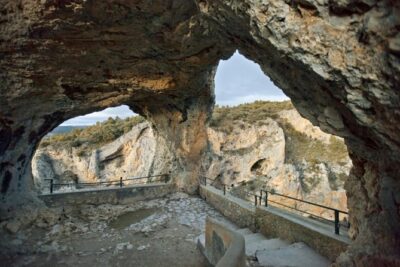
Cuenca and the Enchanted City Full Day Tour from Madrid
Read our review →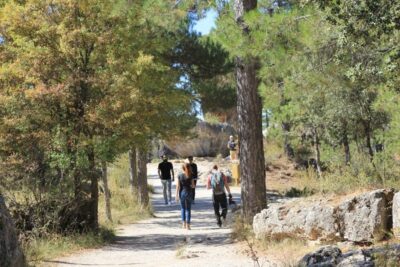
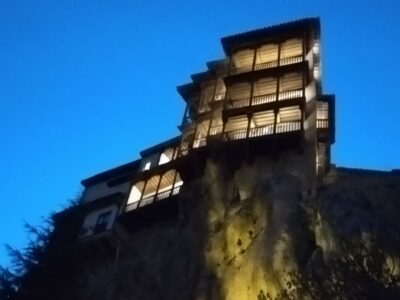
Cuenca: Nighttime Highlights Walking Tour in Spanish
Read our review →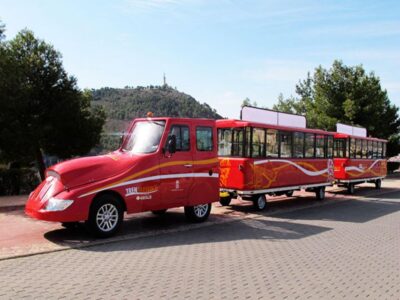
Full Day Trip to Cuenca, Cathedral and Hanging Houses
Read our review →
Browse the lists this tour appears in