
Reviewed · MADRID
Architour through Lavapiés and Rastro with an architect
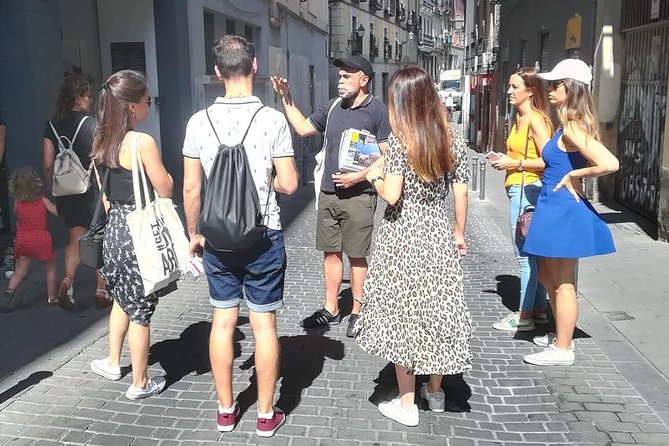
A walk with an architect guide through Lavapiés and the Rastro area feels interesting because you are not just sightseeing. You are reading the neighborhood like a map, watching how styles and social change show up in courtyards, theaters, printing buildings, and museum spaces. I love the focus on architecture you can actually see, from an Inquisition jail in a corrala to the Reina Sofía extension by Jean Nouvel, and I love how the guide ties details to what Madrid becomes now.
You’ll also like the human pace, with short stops that keep the story moving and a final hang at Mercado San Fernando to talk about what you might do next. The main consideration is simple: you are doing a 3-hour walking route, so wear shoes you can trust, especially around older streets and small paths.
Key things I’d circle before you book
- Architect guide energy and context: you get the why behind the bricks, not just what is where
- Access to multiple buildings included: you do not have to figure out separate entry stops
- Lavapiés as a living neighborhood: you see the mix of long-time residents and newer arrivals right in the public spaces
- Big design names in small places: the walk touches modern movement theater ideas and Jean Nouvel’s Reina Sofía extension
- Market time that feels local: El Rastro when it is on, then Mercado San Fernando for tapas and a drink you choose
Why an architect-led route through Lavapiés hits different
Lavapiés can be one of those Madrid neighborhoods people either skip or oversimplify. This tour avoids both. Instead of treating the area like a single vibe, you walk from square to alley to courtyard and learn how each place connects to the city’s politics, design trends, and daily life.
The best part is the guide. Emilio is an architect who lives in Lavapiés and brings that mix of practical building thinking and street-level understanding. In my view, that is what makes the tour work: you start noticing proportions, materials, and how people use space, even during the short “look and learn” moments.
One more reason it is worth your attention is the variety of eras in a small radius. You can move from medieval-era leftovers and religious-era confinement to rationalist 1930 planning and Art Deco details without feeling like you are bouncing across the whole city.
More of Madrid worth an open tab:
- Madrid: Tour Bernabéu Entry Ticket
★ 4.5 · 21,573 reviews - Madrid: Prado Museum Entry Ticket
★ 4.6 · 17,509 reviews - Madrid: “Emociones” Live Flamenco Performance
★ 4.8 · 12,866 reviews
Plaza de Tirso de Molina to the Carcel de la Inquisicion, history you can walk into
You start at Plaza de Tirso de Molina, and you get a fast grounding in what this neighborhood has been through. This matters because it frames everything you will see next. Once you understand why Lavapiés formed the way it did, later details stop looking random.
Then you step into the Inquisition Jail, the Carcel de la Inquisicion. The key detail is that it sits under a corrala, meaning it is connected to the older courtyard-house style Madrid used for dense living. Even if you only spend about ten minutes there, you come out with a clearer sense of how power worked in everyday spaces, not just in official buildings.
Practical note: this is a short stop, but it is a real interior story moment. Take a slow look around when you can. You are not racing the guide, you are collecting context.
El Rastro and the street-market rhythm, then the Art Deco clock at El Pavón
Next comes El Rastro, Madrid’s famous street market zone. The tour timing changes what you see. If you are there on Sunday, you get the real open-market atmosphere. If you go on another day, you are more likely to notice the rhythm through the storefronts and the vintage-furniture shops that tend to open during the week.
The value here is learning how a market district works as an urban system. You are not just hunting for souvenirs. You are watching how commerce, housing density, and street layout shape what people do throughout the day.
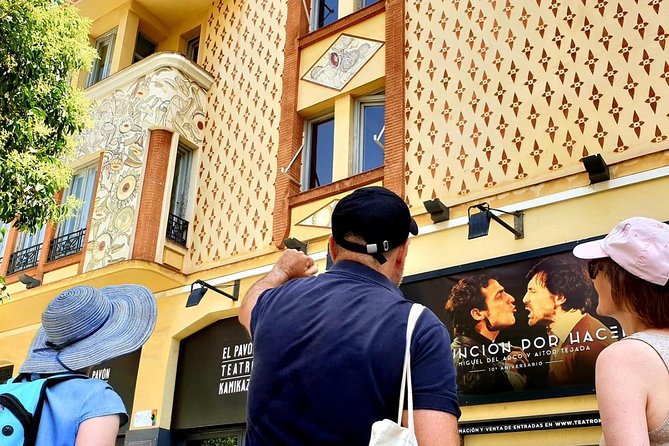
From there, you move to the facade of El Pavón Teatro Kamikaze. Look for the Art Deco clock. This is a quick exterior stop, about five minutes, but it is the kind of detail most people miss while they are busy walking past.
And if you want, you can pause for coffee in the cafe in the middle of the architour route. Even if you skip it, the moment sets the tempo. It turns the walk from lecture to street conversation.
Imprenta Municipal: rationalist architecture from 1930 that still matters
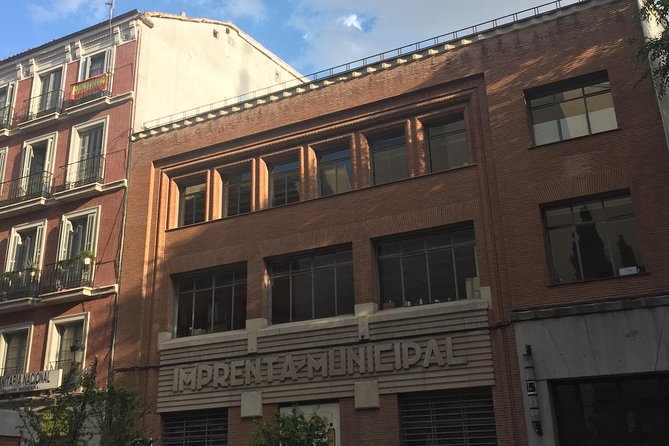
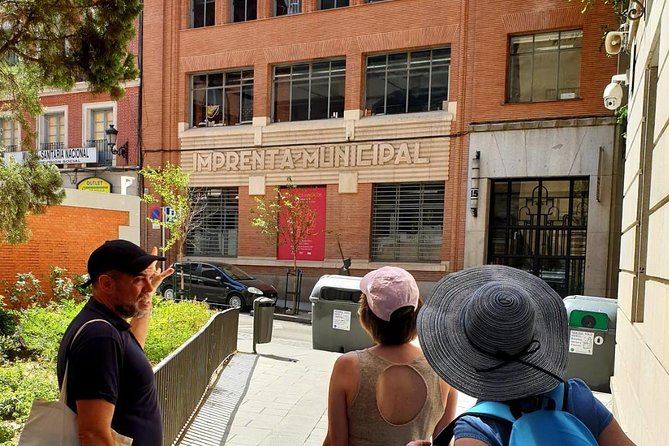
One of the strongest design stops is the Imprenta Municipal, the Municipal Printing Press. You will spend around fifteen minutes here, and access is included in the price.
Why this one hits: printing presses and municipal industry buildings are not always the first things visitors choose. But they show a different face of Madrid, a rational, planning-focused era that valued function and urban order. The tour frames it as a lesser-seen but important part of the city’s architectural language from around 1930.
This is also where an architect guide can really help. You are more likely to notice how the building is organized, how openings and circulation feel, and why this type of public utility architecture shaped the surrounding urban form.
If you like architecture that is not just grand monuments, you will appreciate how the tour brings attention to the practical structures that supported real city life.
Still in Madrid, a different sort of afternoon:
- Madrid: Panoramic Route City Tour
★ 4.1 · 12,259 reviews - Madrid: Live Flamenco Show with Food and Drinks Options
★ 4.5 · 9,901 reviews - Avila & Segovia Tour with Tickets to Monuments from Madrid
★ 5.0 · 9,762 reviews - Three Cities in One Day: Segovia, Avila and Toledo from Madrid
★ 5.0 · 8,402 reviews
Plaza de Lavapiés: a neighborhood square as a social crossroads
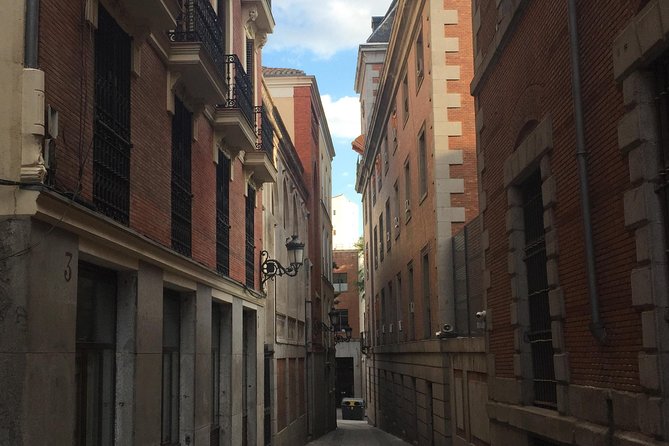
Plaza de Lavapiés is short, about five minutes, but it is a useful breather. The square that gives the neighborhood its name is also where you see the everyday mix of people moving through the area.
This is where the tour does something subtle but important. It connects architecture to how it gets used. You are not only looking at buildings, you are watching how a public space helps different communities coexist and how the neighborhood shifts over time.
If you have only a day or two in Madrid, this stop helps you avoid the common mistake of treating Lavapiés like a theme park. It is a working area of the city, full of older residents and newer arrivals who are changing things.
Take a moment and look around. Notice who is sitting, who is walking through, and what storefront activity feels most active. That simple act makes the later museum stop and market time feel more grounded.
Reina Sofía extension by Jean Nouvel: modern design ideas you can sense
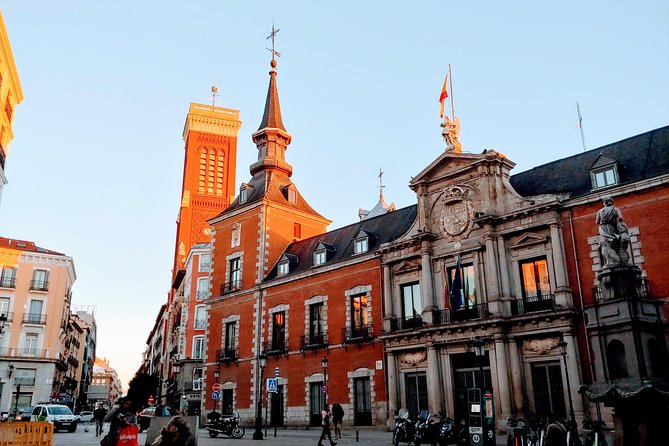
Next you reach the Museo Nacional Centro de Arte Reina Sofía and focus on its extension designed by Jean Nouvel. You spend about ten minutes here, with stops at the restaurant, library, and covered patio.
This part is not just about showing a famous name. It is about the building proposals and how they were debated. The guide talks about different contest proposals from 1999, which gives you a sense that modern architecture is often a political and cultural negotiation, not just a final product.
Why I think this stop is valuable on a walking tour: it lets you connect street-level Madrid to world-famous contemporary design. Even in a short visit window, you learn how the museum extension creates movement, shelter, and usable outdoor space through covered zones and gathering areas.
If you are hoping for a deeper museum visit, this is not that. But it is a smart architectural primer, especially if you already care about how public institutions shape neighborhoods.
Mercado San Fernando for tapas and local recommendations, with drinks on you
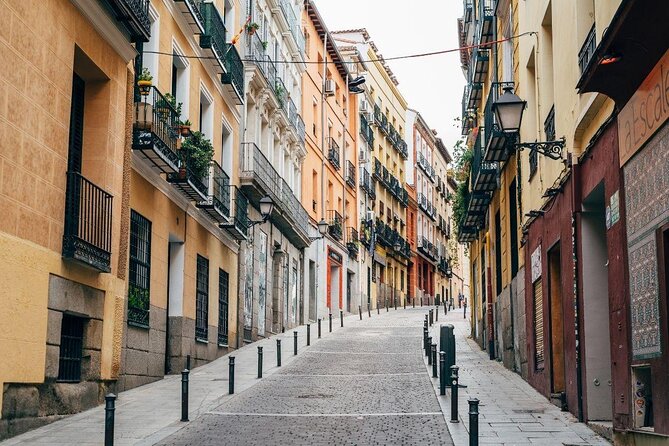
Then you transition into neighborhood food life at Mercado San Fernando. This is about fifteen minutes of market time, and it ends up being a key emotional tone shift in the tour.
You will take tapas and also have a chance to drink something while you get suggestions for your stay in Madrid. The drinks are not included, so you decide what fits your budget and mood. In my experience, that is a good setup because it makes the meal feel like part of the conversation rather than a formal add-on.
This is also a practical moment for you. You are walking with an architect guide who understands the city layout and can suggest what makes sense next. If you tell them what you like, you can often get pointed recommendations, not generic ones.
The real win is timing. You are not trying to find food after a long day. You stop while energy is still there, and you leave with ideas you can actually use.
La Tabacalera de Lavapiés and Teatro Figaro, the modern movement in real streets
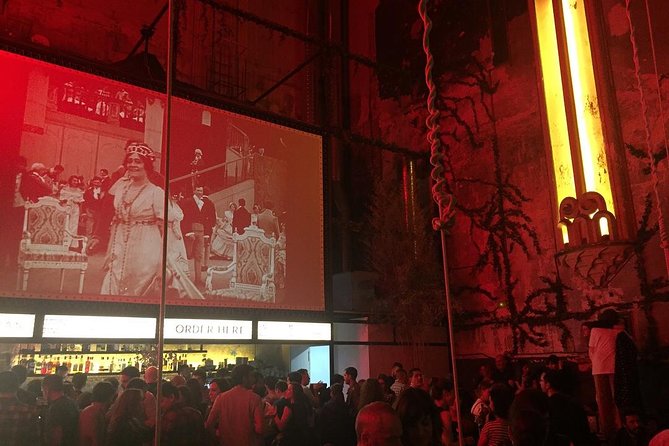
After the market moment, you head to La Tabacalera de Lavapiés. This stop takes around fifteen minutes. You are looking at an abandoned industrial building that now hosts exhibitions and includes an area self-managed by neighbors.
That mix is part of why the walk feels alive. The building is not just maintained for tourists. It is used, claimed, and turned into a platform for art and community activity. The walls also feature works by well-known urban artists.
Important practical note: La Tabacalera is closed for works from July 25. If your trip falls around that window, you might want to confirm whether this stop can still happen on your date.
Finally, you finish with Teatro Figaro, about five minutes. You will see the facade and learn it is described as the first theater built in Spain with criteria of the modern movement. It is a short glance, but it gives you a neat endcap. You close the tour with a reminder that modern design principles are not just museums and new construction. They show up in entertainment spaces, too.
Value and price, what $210.12 really buys you
At $210.12 per person for about three hours, this is not a budget stroll. But for an architect-led private route in a central Madrid neighborhood, it can still be strong value if architecture and urban planning matter to you.
Here is what you are paying for, in plain terms:
- A private tour means only your group participates, and the guide can match the pacing to your interests.
- Access to all buildings is included, which saves hassle and keeps the visit from turning into a series of outside-only peeks.
- English delivery means you can get the design and history details clearly, not summarized into a vague version.
- The route is dense with different types of stops, including an Inquisition Jail in a corrala, rationalist industrial architecture, and the Jean Nouvel museum extension.
If you mainly want sweeping city landmarks and big-photo moments, you might find the focus too detail-oriented. But if you like understanding why a city looks the way it does, it is a smart way to spend a few hours in Madrid without burning half your trip on long transit.
Who should book this tour, and who might not
I’d put this near the top of your list if you:
- like architecture, design, or urban history
- want Lavapiés explained by someone who lives there
- enjoy walking city neighborhoods in a practical, story-driven way
- want market time but still prefer context over random wandering
I’d think twice if you:
- hate walking, even for a three-hour route
- want a long museum visit or full indoor time at major attractions
- are visiting near July 25 and the La Tabacalera stop is important to you, since it is listed as closed for works from that date
Should you book Architour through Lavapiés and Rastro with an architect?
Yes, I think you should book it if your goal is to see Madrid as a designed place, not just a photographed place. This works especially well when you want a neighborhood story with building access included, plus real market pauses like El Rastro and Mercado San Fernando.
My advice for making it a win: go in with one question in mind. For example, ask the guide how design planning relates to who had power in different periods, or how public spaces like squares and courtyards shape everyday life. With Emilio’s architect perspective, you’ll likely get answers that change how you look at the city for the rest of your trip.
FAQ
How long is the architour through Lavapiés and Rastro?
The tour lasts about 3 hours.
What does it cost?
The price is $210.12 per person.
Is the tour private?
Yes. Only your group will participate.
Where does the tour start and end?
It starts at Plaza de Tirso de Molina and ends at Mercado de San Fernando on C. de Embajadores, 41.
What languages is the tour offered in?
The tour is offered in English.
What is included in the price?
Access to all buildings on the route is included.
Are drinks included at the market?
Drinks are not included where you stop for tapas and something to drink at the markets and bars during the experience.
Recently reviewed around Madrid
- Madrid: Treasure Hunt Experience★ 5.0 · 4 reviews
- Madrid Spanish Omelet Cooking Class and Bottomless Wine brunch★ 5.0 · 50 reviews
- Avila and Segovia private day trip with hotel pick up from Madrid★ 5.0 · 68 reviews
- Prado Museum Tour with ticket, small group & expert guide★ 5.0 · 6 reviews
- Bernabeu Stadium Private Guided Tour★ 3.5 · 4 reviews
- Spanish Group Course in Madrid, Spain: 20 Lessons★ 5.0 · 11 reviews
- Self-Guided Audio Tour – Cervantes Literary Experience in Madrid★ 4.0 · 6 reviews
- Madrid Bike Tour with Churros and Wine, Ham, and Cheese Upgrade★ 5.0 · 8 reviews