
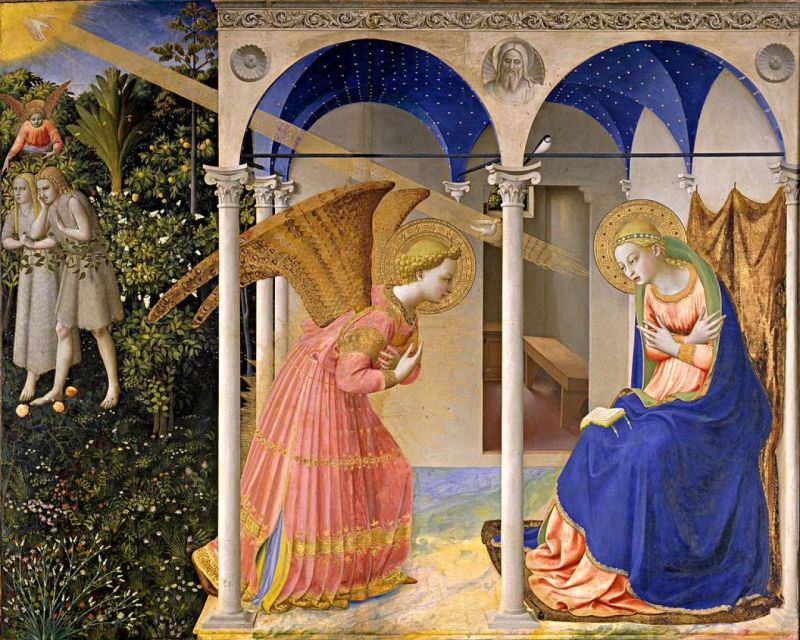
Reviewed · PRADO MUSEUM TOURS
Prado Museum (Madrid): Private visit with art expert
A Prado private visit works because you trade aimless wandering for a clear story line you can actually follow. You get an art expert guiding the evolution of European painting from the 12th to the 19th century, and the guide can flex to your taste, whether you gravitate to religious scenes or later drama. I like the private pace and the way the tour can feel human, like when guides such as Amanda or Carlos share what to look for in front of the canvas, not just facts in the abstract.
Two things I especially love: the visit can be personalized around your interests, and the guide points out details that most people miss on a first pass. One possible drawback to consider is simple, the session is only 2 hours, so if you want to see every room and every masterpiece, you will still need some time afterward on your own.
Key moments that make this Prado tour worth your time
- Personalized path: tell the guide what you care about, and the route adjusts.
- Skip the ticket line: quicker entry for smaller private groups (up to 7).
- 12th to 19th century timeline: a guided through-line across roughly 700 years of European art.
- Big names, explained well: El Bosco, Dürer, El Greco, Rubens, Titian, Tintoretto, Velázquez, and Goya.
- Optional extra time inside: for groups of 7 or less, you can stay after the guided portion with recommendations.
- No photos inside: plan to enjoy the art with your eyes only.
Why a private Prado visit beats doing it solo
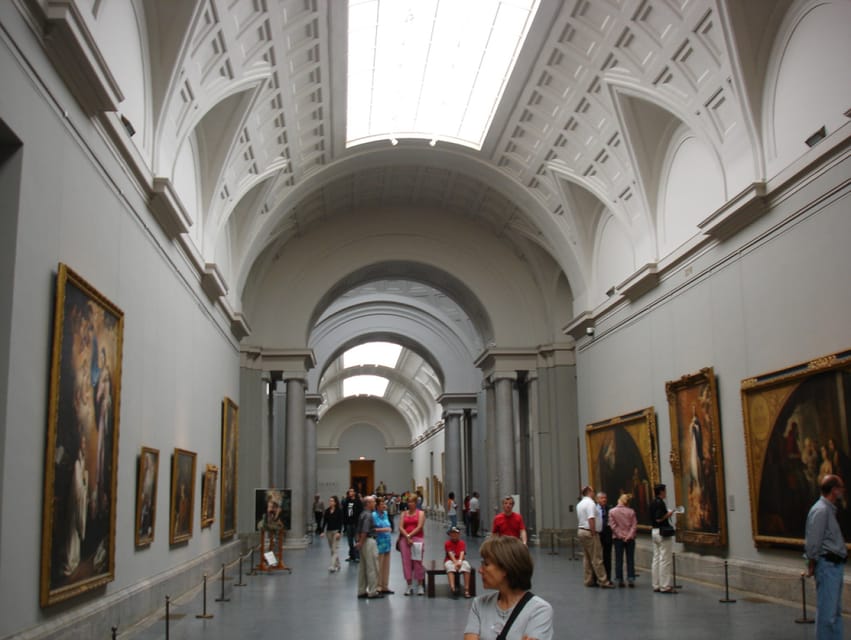
The Prado Museum is one of those places where your first instinct is to sprint for the famous paintings. The problem is, sprinting turns masterpieces into just images. A private visit changes that. You get an expert who can read the room with you and slow down where it matters.
I like that this tour focuses on the evolution of European painting, not just a checklist of highlights. You move from older visual ideas toward later techniques and emotions, so the museum starts to feel like a living timeline. When you leave, you can connect why a style looks the way it does, and why artists built on (or rebelled against) what came before.
The “private” part is not marketing fluff. It shows up in how you interact with the guide. You can ask questions when curiosity hits, or you can just listen and look. In some of the best moments, it feels like you are learning how to see, not just what to name.
More Prado Museum tours in Madrid:
- Madrid: Prado Museum Entry Ticket
★ 4.6 · 17,509 reviews - Madrid: Small Group of Prado Museum Tour & Optional Tapas
★ 4.6 · 2,437 reviews - Madrid: Prado Museum Guided Tour with Skip-the-Line Ticket
★ 4.5 · 2,018 reviews
The one catch: time is tight
Two hours sounds generous until you remember how enormous the Prado is. If your goal is to collect a personal scrapbook of every artwork, this will not cover it all. But if your goal is understanding, and you want the Prado to make sense, a guided 2-hour visit is a strong way to make your limited time count.
Meeting at Goya and using the Landscape of Light to orient fast
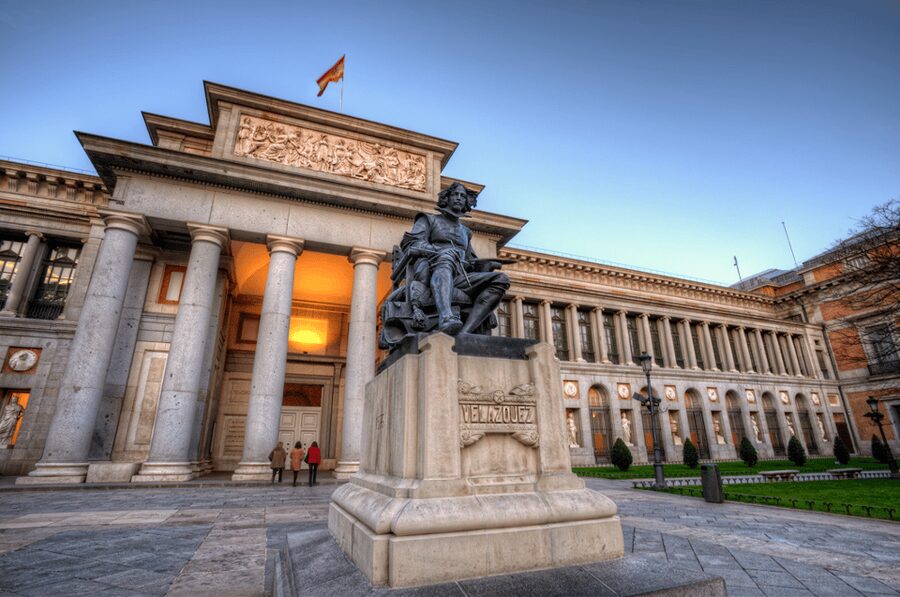
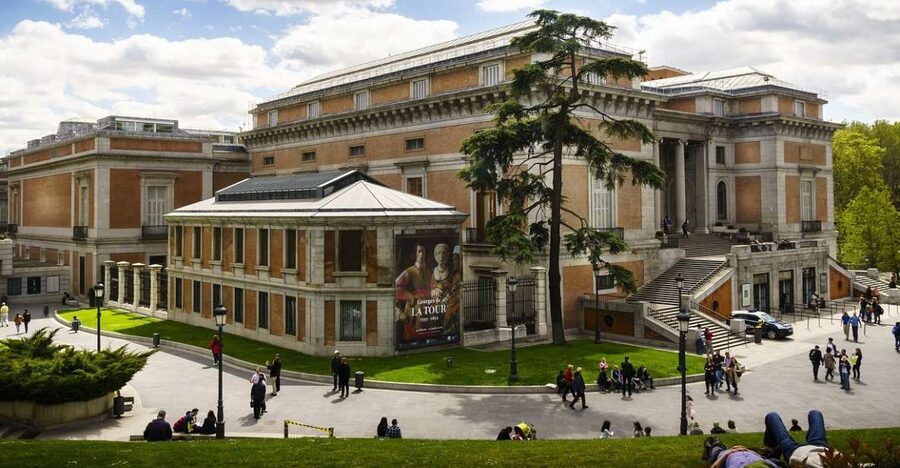
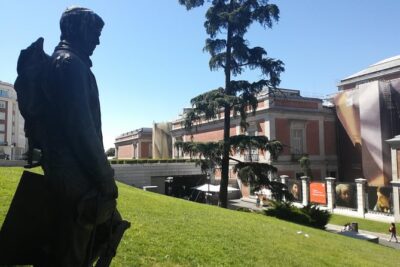
Your guide meets you at the Monumento a Goya, in front of the Prado ticket area. This matters more than it sounds. Starting at a clear, recognizable point helps you get oriented quickly, and you avoid that early-time maze anxiety.
Before entering, you will spend a moment around a beautiful setting called the Landscape of Light, a UNESCO World Heritage Site. It was created under Carlos III with the idea that artistic, scientific, and nature knowledge should be open to the public. Even if you are not a history nerd, the space gives you a sense of why Madrid is so proud of its institutions and public learning culture.
Then the guide uses the fastest entrance based on your group size. That is how you keep the first minutes from evaporating. It is a small detail, but in a museum, first impressions can either boost your energy or drain it.
The 2-hour structure: a guided art history timeline you can actually follow
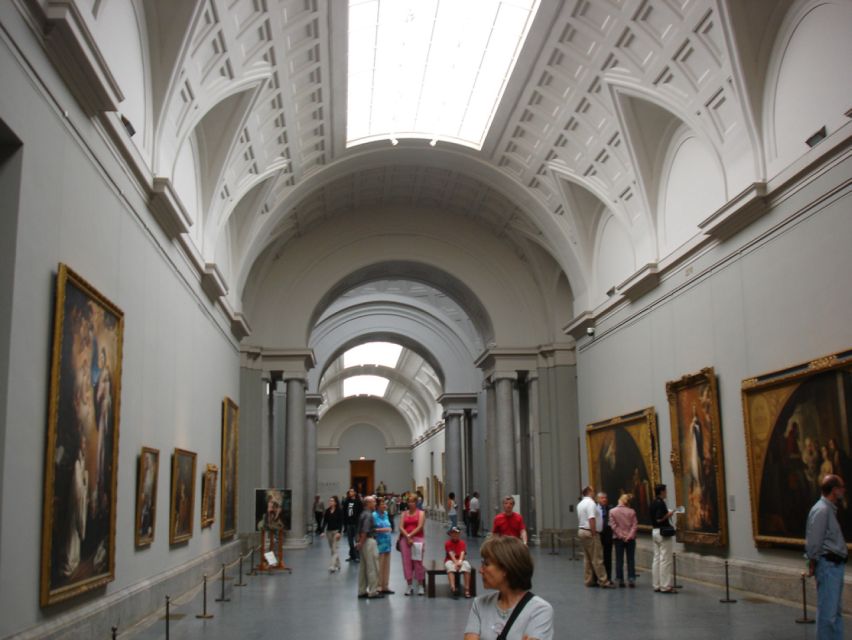
This is not a random tour of rooms. The guide leads you through European art from the 12th to the 19th century, shaping what you see into a coherent story. That time span is huge. The value is in how the guide turns “hundreds of years” into something you can understand in real time.
Here is how this type of itinerary works in practice:
- You start with earlier visual worlds, where art often had a strong religious or symbolic purpose.
- You then move forward into changing approaches to realism, emotion, and technique.
- Finally, you reach later centuries where painting becomes more personal, more dramatic, and more psychologically charged.
The guide adapts along the way. If you care more about technique, you will likely spend more time on how something is painted and what details signal meaning. If you care more about the artist’s life or the cultural context, the stops can shift so you get those answers while you are still standing in front of the work.
A few more Madrid tours worth comparing
- Madrid: Reina Sofía Museum Entrance Ticket
★ 4.5 · 6,889 reviews - Madrid: Prado Museum Guided Tour With Fast Access
★ 4.8 · 1,785 reviews - Prado Museum Small Group Tour with Skip the Line Ticket
★ 5.0 · 1,738 reviews - Royal Palace & Prado Museum Skip the Line Guided Tour
★ 4.5 · 1,347 reviews
What you gain from the “evolution” angle
When you see paintings across centuries with a guide explaining transitions, you stop treating each masterpiece like it exists in a vacuum. The Prado starts to feel like a conversation. That makes the museum more fun, and it makes the famous works hit harder.
Masterpieces you can expect: Boscos to Goyas, and why the guide matters
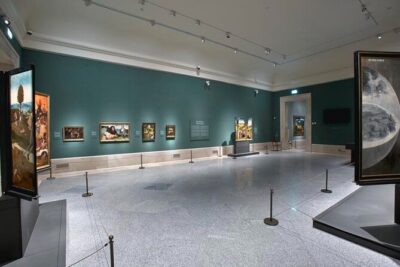
The Prado is packed with household names for a reason. In this tour, you can expect stops that include major figures such as El Bosco, Dürer, El Greco, Rubens, Titian, Tintoretto, Velázquez, and Goya. The exact order can shift based on what you want to emphasize, but the big idea stays the same: you are tracing how European painting changed over time.
The real win is what the guide does with those names.
El Bosco and the “read-the-details” mindset
Bosco can feel like a dream that turns into a puzzle. A good guide helps you look past the obvious and notice symbols, odd juxtapositions, and the logic inside the weirdness. Instead of thinking, What am I looking at?, you start thinking, Why is it arranged like this?
Dürer and the craft behind the drama
Dürer brings a different kind of attention. You will tend to notice precision, control, and how an image communicates power. A guide’s job here is to connect the technique to the message, so the artwork stops being only impressive and starts being understandable.
El Greco and the emotional volume
With El Greco, it is easy to get stuck on the style. The guide can help you see what those stretched forms and intense colors are doing beyond being unusual. You start to read emotion into the structure.
Rubens, Titian, and the physics of paint
Rubens and Titian often reward close looking. The guide can point out how flesh tones, movement, and composition work together. When you get the “how” explained, the “wow” becomes more than surface-level admiration.
Velázquez and the moment you realize you are part of it
Velázquez is often where people’s reactions shift. A good guide helps you understand how the painting plays with perception, audience, and reality. You begin to notice tricks you could never guess on your own.
Goya and the human nerve
Goya has a way of cutting through time. You will likely connect his work to shifting social and artistic pressures, and the guide can steer you toward what makes it feel urgent rather than just historical.
Personalization: what it really means in a room full of masterpieces
This tour can be customized to your interests. That sounds vague until you see how it changes what you pay attention to.
Tell your guide what you are into, and you will notice a different kind of tour math:
- If you love dramatic storytelling, the guide will likely steer you toward works that communicate with strong narrative cues.
- If you are drawn to portraits and character, you will probably spend more time on faces, posture, and the choices behind them.
- If you are curious about religion, politics, or symbolism, the guide can explain what is going on in the image beyond the obvious subject.
The best part is interaction. You can ask follow-up questions while you are looking. And if you want quiet observation, you can keep questions minimal and still get value from the guide’s pointing and context.
Some guides also show real staying power after the tour. For example, one guide named Amanda responded quickly to a later painting identification question, which is a sign of how seriously these guides take learning and explanation.
What it’s like inside: pace, pace again, and enjoying the Prado without stress
At the start, you enter the Prado efficiently. After that, the tour aims for a pace you can control. The guide supports that in two ways. First, you choose how much interaction you want. Second, you can linger on an artwork longer if it clicks.
This matters because the Prado is not a museum you conquer in one energy spike. You want time for looking, and you want time for understanding. A 2-hour guided structure gives you that balance without exhausting you.
Photography note: plan to look, not post
Photography inside is not allowed. That might sound like a minor rule, but it changes the vibe in your head. You will pay more attention when the urge to document is removed. Bring patience. Let the paintings do the work.
After the tour: stay and connect more dots
If your group is 7 people or less, you have the option to stay in the museum after the guided portion. If you do, the guide shares recommendations for what to look at next. That is smart. It turns the guided time into a launchpad, so your self-guided wandering is focused instead of random.
Price and value: is $136 per person a smart use of time?
Let’s talk value in practical terms. This tour costs $136 per person for 2 hours with a specialized art expert, and it includes entrance fees and guide support. It also includes skip-the-line entry for the relevant group size.
So when does this price make sense?
- If you have limited time in Madrid and you want the Prado to feel coherent.
- If you love art but usually miss details without guidance.
- If you are the type who asks questions and wants answers in front of the painting, not in a guidebook later.
- If you prefer a controlled route instead of navigating room by room.
When might it feel less worth it?
- If you are happy doing a self-guided museum at your own pace with no added context.
- If your priority is seeing the broadest possible number of works in a short window, since 2 hours will still be selective.
The honest takeaway: the money is buying clarity. The Prado is famous for quantity and quality, but clarity is what most people need. This format gives you both.
Practical details that affect your day
Here are the nuts and bolts that will affect your experience, and how to plan around them.
- Languages: the live guide works in English and Spanish.
- Duration: 2 hours.
- Private group: the tour is private, so you are not negotiating your schedule around strangers.
- Wheelchair access: the museum is wheelchair accessible, and the tour notes stroller and wheelchair accessibility.
- Transportation: not included. You will need your own plan to get to the Prado area.
- Starting point: the guide meets you by the Goya statue, at the Prado side near the ticket office.
- Best for small groups: for groups of up to 7, you also get the skip-the-queue advantage and the possibility to stay after the guided portion.
Who this Prado private tour suits best
This is a great match if you want the Prado to make sense and you like learning while you look. It also fits well if you are traveling with someone who appreciates art but prefers not to read every wall label.
It is especially useful for:
- First-time Prado visitors who want the museum’s big themes without feeling lost.
- Art fans who want explanation of specific works, styles, and visual tricks.
- Anyone who wants to ask follow-up questions and get direct answers in the moment.
- Travelers with mobility concerns, since the tour is designed to support accessibility needs during the visit.
If you are more of a “I only want to see the must-sees and move on” visitor, you might prefer a shorter highlight-focused option. But if you want depth in a compact time window, this tour format is strong.
Should you book this Prado Museum private visit?
If your question is, Will a guided art expert make the Prado more satisfying, my answer is yes, especially if you are limited on time. A private guide turns the museum from a pile of masterpieces into a timeline you can follow, with details you will remember.
Book it if you:
- want personalization and a route guided by your interests,
- care about understanding European art from the 12th to the 19th century,
- like the idea of skip-the-line entry and a calm pace.
Consider skipping or keeping expectations selective if:
- you want to cover everything in the museum in 2 hours,
- you would rather rely on your own reading and self-guided wandering.
FAQ
Where is the meeting point for the Prado tour?
The guide meets you at the Monumento a Goya, outside the Prado Museum area, in front of the ticket office.
How long is the private Prado Museum visit?
The guided portion lasts 2 hours.
Does this tour skip the ticket line?
Yes, it includes skipping the ticket line, with faster entrance used based on group size. For groups of up to 7, it skips the queues larger groups have to wait in.
What art periods does the guide cover?
The visit explains the evolution of European art from the 12th to the 19th century.
Which languages are available for the live guide?
The guide offers the tour in English and Spanish.
Is photography allowed inside the museum?
No, photography is not allowed inside.
Can we stay in the museum after the guided tour?
Yes. After the tour, you can stay in the museum if you want, and this option applies for groups of 7 people or less. The guide can also share recommendations.
Is wheelchair access included?
Yes. The museum is wheelchair accessible, and the tour information notes wheelchair and stroller accessibility.
Is transportation included in the price?
No, transportation is not included.
What is the cancellation policy?
Free cancellation is available up to 24 hours in advance for a full refund.
Recently reviewed around Madrid
- Tour en Tuk Tuk por lo mejor de Madrid★ 3.4 · 13 reviews
- From Madrid: Toledo Day Trip with Cathedral and 8 Monuments★ 4.3 · 32 reviews
- From Madrid: Toledo Guided Day Trip with Cathedral Admission★ 4.4 · 79 reviews
- Madrid: Tasty Tapas Tour & Visit to a Terrace with Views★ 4.5 · 118 reviews
- Madrid: Spanish Tapas Tour★ 4.3 · 7 reviews
- From Madrid: Best of Sevilla Day Tour with Train Transfers★ 4.6 · 40 reviews
- Tapas Food Tour with Dinner in Madrid★ 5.0 · 6 reviews
- Small Group Prado Museum Guided Tour with Skip the Line★ 4.2 · 106 reviews
Prado Museum Tours, compared.
Small Group of Prado Museum Tour & Optional Tapas
Read our review →
Prado Museum Guided Tour with Skip-the-Line Ticket
Read our review →
Prado Museum Small Group Tour with Skip the Line Ticket
Read our review →
Royal Palace & Prado Museum Skip the Line Guided Tour
Read our review →
Prado Museum Guided Tour with Skip-the-Line Ticket
Read our review →Browse the lists this tour appears in