
Reviewed · MADRID BIKE TOURS
Madrid: Street Art Bike Tour
Madrid street art is everywhere, but this tour makes it make sense fast. You ride with a local graffiti artist, and the city turns into a living gallery of tags, murals, and techniques you would miss on foot. It is a street art bike tour with a clear plan and real neighborhoods, not just random photos.
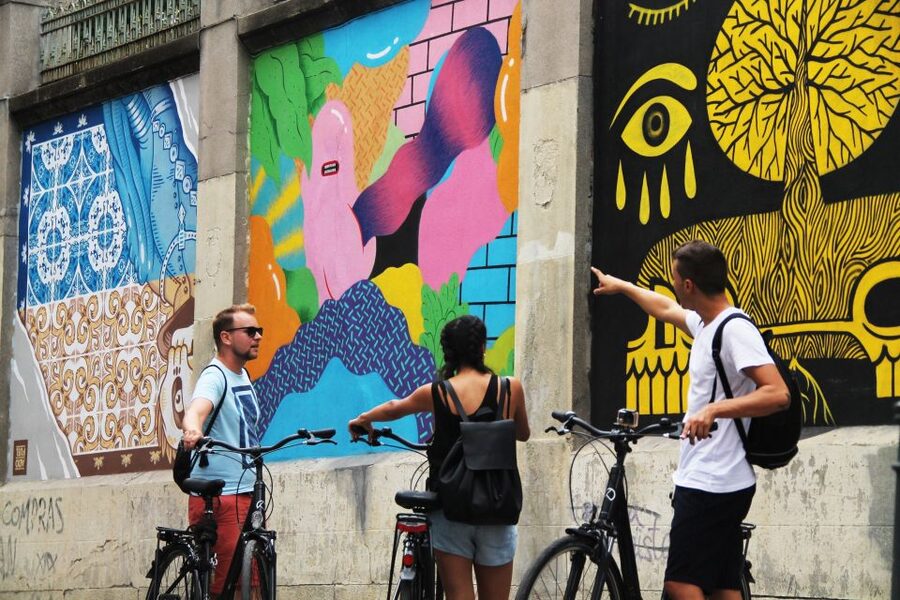
I especially love the way you get the art’s background while you are actually looking at it. You will learn how Madrid pieces connect to crews and festivals, including work by Boa Mistura and the festival energy around Malasaña. I also like that you spend real time in the communities of Lavapiés, where art grows out of local space and local need.
One consideration: you are riding in city traffic and there is one uphill. If you are not comfortable cycling in the middle of Madrid streets, you may find the pace a bit tense, even though the guide can adapt.
Key things I’d watch for on this tour
- Local graffiti artist guidance that explains technique, not just the pretty walls
- Muelle’s preserved tag from 1989, an actual link to Madrid’s early graffiti movement
- Boa Mistura photographed stop near Alonso Martinez, a strong “why they matter” moment
- Pinta Malasaña context in April, with Plaza Dos de Mayo as the neighborhood’s stage
- Lavapiés urban garden stops like Solar Antonio Grilo and Esto es una Plaza
- A chance at Madrid’s biggest center district mural, depending on what you’re shown on the day
Why this Madrid street art tour works better by bike than on foot
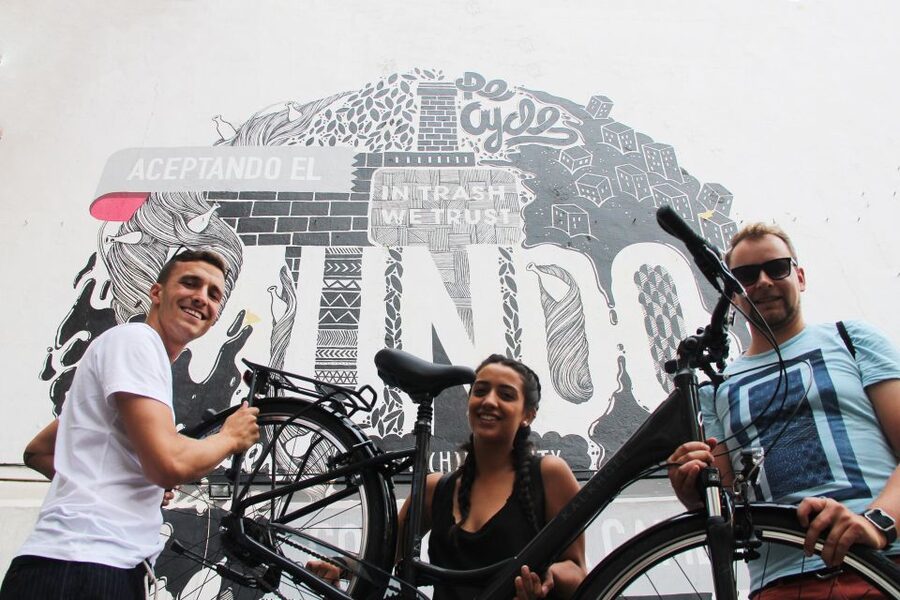
There is a reason street art tours often fail. They stop you in front of one wall, you take a photo, then you are right back where you started with no idea how the whole city fits together.
On this 2.5 hour bike tour, the ride itself becomes part of the storytelling. You move between neighborhoods that feel different in your lungs and your legs. Malasaña has that sharper, nightlife-and-fashion energy. Lavapiés feels more communal and creative, with spaces that look like they have been argued for and shaped by people who live there.
The guide’s graffiti-artist perspective also changes the vibe. You are not just admiring paint. You are learning why someone chose a shutter, why a wall got a certain style, and how public art can act like a message system.
More bike tours in Madrid:
- Madrid Highlights Bike Tour
★ 5.0 · 1,731 reviews - Best of Madrid: 3-Hour Guided Bike Tour in Small Groups
★ 4.8 · 1,417 reviews - Madrid: Highlights Guided Vintage Bike Tour and Tapas Option
★ 4.9 · 962 reviews
Getting started at Carrefour Express, then settling into a safe ride
The tour starts at the entrance of the small supermarket called Carrefour Express, on C/Montera 32. It is near the Gran Vía and Sol metro area, which makes it easy to plug into a day already centered around the historic core.
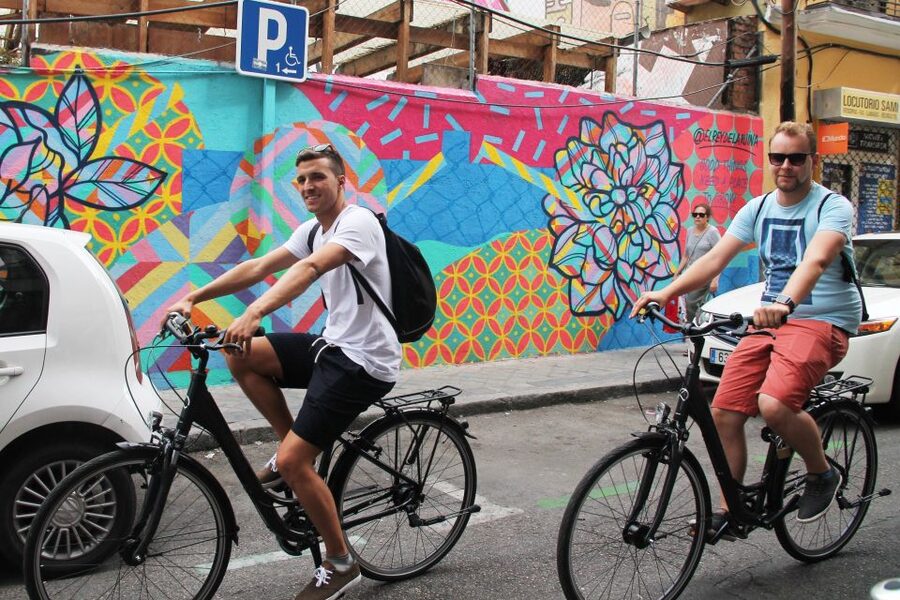
Once you meet up, the first thing you do is get ready to ride. Bike rental is included, and you also get a helmet and lock. Then the guide explains safety and what to expect as you roll through traffic. That matters a lot in Madrid, because the streets can feel busy and you want to know where you fit into the flow.
You also get a restroom break during the tour. That is not glamorous, but it is practical. A well-timed break keeps your head clear when you are trying to learn street art history while biking.
Madrid graffiti history, from preserved tags to modern techniques
This is where the tour earns its keep. The route is only half the story. The other half is learning how graffiti and street art work as tools, not just decoration.
You start with the history of street art in Madrid and the techniques artists use on the city’s surfaces. The guide points out how people decorate not only walls, but also elements like metal shutters and other urban features. In other words, they are not fighting the city’s architecture, they are using it.
A standout example is Muelle, described as a pioneer of Madrid’s graffiti movement. You will observe a preserved tag connected to 1989. Seeing something that old still visible is a gut-check moment. You realize you are not only looking at fresh styles. You are looking at a thread that links present artists to older movements that made space for this art form.
Alonso Martinez and the Boa Mistura photo moment you will actually remember
After the safety briefing, you head toward Alonso Martinez. This section is about momentum and context. You are not stuck waiting for the perfect wall. You are moving, so when you stop, it feels intentional.
Near Alonso Martinez, you will visit and photograph a first piece created by Boa Mistura. This crew is born and raised in the outskirts of Madrid, and they have worked on street art projects around the world. That combination, local roots plus international reach, is exactly the kind of story that helps you understand why certain mural styles have traveled so far.
I like this stop because it reframes what you are seeing in later neighborhoods. Once you understand how a major design agency thinks and works, the smaller tags and neighborhood murals stop feeling random. They start to look like part of a wider design language.
Still in Madrid, a different sort of afternoon:
- Madrid: Tour Bernabéu Entry Ticket
★ 4.5 · 21,573 reviews - Madrid: Prado Museum Entry Ticket
★ 4.6 · 17,509 reviews - Madrid: “Emociones” Live Flamenco Performance
★ 4.8 · 12,866 reviews - Madrid: Panoramic Route City Tour
★ 4.1 · 12,259 reviews
Malasaña and the Pinta Malasaña festival spirit at Plaza Dos de Mayo
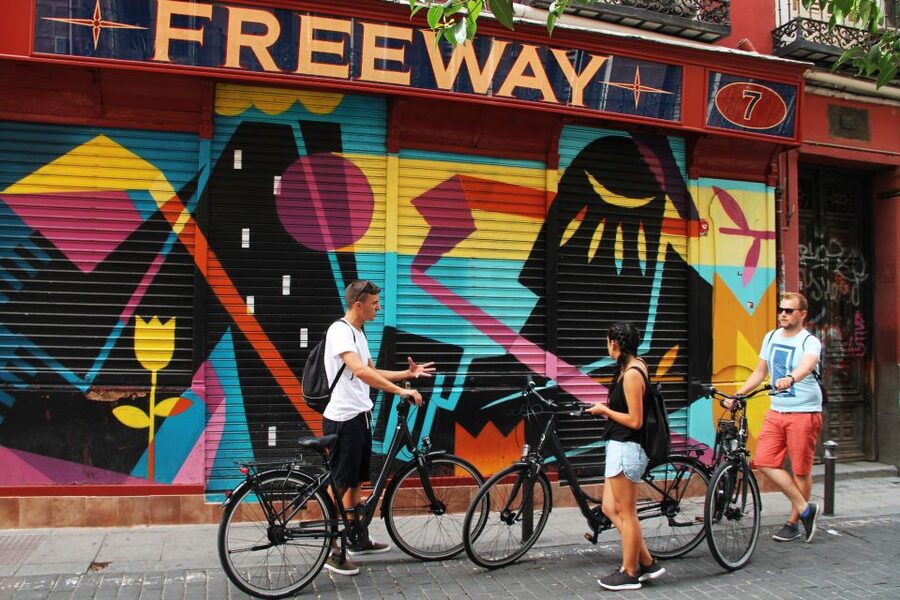
Then you roll into Malasaña, one of those Madrid districts where street art and youth culture overlap. The tour focuses on the most trendy and hipster-feeling areas by bike, and Malasaña is the main act here.
You cross artwork by national artists who participated in the 2017 edition of Pinta Malasaña. The key point is not just the art. It is the festival rhythm. Pinta Malasaña colors the neighborhood during April, and the tour lets you see how festival-era pieces become part of the street texture long after the event dates.
Plaza Dos de Mayo becomes a central moment. This is where you will encounter a colorful display of traffic elements called Bolardo Voy, Bolardo vengo. It sounds playful, but it is also smart street design. It takes something functional and turns it into visual storytelling.
One practical note: this is a lively neighborhood. When you stop for photos and explanations, you may want to keep one hand free and your bike steady. The guide will manage the group, but you will be doing part of the work by staying aware, especially when pedestrians drift into the lane.
Lavapiés and Noviciado: Solar Antonio Grilo and Esto es una Plaza
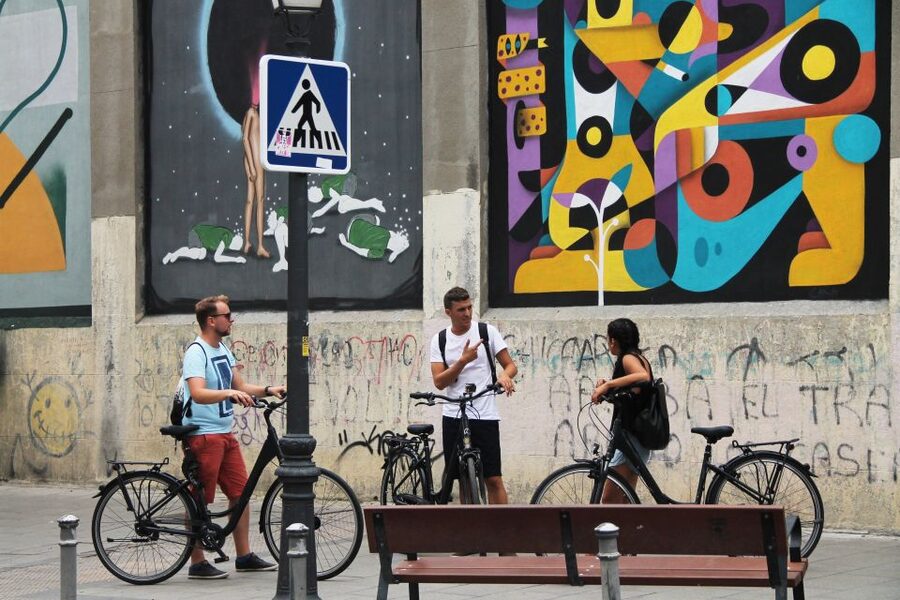
After Malasaña, the tour shifts into a different kind of creativity. Lavapiés and Noviciado are where you start seeing art that feels tied to shared space and community needs.
You get time to visit Solar Antonio Grilo and Esto es una Plaza by bike. These are described as local hubs created for and by the community. They are also urban gardens full of street art, with a backstory that matters: they were once abandoned places, and now they act as examples of hybrid economy systems.
That hybrid economy detail may sound technical, but here is the human translation. You are watching people turn neglected land into shared assets. Street art is not only the visible layer. It is part of a broader story about how a neighborhood fixes itself.
You will also see interventions from multiple artists, including El Rey de la Ruina, Cassassola, Ze Carrión, Por Favor, and others. This is where the tour feels like a map of personalities. Different artists bring different attitudes, and you start noticing how style changes based on who is speaking and where they are speaking.
The biggest mural moment in Madrid’s center district
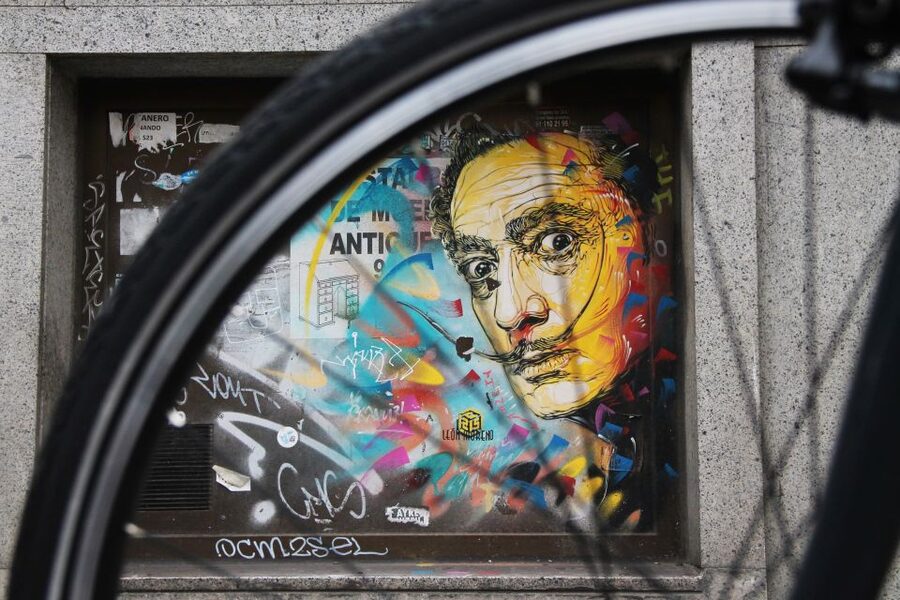
The tour includes a chance to see what is described as the biggest mural in Madrid’s center district. I like tours that admit uncertainty here, because street art is not static. Pieces evolve, get painted over, moved, repaired, or replaced.
Still, the bigger-mural idea is a good reason to book this specific tour type. You are combining small historical moments, like that 1989 tag, with scale moments that show what street art can do when it is given room and attention.
If you care about murals over tags, this is where your expectation should sit. You will get plenty of context so the big visual stop lands, instead of feeling like a random finale photo.
How the timing and pace really feel in your body
This experience is listed as medium level, with just one uphill. That is a relief if you have spent the last days walking Madrid hills and thinking, okay, one more climb and I will become a snail.
Because it is about street art explanations, the stops do interrupt your momentum. You will not bike nonstop for 2.5 hours. Instead, the guide pauses so you can look closely, ask questions, and connect what you see to what you learned.
One practical takeaway from real-world experience: the pace and the traffic can be a challenge if you are not used to cycling in a city. The guide can adjust when needed, but your best results come when you already know how to ride confidently in real-world conditions. If you can handle a bike on busy streets at a steady pace, you will enjoy the tour more.
A good mindset: treat this as art viewing with motion, not a casual cruise. You are moving through Madrid’s neighborhoods and learning while doing it.
What you get for $46, and why it is decent value
At $46 per person for a roughly 2.5 hour tour, you are paying for three things that are hard to DIY:
1) a guide who can explain graffiti history and technique,
2) bike rental plus helmet and lock,
3) a structured route that strings together multiple neighborhoods and festival-era pieces.
If you were to rent a bike on your own and just roam, you would still be able to find murals. But you would likely miss the connections: why a preserved 1989 tag matters, why Boa Mistura’s local roots matter, and how community hubs in Lavapiés became part of the street art ecosystem.
That guided element is the value engine here. It turns the city from a collection of photos into a narrative.
Also, you get a Madrid city map included. That is useful for your next day. After the tour, you will know what areas you want to walk back through slowly and which corners you now understand better.
Who this tour suits best in Madrid
This is an excellent fit if you want more than sightseeing. It is for people who like art but also like context, and who enjoy street-level Madrid life as much as the big monuments.
It also works well for families, if your kids can bike confidently. One family-friendly highlight from the tour experience is that it has been done with a 7-year-old riding their own bike. Your mileage will depend on your child’s comfort, but it is not marketed as an adult-only activity.
I would consider this tour especially when:
- you want a fast, guided crash course in Madrid street art culture
- you are staying near Gran Vía or Sol and want a structured ride without logistics headaches
- you want to see Malasaña and Lavapiés in one shot, with stops you would not easily find on your own
If you hate cycling, or you cannot handle traffic at all, then this is not the right format. The art is worth it, but the delivery system is by bike.
Should you book the Madrid street art bike tour?
Yes, if you want street art that has a storyline. This tour does not just point at walls. It teaches you how the art works, where it came from, and how neighborhoods like Malasaña and Lavapiés became stages for it.
Book it if you like learning from the people who make the scene, and if biking in a busy city does not scare you. I would skip it if you need a quiet, walking-only experience or if you expect an easy ride with no awareness required.
Bottom line: for $46, you get a bike, helmet, and a guided route that turns Madrid’s street art into something you can read, not just look at.
FAQ
How long is the Madrid street art bike tour?
The tour duration is 2.5 hours.
How much does the tour cost?
The price is $46 per person.
Where does the tour start?
It starts at the entrance of the small supermarket Carrefour Express at C/Montera 32, near the Gran Vía and Sol metro area.
Where does the tour end?
The tour ends back at the meeting point.
What is included in the $46 price?
Bike rental is included, along with a helmet and lock, a Madrid city map, an English or Spanish live guide, and a restroom break.
Do I need to bring anything?
Bring your passport or ID card and wear comfortable shoes.
Are beverages included?
No, beverages are not included.
Recently reviewed around Madrid
- Tour en Tuk Tuk por lo mejor de Madrid★ 3.4 · 13 reviews
- From Madrid: Toledo Day Trip with Cathedral and 8 Monuments★ 4.3 · 32 reviews
- From Madrid: Toledo Guided Day Trip with Cathedral Admission★ 4.4 · 79 reviews
- Madrid: Tasty Tapas Tour & Visit to a Terrace with Views★ 4.5 · 118 reviews
- Madrid: Spanish Tapas Tour★ 4.3 · 7 reviews
- From Madrid: Best of Sevilla Day Tour with Train Transfers★ 4.6 · 40 reviews
- Tapas Food Tour with Dinner in Madrid★ 5.0 · 6 reviews
- Small Group Prado Museum Guided Tour with Skip the Line★ 4.2 · 106 reviews
Madrid Bike Tours, compared.

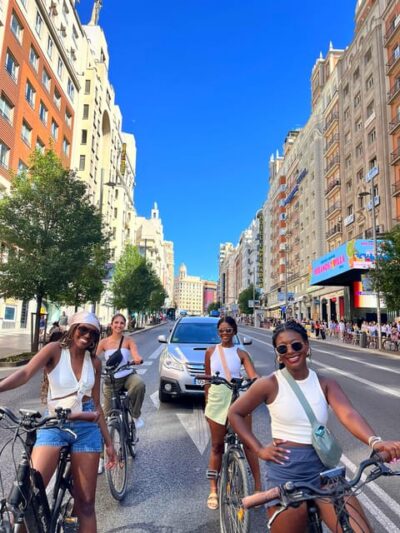
Best of Madrid: 3-Hour Guided Bike Tour in Small Groups
Read our review →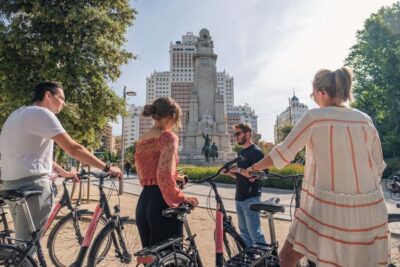
Highlights Bike Tour with Optional E-Bike or Tapas
Read our review →
Highlights Guided Vintage Bike Tour and Tapas Option
Read our review →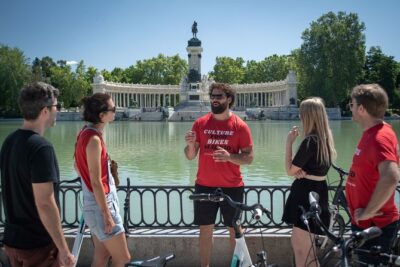
3 hour Guided Highlights Bike Tour with Optional Tapas
Read our review →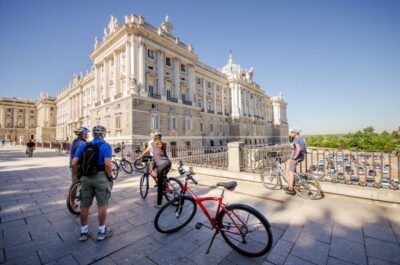
Madrid City Guided Bike/E-Bike Tour for Small Groups
Read our review →

Browse the lists this tour appears in