
Reviewed · RETIRO PARK TOURS
Madrid on foot: From Debod to Retiro
Madrid on foot from Debod to Retiro is interesting because it turns the city into one continuous storyline, from that unexpected Egyptian temple to the calm ponds of the park. I love how the guide uses facts you can actually use while you wander on your own, and I love the variety packed into just 3 hours, especially the Royal Palace and Plaza Mayor stops. The main drawback is simple: it is a real walking tour, so if you have mobility limits or low fitness, this route may feel like too much.
You’ll get a live Spanish or English cultural mediator, and the group is capped at 7 participants, which keeps questions and pace under control. You start in Plaza de España in front of the Cervantes monument, and you end back at the same spot, so you are not left trying to figure out where you are when the tour wraps.
Key highlights you will feel right away
- Debod’s Egyptian Temple in central Madrid: the tour opens with the kind of surprise that makes you pay attention immediately
- Royal Palace context, not just photos: you get the monarchy angle plus nearby landmarks you might otherwise miss
- Stories tied to specific streets: Calle del Codo and Madrid de los Austrias come with names and meaning, not random stops
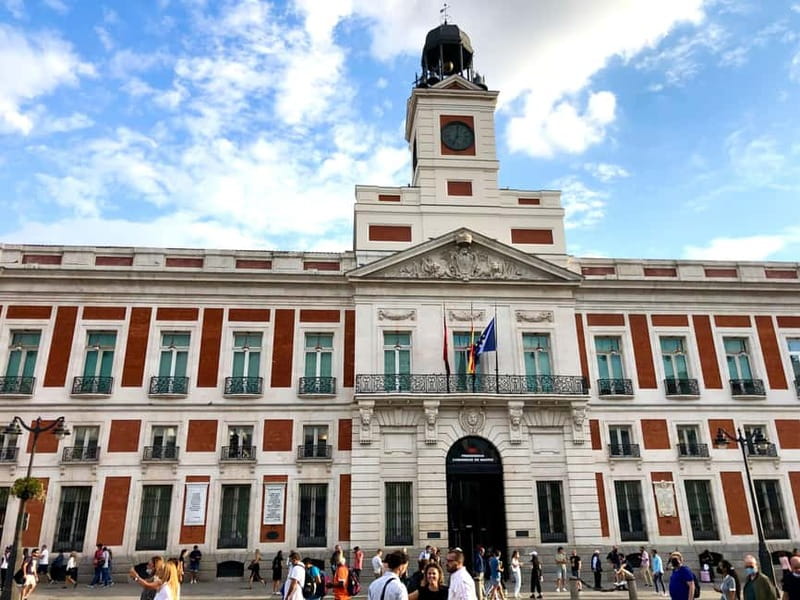
- Plaza Mayor and Puerta del Sol, explained like Madrid’s timeline: market square, fires, war memories, then the city’s heartbeat
- Calle Alcalá to Retiro Park: grand civic buildings step you toward the green payoff at the end
Debod to Retiro: the logic of this end-to-end walk
This tour works because it is built like a line you can follow. You start at Plaza de España and move through Madrid’s key layers, old power, classic squares, and then the large city park finish. It is not one of those walks where you just hop from monument to monument. You get the why behind the what, which makes the streets feel readable.
For me, the biggest value is that you leave with a mental map. After the tour, you can look at Royal Palace, Cathedral areas, and the major plazas and understand what each place is supposed to represent in Madrid’s story. That is also why this makes a great first or second day option, even if you plan to do other neighborhoods later.
One more practical point: with a small group of up to 7, the pace is usually friendlier for photos and questions. If you prefer a guided route instead of guessing your own order, this format helps a lot.
More Retiro Park tours in Madrid:
- Madrid Walking Tour from Puerta del Sol to Retiro Park
★ 5.0 · 2,285 reviews - Madrid: Iconic Retiro Park Segway Tour
★ 4.9 · 848 reviews - Madrid Private Segway tour. Retiro Park – Centro Historico
★ 4.9 · 636 reviews
Plaza de España and Cervantes, then the Egyptian temple surprise at Debod
The walk begins in Plaza de España, right in front of the Cervantes monument. It is a sensible meeting point because you get your bearings fast, and the tour quickly sets the tone with a head-turner: why there is an Egyptian temple in the center of Spain.
This kind of stop is perfect early. It breaks the usual Madrid pattern of only Spanish and only royal stuff. You learn to see the city as a place that collects influences, and then the rest of the route feels more logical. You are also ready to notice details that you might otherwise skip, because the guide teaches you what to look for in each new area.
Even if you already know Debod on a basic level, the value here is the explanation connecting it to Madrid’s central landscape. Then you transition from that surprise into the royal and religious zone nearby, where Madrid’s official story starts to show.
Tip for your shoes: the route is on foot and paced for a proper walk. Bring comfortable shoes you trust on sidewalks and uneven patches, since you will be moving for the full 3 hours.
Royal Palace of Madrid, Almudena Cathedral, and the theater bits people quote
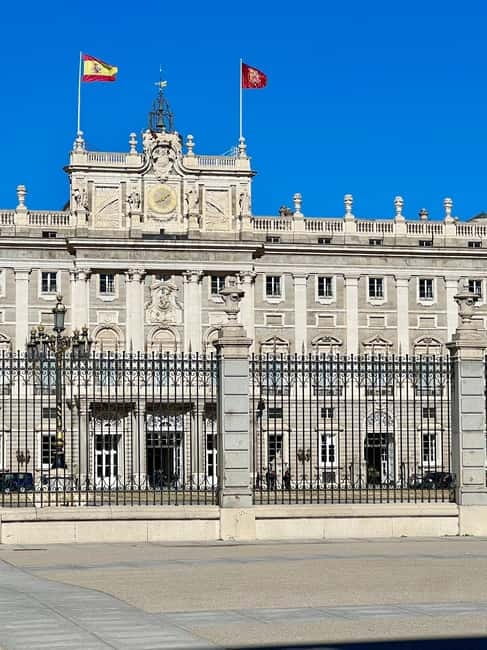
Next you hit the Royal Palace of Madrid, described as the largest palace in Western Europe and the official residence of the monarchy. The way the stop is handled matters. You do not just hear dates and big facts. You learn how the palace connects to the nearby landmarks people photograph separately, like Almudena Cathedral and the Royal Theater.
There is also a memorable layer that you do not usually get on a quick sightseeing stop: a statue whose construction involved Galileo Galilei. That is the kind of detail that makes you look differently at art and science touching the same public space.
The tour also includes the Royal Theater and a famous expression, Mucha m*!, explained in context. I like that these moments add local flavor without turning into pure gossip. You come away understanding how language sticks to places, especially when theaters and ceremonies are part of public life.
What you gain here: palace area context. When you later see the façade or the skyline angles, you can connect them to the role Madrid played in power, ceremony, and public image.
Possible watch-out: this portion is dense with landmarks. If you are the type who wants total free time to sit and absorb, you might find the pacing slightly tighter. Still, the guide’s job is to keep the story flowing, and that is what makes the whole route work.
Madrid de los Austrias, Quevedo’s footsteps, and Calle del Codo’s charm
After the royal zone, you move into Madrid de los Austrias, a part of town where the old fabric still feels close. One of the more charming details is a little character moment involving a curious neighbor who contemplates the foundations of the old Almudena. It is a reminder that historic places are not only buildings, they are also lived spaces with people keeping an eye on what came before.
Then comes Calle del Codo, tied to the writer Quevedo. This is the kind of street-name story that makes you slow down, because you start to see Madrid as a city of routes used by real people, not just backdrops for postcards.
This section is valuable for two reasons. First, it breaks up the heavy hitters so you do not feel like you are just “collecting monuments.” Second, it teaches you how to read the street layout and the neighborhood vibe, which helps when you want to roam a bit later.
If you enjoy writers, art, and the kind of old-city storytelling where one street name connects to a real figure, you will appreciate this part most.
Still in Madrid, a different sort of afternoon:
- Madrid: Tour Bernabéu Entry Ticket
★ 4.5 · 21,573 reviews - Madrid: Prado Museum Entry Ticket
★ 4.6 · 17,509 reviews - Madrid: “Emociones” Live Flamenco Performance
★ 4.8 · 12,866 reviews - Madrid: Panoramic Route City Tour
★ 4.1 · 12,259 reviews
Plaza Mayor: a market square that survived fires and wars
Plaza Mayor is where the tour turns into Madrid’s big central stage. You reach it after the older streets and the Quevedo connection, and suddenly you are in a wide open space with centuries behind every edge.
The guide explains that Plaza Mayor was once a market, and that it carries more than four centuries of history, including fires and memories of war. That matters because it changes how you experience the square. Instead of seeing only a pretty plaza, you start seeing the resilience of a place that got rebuilt and reused.
The tour also points out the claim that Plaza Mayor has the oldest restaurant in the world. Even if you do not base your travel plans on food trivia, this kind of detail helps you understand why this square holds on to its identity over time. It is not only for modern photos, it is still part of daily life.
What I like about this stop: you get context before the square becomes just scenery. That makes it easier to picture what happened there, and easier to spot the subtle ways the square shapes movement around it.
Puerta del Sol and Gran Vía connections: Madrid’s heart in motion
From Plaza Mayor it is not far to Puerta del Sol, the heart of Madrid. This is one of those places where you could walk through without noticing much, which is exactly why a guided route helps.
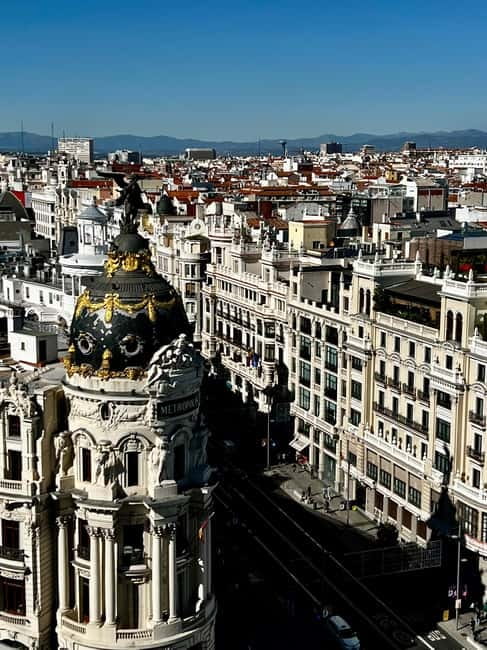
Here, the guide takes you in and out through several streets that connect to Gran Vía, Madrid’s main artery. You do not stay bottled in one spot. You see how Sol links to the city’s bigger flow.
This stop is especially good if you want to understand Madrid as a living system. It is not just royal corners and historic squares. It is also the modern grid that people move through every day.
Practical mindset: expect crowds and movement around Sol. The tour approach helps you navigate the busiest areas while still learning something, instead of just wrestling with foot traffic.
Calle Alcalá, Círculo de Bellas Artes, Banco de España, Cibeles, and Puerta de Alcalá
After Sol, the walk continues along Calle Alcalá. This part is a nice transition because you move from big public squares into a corridor of recognizable institutions.
The tour passes the Círculo de Bellas Artes, and it also spotlights the Banco de España. Important detail: you are shown the real Banco de España and reminded not to mix it up with the one that appears in La Casa de Papel. That is a very practical note for anyone who thinks they recognize a façade from TV.
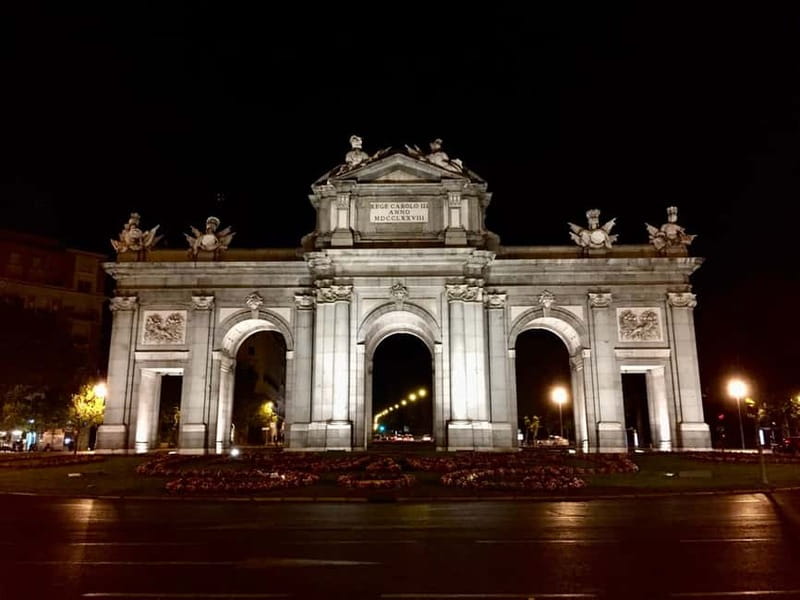
You also see the fountain and palace of Cibeles, followed by Puerta de Alcalá. These are the kinds of landmarks that you can easily view and then forget, unless someone gives you the role each one plays in Madrid’s city-picture. That is where the tour earns its keep.
What you learn here is not only what things are. You learn why Madrid stacks formal buildings along major streets, creating an urban stage that shifts from the city core toward the park finish.
Ending at Retiro Park: ponds, Palacio de Cristal, and Ángel Caído
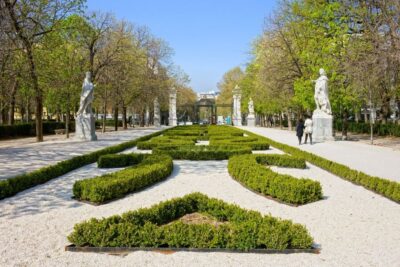
Retiro Park is the payoff. After the architectural intensity of palace area streets and major boulevards, you get open space and calmer scenes.
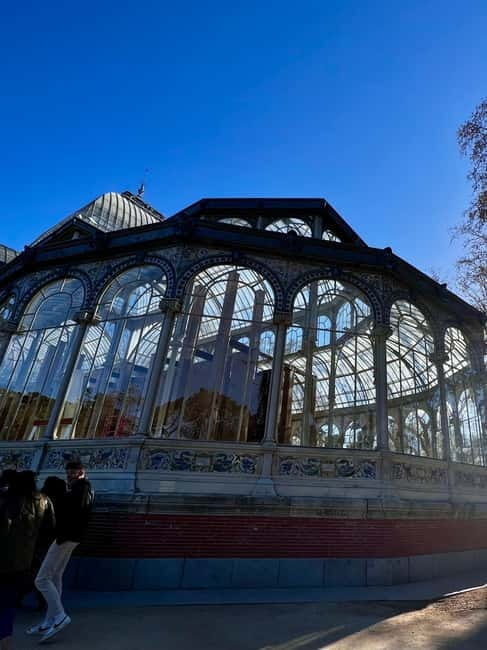
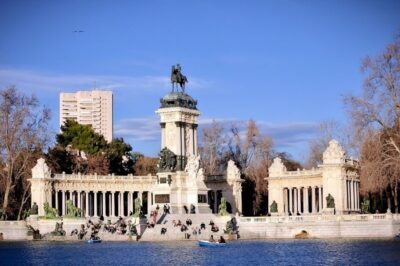
The tour highlights Retiro’s ponds, the Palacio de Cristal, and Ángel Caído. This final stretch is a smart way to land the story. The guide essentially gives you a quiet last chapter, where Madrid feels less like government and more like everyday escape.
Why this ending is smart: it helps you mentally cool down. You go from dense landmark talk into something softer and slower. It also gives you options after the tour. If you want more time, you can stay in the park on your own and keep exploring.
If you are planning the rest of your day, this ending makes it easier to branch out. You are not stuck at a remote corner. You are at one of Madrid’s best-known green spaces, where it is easy to continue at your own pace.
Price, group size, and why $28 can be good value
At $28 per person for about 3 hours, the value depends on how you travel. If you like guided context, a living guide who connects the dots can be a solid deal. You are not just getting a route, you are getting explanations of why Madrid’s surprises exist, why certain streets and neighborhoods matter, and how key plazas fit together.
The small-group cap of 7 participants also matters. You are less likely to feel like you are being rushed through photo stops. In a tighter group, a guide can answer the questions that pop up naturally during the walk.
One more value point: you get live guiding in Spanish and English, so you can match your comfort level without losing the story. If you are traveling with someone who prefers explanations over audio apps, this format usually fits well.
Who should join this Debod to Retiro walk
This tour fits best if you want a guided history and cultural walk that strings major Madrid landmarks into one easy route. It is ideal for people who enjoy street-level storytelling and learning the meaning behind place names, not only taking pictures.
You might like it most if:
- you want to see the Royal Palace area, Plaza Mayor, and Puerta del Sol without planning a complex route yourself
- you enjoy learning how language and culture attach to specific sites, like the Royal Theater reference
- you want a small-group experience with a live guide who can explain what you are seeing
Who should skip
This one is not suitable for children under 8, people with mobility impairments, people with low fitness, and people over 70. If any of those apply, I would choose a less demanding format. Also, keep in mind there is no alcohol and drugs allowed, which is usually a plus for a relaxed atmosphere.
Should you book Madrid on foot from Debod to Retiro?
Book it if you want the “best of Madrid” feel in one guided walk, with clear, story-driven context that makes the city easier to understand after the tour ends. The route covers major highlights, but it also includes the kind of details that make Madrid feel personal, like Quevedo’s connection to Calle del Codo and the Galileo Galilei statue construction mention.
Skip it if you cannot do a sustained 3-hour walk, or if your mobility needs make street-level travel tricky. In that case, you would probably spend the tour focusing on logistics instead of the actual sights.
If you do book, do yourself a favor and pack the basics: comfortable shoes and season-appropriate clothing. Then show up ready to walk, ask questions, and treat the city like a storyline you can follow from start to finish.
FAQ
Where does the tour start?
It starts in front of the Cervantes monument in Plaza de España.
Where does the tour end?
The activity ends back at the meeting point, in front of the Cervantes monument.
How long is the walking tour?
The duration is 3 hours.
What languages are available?
The live tour guide offers Spanish and English.
How big is the group?
The group is limited to 7 participants.
Is it suitable for children or people with limited mobility?
It is not suitable for children under 8 years, it is not suitable for people with mobility impairments, and it is also not suitable for people with low level of fitness.
Recently reviewed around Madrid
- Tour en Tuk Tuk por lo mejor de Madrid★ 3.4 · 13 reviews
- From Madrid: Toledo Day Trip with Cathedral and 8 Monuments★ 4.3 · 32 reviews
- From Madrid: Toledo Guided Day Trip with Cathedral Admission★ 4.4 · 79 reviews
- Madrid: Tasty Tapas Tour & Visit to a Terrace with Views★ 4.5 · 118 reviews
- Madrid: Spanish Tapas Tour★ 4.3 · 7 reviews
- From Madrid: Best of Sevilla Day Tour with Train Transfers★ 4.6 · 40 reviews
- Tapas Food Tour with Dinner in Madrid★ 5.0 · 6 reviews
- Small Group Prado Museum Guided Tour with Skip the Line★ 4.2 · 106 reviews
Retiro Park Tours, compared.
Madrid Walking Tour from Puerta del Sol to Retiro Park
Read our review →
Madrid Private Segway tour. Retiro Park – Centro Historico
Read our review →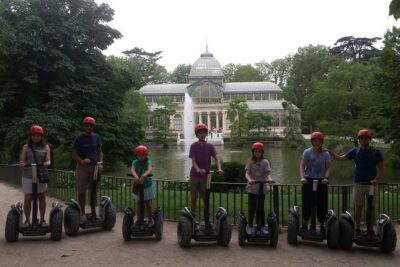
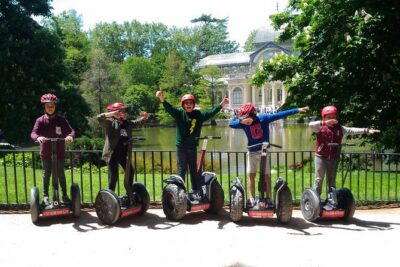
Magical and Iconic Retiro Park Segway Tour in Madrid
Read our review →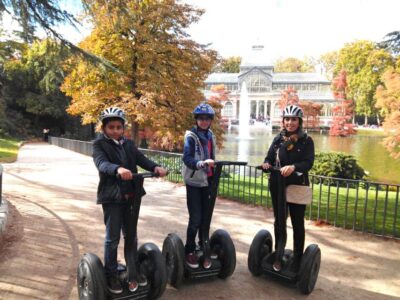
Browse the lists this tour appears in