
Reviewed · MADRID
Spanish Civil War start of 2 World War, Guernica Franco
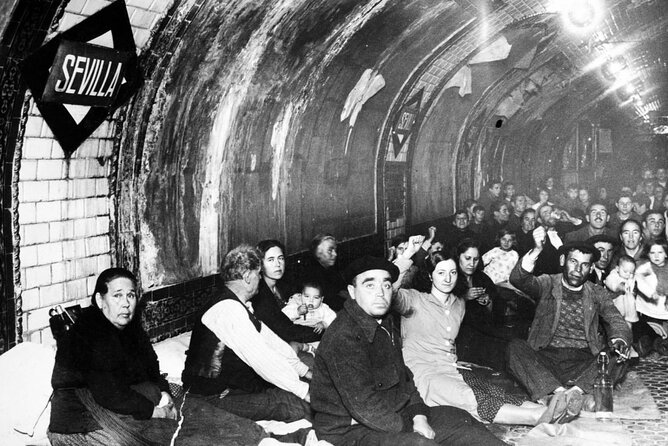
Madrid is a great city for history, but this tour is different. It uses the streets themselves to explain how the Spanish Civil War shaped daily life and how the conflict fed into the darker machinery of the 20th century, with Guernica and Franco woven into the story as you move. You start in the center, then keep walking toward Moncloa, ending at the Arco de la Victoria, where the tour turns from events into memory.
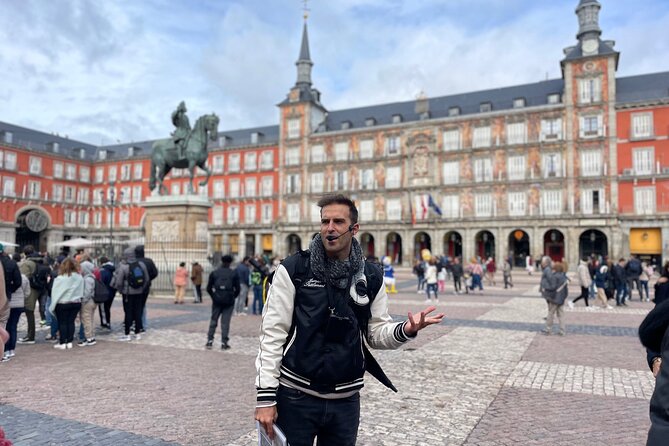
What I like most is how the guide keeps the details clear while staying human. I also like the mix of locations and media support, so you are not just hearing dates, you are seeing maps, images, and listening to audio cues that make the message stick. One thing to consider, this is a heavy, political route, so it is not a casual, lighthearted stroll.
Key Highlights From This Madrid Spanish Civil War Walk
- Bombed streets plus visible scars, especially around Plaza del Callao
- A clear thread connecting Spain, WWII, and dictatorship, not just local events
- Multimedia support with maps, images, audio, and video included
- A thoughtful stop at Arco de la Victoria, where the tour asks what to do with war monuments
- Short, focused segments at each landmark, so you stay engaged for about 2.5 hours
Why This Madrid Walk Starts With Plaza del Callao and Ends at the Arco de la Victoria
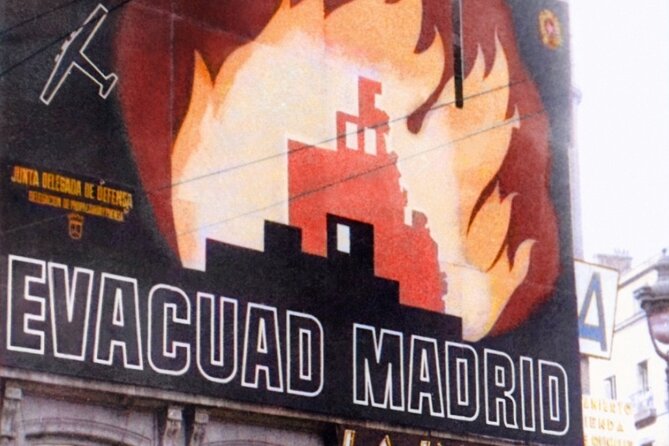
This is the kind of Madrid tour that makes you look twice at ordinary buildings. The route is built around the Spanish Civil War in Madrid, then expands into how the war became a rehearsal for bigger conflicts. You feel that shift as you go from central bomb damage to the politics of monuments and propaganda.
If you like tours that do more than point, you will likely enjoy this one. The approach is practical and story-driven, with a local guide who keeps things organized and understandable. You may even encounter guides such as Victor, Maikel, Adria, Guillermo, or Chato, who are known for being friendly and for handling the topic with care, while still making it feel engaging and real.
One consideration: the emotional tone can be serious, and the themes are sharp. If you are in Madrid for sun, snacks, and light sightseeing only, this might feel like too much. But if you want meaning from the city, it is a strong use of time.
More of Madrid worth an open tab:
- Madrid: Tour Bernabéu Entry Ticket
★ 4.5 · 21,573 reviews - Madrid: Prado Museum Entry Ticket
★ 4.6 · 17,509 reviews - Madrid: “Emociones” Live Flamenco Performance
★ 4.8 · 12,866 reviews
Price and Timing, Plus How to Plan Your Day Around It
The price is unusually low, listed at $3.62 per group (up to 15 people), and the duration is about 2 hours 30 minutes. That matters because you are not paying museum-style ticket prices for an experience that uses multiple landmarks plus multimedia materials.
It also helps that the tour does not require you to buy entry tickets to reach or understand the stops. You can keep the day flexible and still cover a lot of ground in a single session.
A small practical note: it is commonly booked about 16 days in advance, so if you want a specific English time slot, it is smart to reserve sooner rather than later. The group size is capped at up to 30 travelers, and you will receive a mobile ticket, which makes check-in easier.
What You Actually Get: Local Guide Plus Maps, Audio, and After-Tour Recommendations
This tour includes more than a walk and a lecture. You get exclusive material like maps, images, audio, and videos. That is a big deal for a subject like the Spanish Civil War, because so many factions, events, and propaganda messages overlap and can blur together fast.
Then there is the human part. You have a local guide, and after the tour you get personalized attention with recommendations for what to do in Madrid. That is useful if you are trying to connect themes from the walk to real places you can visit later, like art spaces, memorials, or neighborhoods that fit your interests.
One more practical point: the guide provides a link to personalized recommendations, so you can plan the next steps quickly. If you are only in Madrid briefly, this kind of “what next” support helps you turn a tour into a better overall day.
Plaza del Callao: Bombings, Scars, and Life Under Pressure
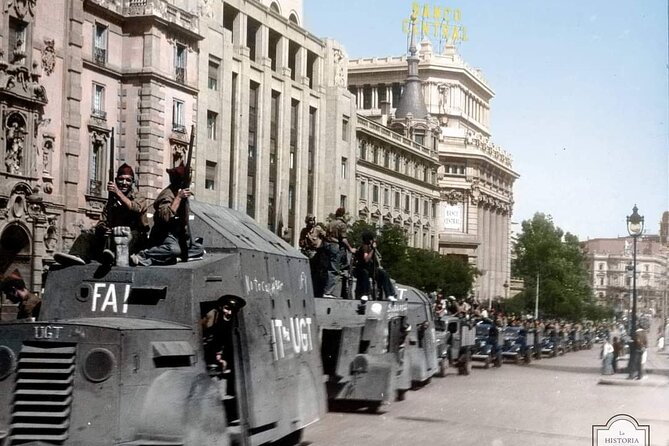
The walk opens at Plaza del Callao, one of Madrid’s central squares. The tour frames this area around bombings in central Madrid, with a focus on buildings with scars. You are meant to connect what you see in the streets to what was happening above and around those streets during the conflict.
What makes this stop work is that it does not treat the bombings like an abstract tragedy. It pushes you toward how war changes everyday choices, habits, and stories. The tour even brings in the idea of the life of a Spaniard at war and whether you would go to the movies, which nudges you to think about distraction, morale, and propaganda rather than only destruction.
Time here is about 15 minutes, so do not expect a long stop at this first location. Instead, treat it like your “context marker.” When the later stops talk about propaganda and ideology, you will already understand what the city looked and felt like under fire.
Potential drawback: if you are sensitive to violent historical events, the opening can feel intense. The upside is that it immediately sets the tone for understanding Madrid during the war.
Still in Madrid, a different sort of afternoon:
- Madrid: Panoramic Route City Tour
★ 4.1 · 12,259 reviews - Madrid: Live Flamenco Show with Food and Drinks Options
★ 4.5 · 9,901 reviews - Avila & Segovia Tour with Tickets to Monuments from Madrid
★ 5.0 · 9,762 reviews - Three Cities in One Day: Segovia, Avila and Toledo from Madrid
★ 5.0 · 8,402 reviews
Palacio del Senado: Two Divided Spains and Why This Was More Than a Local Fight
Next comes Palacio del Senado. This stop is all about origins and framing, focused on how the Spanish Civil War begins. The tour presents the idea of two divided Spains, and it keeps pushing outward, explaining how Spain became a kind of test range for what would later scale up elsewhere.
This is the moment where the tour starts tying your everyday Madrid sightseeing to larger European shifts. Even if you already know the major names, you might not have thought about the war as a preview of bigger forces, including the way violence, messaging, and political control can be tested in smaller theaters before expanding.
Expect about 20 minutes here. It is long enough to connect the dots, but short enough that you keep moving and do not lose momentum. You will likely leave this stop with a clearer mental map of how factions and ideology fueled the conflict.
Plaza de España: Franco, the 900 Days of Siege, and Wartime Sayings
At Plaza de España, the tour turns to Francisco Franco and the defense of the capital. One of the key themes is the 900 days of siege. The guide uses this to explain what it meant to keep a city running under extreme pressure, where shortages, fear, and propaganda all shape daily rhythm.
The tour also mentions Madrid under pumps and wartime sayings. That matters because it hints at a wider wartime reality: life is not just battles and banners. It is how people talk, joke, cope, and try to make sense of what is happening around them.
This stop lasts about 15 minutes, which is perfect for a focused topic like the siege. You get the emotional weight and the basic facts without being stuck in one place too long.
If you want a “Madrid moment” that feels iconic and still connected to serious events, this is it. Plaza de España is a strong visual stage, and the guide makes sure the story stays anchored to people rather than just politics.
Templo de Debod: Who Paid for the War, Propaganda, and a Memorial for the Fallen
Then you reach Templo de Debod, and the tour shifts again from battles to the systems around them. The stop focuses on money: who paid for the war and on propaganda: war of ideas. That is a smart change of pace because it helps you see the conflict as something financed, narrated, and managed, not only fought.
Templo de Debod is also tied to remembrance, including a sculpture to the fallen of the civil war. So you have both the “why it happened” discussion and the “how we remember it” presence in one place.
Expect about 20 minutes. The value here is that the guide helps you interpret propaganda as a tool that competed for hearts and minds. Once you have that lens, later stops about culture and monuments make more sense.
Potential drawback: if you expected a purely museum-style historical explanation, this stop can feel more conceptual. But if you like understanding the psychology behind events, it is one of the most useful parts of the walk.
Paseo del Pintor Rosales: Picasso, Guernica, and Art Under Fire
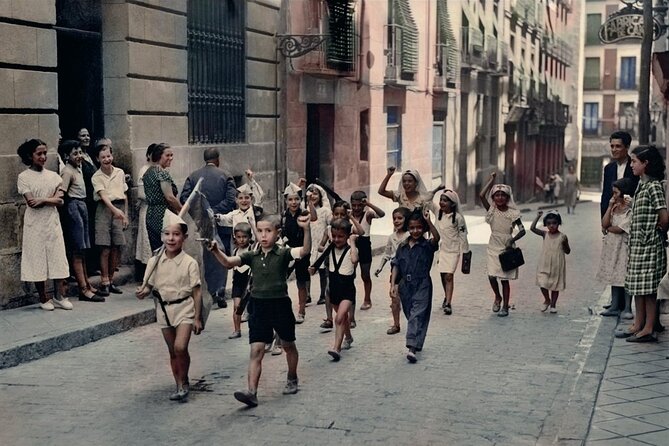
At Paseo del Pintor Rosales, the tour makes a powerful move: it connects the war to art, starting with Picasso and Guernica, specifically tied to the bombing of civilians. This is where the tour helps you understand how violence becomes visual evidence and moral argument.
The guide then brings in the idea of the Prado Museum and art under fire. Even if you are not entering any galleries, you will get a sense of how art, institutions, and cultural identity can be threatened, protected, or used as messaging during conflict.
There is also mention of Christmas in Tregua, described as a breather. The point is not that the war suddenly became gentle. The point is that even during harsh conditions, people seek small pauses and moments of humanity, and those moments get carried into memory and storytelling.
This stop lasts about 20 minutes. It is ideal if you want your learning to connect to culture, not only politics. If you are an art lover, you will probably find this the most emotionally gripping section, because it uses creativity to frame suffering and empathy.
Cuartel General del Ejercito del Aire: Military Tech, Medicine, and the Soundtrack of War
Next is Cuartel General del Ejercito del Aire. The themes here are unusual in a good way. The tour touches on music, including a reference to they won’t happen and Sun Face, and it also highlights a medical turning point with 1st remote blood transfusion: life in the middle of death.
Why this stop is worth your time is simple: it reminds you that wars do not only destroy. They also accelerate science, tactics, and logistics, often in ways that are morally complicated and deeply human.
This stop is about 15 minutes, so you are not expected to absorb everything. You are meant to pick up the thread that war reorganizes society, including what people do to keep others alive, what they sing, what they fear, and what they try to control.
Potential drawback: if you prefer only major political events and famous leaders, this stop might feel more niche. But if you want the conflict understood as a total system, it is a strong piece of the puzzle.
Arco de la Victoria: Destroy or Preserve, and How Monuments Teach Us
The final stop is the Victory Arch (Arco de la Victoria). The tour frames the big question directly: destroy or preserve it? It turns the walking tour into a conversation about how wars echo through stone and slogans, and how societies decide what to keep, what to condemn, and what to reinterpret.
There is also an explicit theme of reflections of wars, which is where your perspective should start broadening. Earlier stops help you understand what happened. Here, the guide helps you consider what it means that those events were turned into public symbols.
This last segment lasts about 20 minutes. It is a good way to end, because it does not drop you at a landmark and send you away. It encourages you to think, even after the tour finishes, about how memory works in real life.
If you end your walk here, you will also likely appreciate the practical setup: your tour ends near Moncloa, with the metro nearby, which makes it easy to keep moving through Madrid afterward.
Value Check: Who This Tour Suits Best
This tour is a great fit if you want an intelligent, story-led Spanish Civil War experience in central Madrid that still feels grounded in real places. It works well for first-timers because the route uses major points of interest, including Plaza del Callao, Plaza de España, Templo de Debod, and a finish near Moncloa.
You will also likely enjoy it if you like tours that handle complex topics with care. The guides connected to this experience, including Victor, Maikel, Adria, Guillermo, and Chato, are repeatedly described as clear and welcoming, and as able to balance education with a more human mood.
Where it might not be ideal: if you want only relaxed sightseeing, or if you are uncomfortable with war topics and the politics of memory, the subject matter may feel heavy.
Should You Book This Spanish Civil War Walking Tour?
I think you should book it if your goal is to understand how the Spanish Civil War played out across Madrid and why it still matters in public memory. The mix of multimedia materials, a local guide, and a route that moves from bombings to propaganda to monuments makes the learning feel connected rather than scattered.
You should also book it if you like the idea of not paying for site entries, while still seeing a sequence of landmarks that keep the story flowing. For a price that is closer to a small coffee than a major attraction, you are getting serious context and a guided way to look at Madrid differently.
If you are unsure, use this test: do you want the city explained beyond postcards? If yes, this is a strong choice, and the 2.5 hours is long enough to feel meaningful without turning into a time sink.
Recently reviewed around Madrid
- Tour en Tuk Tuk por lo mejor de Madrid★ 3.4 · 13 reviews
- From Madrid: Toledo Day Trip with Cathedral and 8 Monuments★ 4.3 · 32 reviews
- From Madrid: Toledo Guided Day Trip with Cathedral Admission★ 4.4 · 79 reviews
- Madrid: Tasty Tapas Tour & Visit to a Terrace with Views★ 4.5 · 118 reviews
- Madrid: Spanish Tapas Tour★ 4.3 · 7 reviews
- From Madrid: Best of Sevilla Day Tour with Train Transfers★ 4.6 · 40 reviews
- Tapas Food Tour with Dinner in Madrid★ 5.0 · 6 reviews
- Small Group Prado Museum Guided Tour with Skip the Line★ 4.2 · 106 reviews