
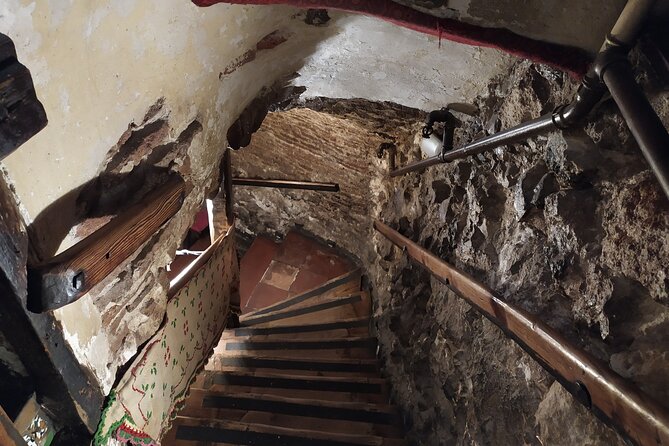
Reviewed · WALKING TOURS
Private walking Tour: The oldest taverns of Madrid
Madrid’s taverns are not just dinner stops, they are social history you can step into. This private walking tour strings together some of the city’s earliest eating houses, from a 17th-century inn site to classic 1800s taverns with political and bullfighting links. You walk, you taste, and you leave with a much clearer sense of how Madrid’s everyday life became the Madrid on menus today.
I love how each stop is a timeline, not random “foodie sampling.” I also love the way the guide connects the buildings to real people, from aristocrats and intellectuals at Lhardy Restaurante to the bullfighting world threaded through Malacatín and Taberna Antonio Sánchez. One thing to consider: it is a walking tour with multiple tavern stops, and on busy days it can feel crowded inside, so comfy shoes and patience help.
Quick Reasons This Taverns Walk Is Worth Your Time
- A true Madrid cross-section, from aristocratic dining culture to neighborhood tapas culture
- Six historic stops across several centuries, including an inn site from 1610
- Included tastings at the first and last taverns, so you get real value without feeling rushed
- Small-group intimacy, it is private, so your guide can pace and explain as you go
- Guide-led access and stories, including secret-feeling corners inside places you would miss on your own
Why Madrid’s Old Taverns Are More Than Places to Eat
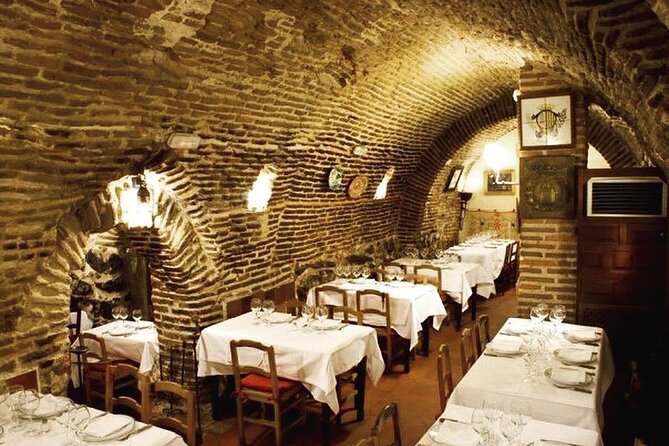
If you only visit Madrid for museums and viewpoints, you miss a big part of how people actually lived. Taverns in Madrid were where careers got discussed, news spread, and everyday Spaniards treated themselves. This tour uses that idea in a smart way: you are not just eating, you are learning how these spaces functioned in different eras.
What makes it especially satisfying is the variety of “older” you see. Yes, you get classic 1800s taverns. But you also get the 1610 perspective through Petit Palace Posada del Peine, which helps you understand the difference between inns and taverns. That kind of context makes what you taste later feel more meaningful, because you know what kind of social machine you are standing in.
And because it is private, your guide can tailor the pace. If you want more talk about people and politics, you can lean in. If you want it lighter and more about what to order, you can lean that way too.
More walking tours in Madrid:
- Toledo Tour & Vineyard Walk with Wine Tasting from Madrid
★ 5.0 · 2,546 reviews - Madrid Walking Tour from Puerta del Sol to Retiro Park
★ 5.0 · 2,285 reviews - Madrid Old Town & Royal Palace Walking Tour Skip the Line Ticket
★ 4.5 · 1,829 reviews
Getting Oriented: The Route Starts at Puerta del Sol
You meet at Rodilla, Puerta del Sol 13, Centro. That location matters more than it sounds. Puerta del Sol is the center of gravity in Madrid, easy to reach by public transport, and simple to navigate before and after your walk.
The tour runs about 1 hour 50 minutes to 2 hours 30 minutes, so it fits nicely into a first day or a mid-trip afternoon when you want to get your bearings. There is pickup offered, but the stated meeting point is Puerta del Sol, so you will still want to be ready to start there unless your guide confirms otherwise.
Also note the tour ends in a different location. That is a good thing, because it naturally spreads you out across the city instead of looping back to the start. Just plan a loose next stop, maybe a casual lunch or another neighborhood wander.
Stop 1: Lhardy Restaurante (1839) and the Aristocracy-to-Intellectuals Story
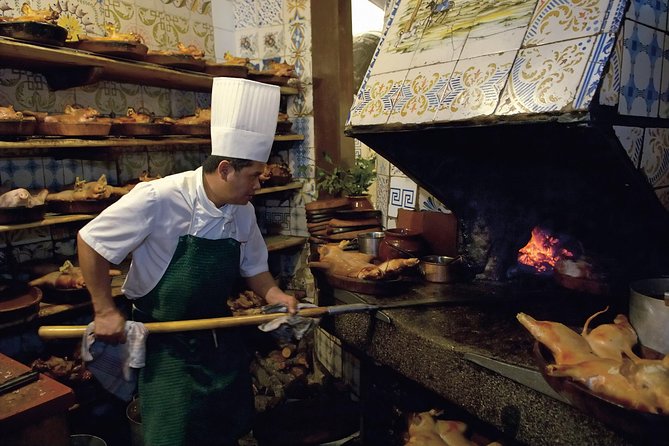
The walk begins at Lhardy Restaurante, founded in 1839. This is where the tour sets its tone: the place was a favorite for Madrid’s higher society, including the kings, but it was also used by artists, writers, and intellectuals. In other words, it is a tavern-adjacent start that immediately shows the social range of Madrid dining.
What I like about starting here is the feeling. You are stepping into a restaurant that reads like a palace inside, but it is still connected to everyday rituals like ordering, lingering, and treating dining as a public event. It also primes you for later stops, where the same walls concept gets translated into neighborhood life.
You should also know this stop includes the first set of tastings: one drink and one tapa are included here. That is a smart pacing trick. You get warmed up early, then the rest of the tour can be more exploratory.
Stop 2: Casa Labra (1860) for Old-School Tapas at a Good Price
Next up is Casa Labra, a tavern dating from 1860. This is classic Madrid in the best way. The setting is known for people settling in for tapas and beers at a price that keeps things friendly and repeatable.
The fun part here is the mix of normal and unusual. The tavern is known for its steady popularity, and it also has a curious connection to Spanish politics. You do not need to be a politics expert to enjoy this stop. The guide typically frames it as how places like this became informal meeting points, where conversations mattered long before social media.
This stop is shorter, about 10 minutes, so treat it as a “listen and notice” moment. Look at how it operates, how locals move through it, and how the staff and regulars keep the vibe going. Even if you are picky about food, you can still leave with something real: an understanding of how Madrid’s taverns worked like community hubs.
A few more Madrid tours worth comparing
- Madrid Welcome Tour with Local Guide in Eco Tuk Tuk Private
★ 5.0 · 2,936 reviews - Madrid: Private City Tour by Eco Tuk Tuk
★ 4.9 · 2,876 reviews - Madrid Historical Tour with Local Guide in Eco Tuk Tuk Private
★ 5.0 · 876 reviews - Toledo Private Tour with Licensed Guide and Driver from Madrid
★ 5.0 · 637 reviews
Stop 3: Petit Palace Posada del Peine (1610) and the Inn vs. Tavern Insight
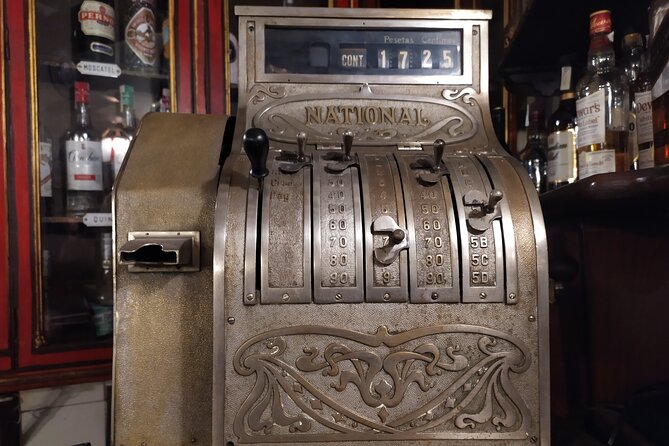
Petit Palace Posada del Peine is not a tavern, but it earns its place on this tour. It dates back to 1610, and that early date is the point. If the later stops feel like modern-ish “old places,” this one shows you how long the tradition of lodging and eating in the same ecosystem goes back.
The guide uses this stop to explain the difference between inns and taverns. That matters because people often lump everything together as tapas culture. But in older Madrid, the lines between where you ate, where you slept, and where you met were not always neat. Understanding that helps you read each building with more care.
Even though you spend around 10 minutes here, I think it is one of the most useful stops. It keeps the tour from becoming purely a list of famous names. It also gives you a framework so when you see old streets and old doors on your own later, you can start guessing what kind of place you are looking at.
Stop 4: The Guinness-Recognized Oldest Restaurant in Madrid
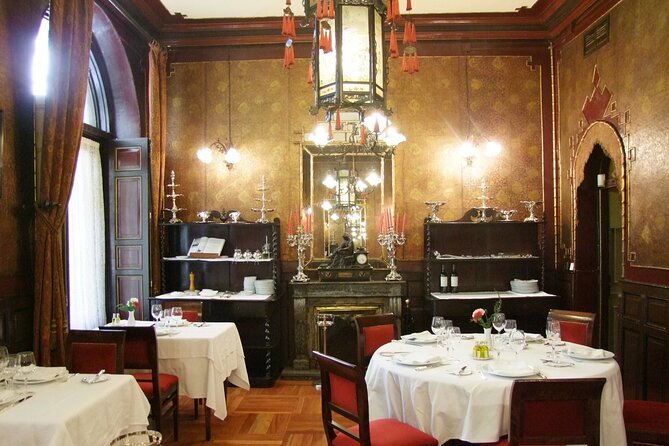
Then you get to the legendary stop: the oldest restaurant in the world, recognized by Guinness World Record. The tour does not rush it, and it does not pretend it is just a photo op. This is the kind of place where the age itself is part of the story.
What you should expect is more of a context stop. You will hear why restaurants like this became institutions, how they survived through changes in taste and society, and why people keep showing up. The guide typically frames it as a Madrid pattern: if a place becomes reliable, it becomes a default.
This stop runs about 15 minutes. It is enough time to let the scale of the reputation sink in without turning the tour into a long food-only slog. Since it is a walking tour, the pacing stays practical, and you keep energy for the later tastings and tavern personality stops.
Stop 5: Malacatín (1895) and the Bullfighting Connection
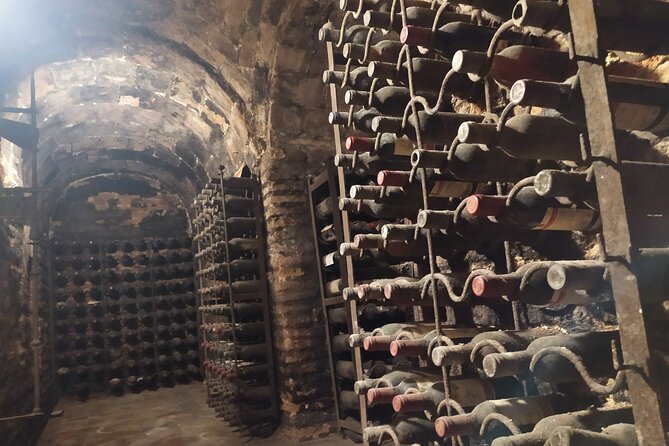
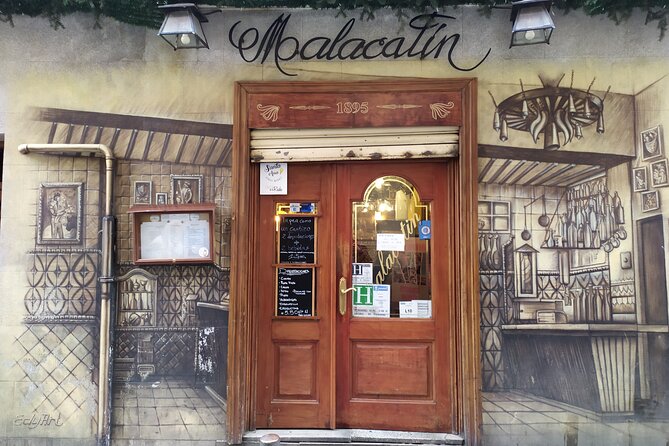
Malacatín is one of Madrid’s most traditional taverns, founded in 1895. It is also a place with personality, and it has strong ties to the world of bullfighting. If you are curious about why bull culture echoes through Madrid beyond the arena, this is one of the more direct ways to spot it.
This stop is about 20 minutes, and it is long enough to notice details that matter. The guide usually explains how bullfighting influenced social life, who gathered, and why taverns became part of the routine around events.
If you are not into bullfighting, you can still enjoy this stop. You will likely come away with a better understanding of how Madrid’s public life spilled into everyday spaces like bars and eateries. And once you have that lens, ordering becomes more fun. You start to think, Who would have ordered this back then, and why?
Stop 6: Taberna Antonio Sánchez (1787) and the Surprise of French Wine
The last historical anchor is Taberna Antonio Sánchez, including the long timeline behind it. It is known as the tavern of three centuries, with roots in 1787, while later connections tie it to a bullfighter who founded it in 1884. The tour blends those timelines in a way that makes it feel coherent instead of confusing.
This stop is also where the tour finishes with another tasting: one drink and one tapa are included at the final tavern. That makes the ending feel satisfying, not just “and that’s it, bye.”
There is one more detail to look forward to: the guide will talk about its French wine, and you will hear how it is probably not what you expect. That kind of gentle surprise is exactly what keeps an old place interesting. You are not just hearing dates, you are learning how people interpreted flavors and labels in their own time.
Like the rest of the tour, admission tickets at these stops are listed as free, so you are not paying extra just to stand in line or enter a ticketed museum.
What You Really Get for the Money: Tastings, Time, and Private Guide Value
The price is $152.59 per person, which is not cheap. But you are paying for a private walking experience with a guide who connects the dots, plus two tasting moments that include one drink and one tapa at the first and last tavern.
So you should think of value in three parts:
- Story time: You get explanations tied to when each place opened and how Madrid society used them.
- Practical tasting: You get real food and drink included without needing to coordinate with a friend or guess what is classic.
- Convenience and access: It is private, so you are not stuck with a large group pace. And based on what people have said, guides like Diana and Guido tend to manage the stops smoothly, with the taverns recognizing them and helping you feel like you belong inside the moment.
If you are traveling solo, this can be one of the pricier ways to do food history. If you are a couple or small group, it can start to feel more reasonable because you are splitting the guide and private time. The tour is booked about 46 days in advance on average, which is a polite way of saying it is popular, especially for people who want a strong start to their trip.
Who This Tour Suits Best (and When It Might Not)
This is a great fit for you if you like three things: history with real settings, tapas culture that goes beyond trendy areas, and guides who explain local perspective in plain language. It is also a smart choice early in your trip because you start recognizing patterns and names later when you eat on your own.
It is less ideal if you want a fast, purely food-centric crawl with lots of tastings. Since the included drink and tapa are only at the first and last taverns, you may want to budget extra for additional stops if you get hungry between. The tour is designed to be informative and paced, not a full meal.
Also plan around walking. This is still a walking tour, so you want shoes you can trust. And since the taverns can get busy on weekends, keep your expectations flexible. If it is crowded inside, you will still get the stories and the vibe, but service can feel slower than a quiet weekday.
Tips for a Smooth, Madrid-Style Afternoon
Bring a simple plan: comfortable shoes, a charged phone for the mobile ticket, and an appetite that can handle standing and short conversations. Since the tour is offered in English and is private to your group, you should be able to ask questions without feeling rushed.
I also suggest you treat it like a mini-lesson. When the guide mentions politics, bullfighting, or the difference between inns and taverns, jot the names mentally. Later, when you see a similar street or a similar dining room, you will start recognizing what type of social space it is.
Finally, ask your guide one ordering question at each stop. Even if you do not drink alcohol, you can learn what locals consider a solid pairing. That is the kind of practical knowledge that pays off long after the tour ends.
Should You Book the Oldest Taverns Walk?
Book it if you want a guided, private introduction to Madrid that blends six historic stops with real tastings and clear explanations. It is especially good for first-timers who want local context quickly, and for anyone who likes the way old places connect food to people.
Skip it only if you are chasing lots of included tastings, want a strictly museum-style itinerary, or you dislike walking and standing in traditional spaces when they are busy.
FAQ
How long is the walking tour?
The tour lasts about 1 hour 50 minutes to 2 hours 30 minutes, depending on the pace of the group and stops.
What food and drinks are included?
At the first and the last taverns, you get one drink and one tapa per person at each stop. That totals two drinks and two tapas per person.
Where does the tour start?
The tour starts at Rodilla, Puerta del Sol 13, Centro, 28013 Madrid, Spain.
Is this tour private, and is it offered in English?
Yes, it is private, so only your group participates. It is offered in English.
Is pickup available?
Pickup is offered, but the listed meeting point is Rodilla at Puerta del Sol 13.
Can I cancel for a full refund?
Yes. You can cancel up to 24 hours in advance for a full refund.
Do I get a mobile ticket?
Yes. The tour includes a mobile ticket.
Recently reviewed around Madrid
- Madrid: Treasure Hunt Experience★ 5.0 · 4 reviews
- Madrid Spanish Omelet Cooking Class and Bottomless Wine brunch★ 5.0 · 50 reviews
- Avila and Segovia private day trip with hotel pick up from Madrid★ 5.0 · 68 reviews
- Prado Museum Tour with ticket, small group & expert guide★ 5.0 · 6 reviews
- Bernabeu Stadium Private Guided Tour★ 3.5 · 4 reviews
- Spanish Group Course in Madrid, Spain: 20 Lessons★ 5.0 · 11 reviews
- Self-Guided Audio Tour – Cervantes Literary Experience in Madrid★ 4.0 · 6 reviews
- Madrid Bike Tour with Churros and Wine, Ham, and Cheese Upgrade★ 5.0 · 8 reviews
Walking Tours, compared.

Toledo Tour & Vineyard Walk with Wine Tasting from Madrid
Read our review →
Madrid Walking Tour from Puerta del Sol to Retiro Park
Read our review →
Madrid Old Town & Royal Palace Walking Tour Skip the Line Ticket
Read our review →
Spanish Inquisition and Legends Evening Walking Tour
Read our review →
6-Hour Day Trip to Toledo with Guided Walking Tour
Read our review →
Browse the lists this tour appears in