
Reviewed · MADRID
Inquisition, The Executioner, Witches, Expulsion Jews and Muslims
The Inquisition topic is heavy, but this Madrid walk makes it concrete, step by step, by linking ideas of faith, fear, and punishment to real corners of the city. You see the places where accusations were announced and power was carried out, and you also get a clearer view of how Christianity, Islam, and Judaism were pulled into the same brutal story.
What I love is the structure, eight focused stops that keep the timeline moving, without drowning you in theory. I also love the way the guide skills come through, with dramatic storytelling used to keep tough material clear. One drawback to consider: the subject matter includes persecution and executions, so it is not a light, casual stroll.
Key highlights you can actually plan around
- 8 precise stops across central Madrid, each around 10 to 20 minutes, so you stay oriented and moving.
- Free site entries are not required, which helps you keep the tour on schedule.
- Mobile ticket in English, with printed teaching materials along the route.
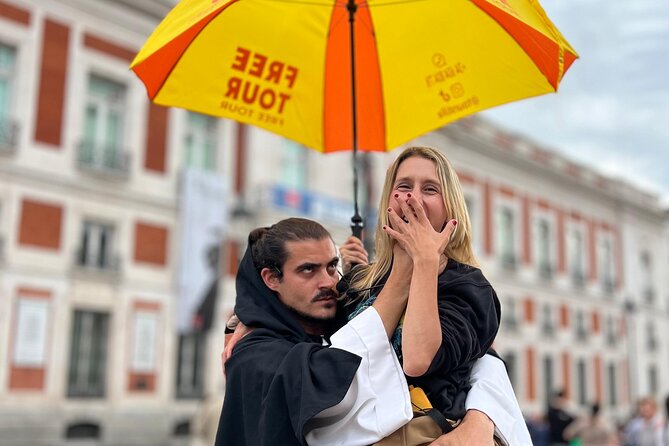
- Strong guide performance, including guides like Jackie and David Onion who use drama to keep you engaged.
- Execution methods explained in plain terms, including the garrote vil and other punishments.
- Modern religious echoes, tying old edicts and expulsions to later legacies and questions.
Tracing the Inquisition in Madrid, from edicts to executions
This tour is built like a guided walk through mechanisms of control. Instead of treating the Spanish Inquisition as a distant, textbook topic, you follow it through Madrid’s streets, plazas, and church settings. You’re learning how authorities framed religion, how they processed accusations, and how fear turned into public outcomes.
You also get something practical that most history tours skip: a clear sense of cause and effect. One stop explains how beliefs were policed. Another shows how investigations and confessions were shaped by pressure. Then you hit the public symbols, the process, and the physical punishments.
And yes, it gets uncomfortable. The walk includes talk about expulsion, stereotypes like how people were labeled as false Jews or false Moors, and the brutal methods used by the system. If you prefer your history sanitized, this may feel too direct.
More of Madrid worth an open tab:
- Madrid: Tour Bernabéu Entry Ticket
★ 4.5 · 21,573 reviews - Madrid: Prado Museum Entry Ticket
★ 4.6 · 17,509 reviews - Madrid: “Emociones” Live Flamenco Performance
★ 4.8 · 12,866 reviews
Price and timing, the value behind the small-group format
The cost is $3.61 per group (for groups up to 15), and the tour lasts about 2 hours 15 minutes. That’s good value when you remember you’re not just seeing exteriors, you’re getting a live guide, printed teaching tools, and a focused route with no extra paid admissions required.
Booking patterns matter too. This is typically booked about 31 days in advance, so if you know your dates, it is smart to lock it in early. The tour has a maximum of 30 travelers, so you’re not likely to feel swallowed by a giant crowd, but it can still be lively.
The tour also uses a mobile ticket, and it is offered in English. If you’re traveling with friends who need English guidance, this is an easy match.
Meet in Plaza Mayor, end at Plaza de la Armería
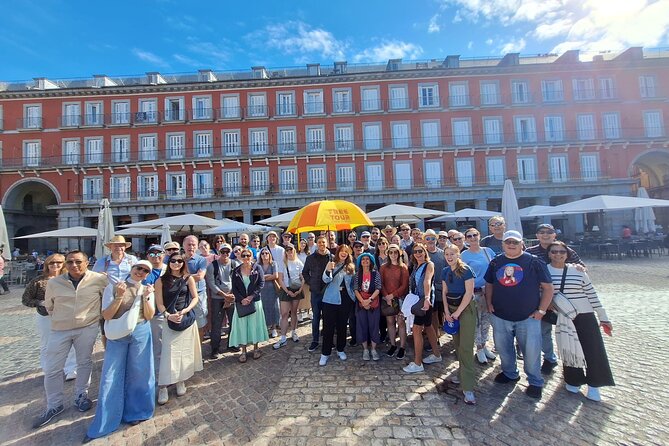
The start point is Plaza Mayor (Centro, Madrid). The route ends at Plaza de la Armería. It is about a 10 minute walk from Plaza Mayor to the end area, and the finish is also convenient for transit, with about 3 minutes from Metro Opera.
This matters because it affects your planning day. If you treat the tour as a mid or late afternoon activity, you can easily connect to dinner nearby or continue sightseeing without backtracking.
The route is near public transportation, and the experience notes say most travelers can participate. Service animals are also allowed, which is a real plus if you need that kind of flexibility.
Stop 1, Iglesia de Santa Cruz and the Inquisition’s religious targeting
You begin at Iglesia de Santa Cruz, where the guide sets the foundation: the Spanish Inquisition and its relationship with the three monotheistic religions, Christianity, Islam, and Judaism.
This start is useful because it prevents the tour from becoming only about executions. Instead, it frames the bigger logic, how the system categorized people, how it treated religious difference as a threat, and how the Inquisition turned theological claims into legal outcomes.
You’ll likely leave this first stop with better clarity on why the tour keeps returning to accusations and identity language. It is not random. The walk is building a pattern.
Still in Madrid, a different sort of afternoon:
- Madrid: Panoramic Route City Tour
★ 4.1 · 12,259 reviews - Madrid: Live Flamenco Show with Food and Drinks Options
★ 4.5 · 9,901 reviews - Avila & Segovia Tour with Tickets to Monuments from Madrid
★ 5.0 · 9,762 reviews - Three Cities in One Day: Segovia, Avila and Toledo from Madrid
★ 5.0 · 8,402 reviews
Stop 2, Plaza de la Provincia and the investigation machine
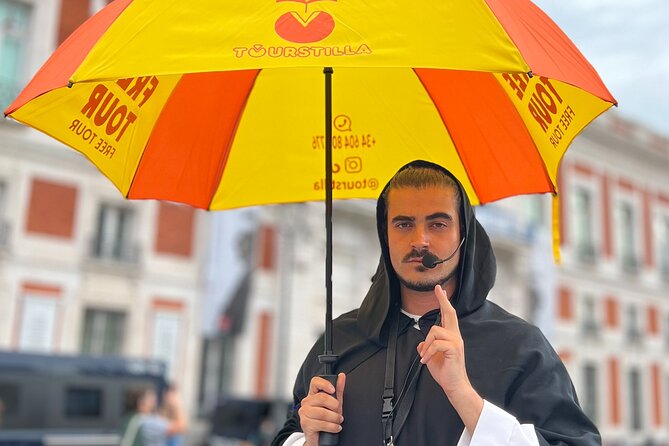
Next comes Plaza de la Provincia, where you get the Inquisition as a process, not a myth. This stop focuses on the executioner and the Inquisition, then moves into the investigation process, torture, and the kind of confessions that could be produced under pressure.
This is one of the stops where you will appreciate the guide’s pacing. If you’ve ever tried to learn this topic by yourself, it can feel like a fog of names and documents. Here, the guide keeps you oriented around what the system did, not just what people suffered.
Practical note: this is also a good moment to ask yourself what you think counts as evidence. That question comes up again and again during the rest of the walk.
Stop 3, Casa de la Carnicería and the show trial idea
At Casa de la Carnicería, you’ll talk about the idea of faith as performance. The tour calls them cars of faith in Madrid, and it frames this as the big trial atmosphere, with a reference to the most famous painting tied to the theme.
Even if you do not know the art angle ahead of time, you can still get the point: public religion was used as public leverage. The Inquisition was not only about punishment. It was about sending a message to the wider community.
This stop is often where the tour becomes visually memorable. You can connect an image you see on site with the mechanics you heard explained earlier.
Stop 4, Basílica de San Miguel and the language of false Jews and false Moors
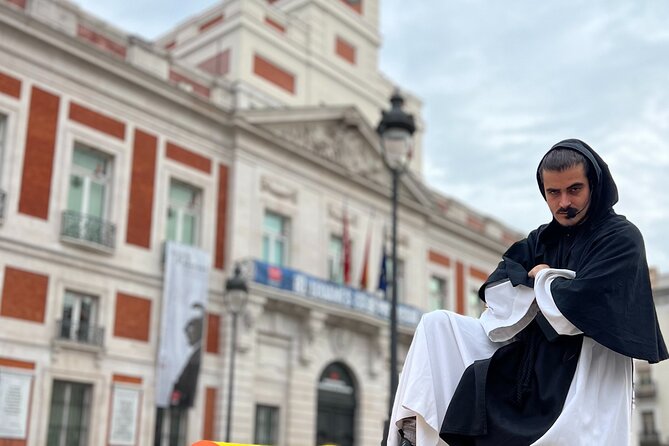
Then you step into Basílica de San Miguel, and the tour turns sharply to labels. You’ll hear how people were targeted using terms like how to identify a false Jew and a false Moorish, plus the proclamation of edicts of faith and the role of false allegations.
This is sensitive territory, so the value is in how carefully the guide handles it. The key for you is to listen for what the guide is doing: showing how accusation language worked as a weapon. These categories were used to justify actions long before any fair process happened.
If you take away one thing from this part, make it this: words were power. Edicts gave authority a script, and stereotypes helped people believe they were defending faith.
Stop 5, Casa Cisneros and the clash of figures
At Casa Cisneros, the tour brings in the human side, the names and rivalry. You get the story of Cisneros vs Torquemada, framed as historical characters in the Inquisition era.
This stop helps your brain connect the abstract to real figures. It’s also a good “reset” point in the route, because it shifts from mechanisms and accusations to personality and influence within the system.
Even in a short time window, it gives you a handle on the period’s internal power struggles.
Stop 6, Plaza de la Cruz Verde and the symbol of punishment
At Plaza de la Cruz Verde, the tour leans into the physical reality. This stop is the symbol of the Inquisition, then it walks through implementation, including the gallows, beheading, garrote vil, and even burning at the stake. There is also a reference to Bruges as part of the broader picture.
This is where your understanding stops being conceptual. You see, in sequence, the range of punishments the system used to enforce conformity through fear.
Also, this stop explains why the guide’s dramatic storytelling matters. When the methods are described clearly and in order, you do not get lost in the horror. You understand the system’s intent: control, deterrence, and public effect.
Stop 7, Catedral de Sta María la Real de la Almudena and the Vatican thread
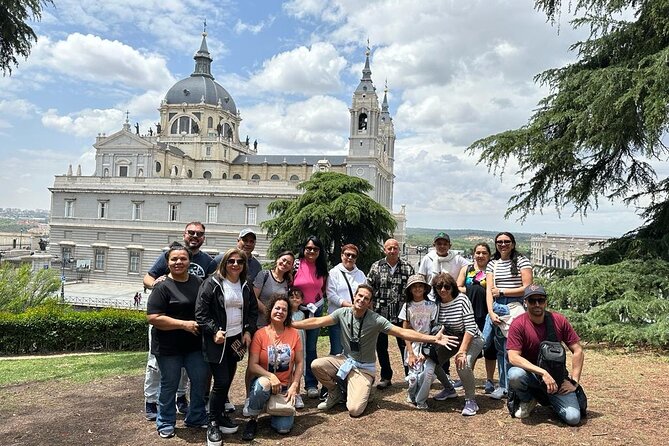
Next, you reach Catedral de Sta María la Real de la Almudena. The tour discusses the Vatican Archives, then connects it to John Paul II and the pardon of the Catholic Church, and it frames the end of the Inquisition. It even raises the question of the last execution, pointing to 1974 with the garrote vil.
This is an important pivot in the walk. You start to see how the story continues past the medieval period, and how institutions handled accountability and memory later.
If you like history that links past to the present, you’ll appreciate the way this stop ties religious authority, documentation, and later forgiveness efforts into one chain.
The tour also points you toward legacies, including the legacies of the Jews in Spain and legacies of Muslims in Spain. That gives the story consequences beyond a single era.
Stop 8, Plaza de la Armería and today’s questions about faith and conflict
The final stop is Plaza de la Armería, where you get a reflective ending. The guide brings up current religious conflicts and the idea of holy wars, then circles back to legacies and a closing reflection.
This ending is not meant to be a modern political debate. It is more like a prompt. You leave with questions about how fear, identity labels, and religious authority can still be used to justify harm.
If you’re the type who likes a tour with a final takeaway, this one gives you an emotional and intellectual landing spot.
How the guide style shapes the whole experience
A big reason this walk has a 5 out of 5 rating is the guide work. In practice, this means you stay oriented. The guide’s pacing keeps each stop from turning into a lecture you have to fight to understand.
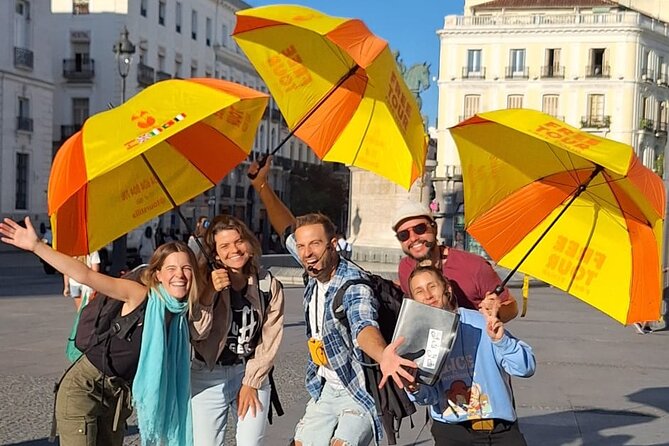
You might also get a guide who uses performance. One guide name you may hear in this context is David Onion, praised for dramatic talent that keeps everyone engaged and entertained while still following the story clearly. Another guide name that shows up is Jackie, noted for being knowledgeable and making the tour easy to follow.
One small but real detail: the tour is described as no hustle for tips. The guide may explain the usual procedure at the end in a tactful way. That keeps things respectful and keeps you focused on the content, not sales pressure.
What is included, and what it means for your day
Here is what the tour provides:
- A local guide
- Printed material and teaching tools throughout the route
- A link to personalized recommendations for what to do in Madrid
- Personalized attention after the tour
It also notes what is not included:
- Tips at the end are not included
- No food or drink
- Site entries are not required, which helps you avoid delays
For you, that means you can plan the day without worrying about ticket lines or adding extra cash for entry fees. It’s also easier to keep your schedule tight, because the stops are set and you are not hunting for open doors.
Best fit for who should book this Inquisition walk
This tour is best for you if:
- You want a guided, story-driven walk rather than self-guided research.
- You prefer your history grounded in places, plazas, and churches.
- You are comfortable with serious themes, including persecution and executions.
It may be less ideal if:
- You want a lighter day with minimal emotional weight.
- You dislike tours that are direct about violence and religious conflict.
It suits solo travelers, couples, and small groups who want a structured route in central Madrid. Because it is English and group-based, it can also work well for travelers who want help interpreting what they see.
Should you book this Madrid Inquisition walking tour?
Book it if you want a tight 2 hours 15 minutes route with a strong guide, clear explanations, and no paid site entries. The biggest selling point is not just the theme, it’s the way the story is organized, from identity targeting to investigation tactics to the symbolic places of punishment, ending with legacies and reflection.
Hold off if you know the topic will weigh on you too much, or if you prefer only optimistic history. Also, if you are traveling with tight timing, keep flexibility in mind, since at least one cancellation has happened last minute due to availability, and no replacement was mentioned.
If you book, do it early and treat it as a key cultural stop, not background entertainment. This walk turns Madrid’s center into a readable timeline.
FAQ
How long is the tour?
It lasts about 2 hours 15 minutes.
What language is the tour offered in?
The tour is offered in English.
How much does it cost?
The price is $3.61 per group, up to 15.
Where does the tour start and end?
It starts at Plaza Mayor (Centro, Madrid) and ends at Plaza de la Armería (Pl. de la Armería, Centro, 28013 Madrid).
How do I get to the meeting point and the end location?
The end point is about a 10 minute walk from Plaza Mayor, and it is about 3 minutes from Metro Opera.
Do I need to buy entry tickets for the sites?
No. Site entries are not required, and the listed admissions for the stops are free.
Is there a mobile ticket?
Yes, it includes a mobile ticket.
Are service animals allowed?
Yes, service animals are allowed.
How large is the group?
The tour has a maximum of 30 travelers.
What is the cancellation policy?
You can cancel for a full refund up to 24 hours before the experience start time, and free cancellation is available.
Recently reviewed around Madrid
- The Beauty of Madrid by Bike: Private Tour★ 4.5 · 26 reviews
- Leathercraft Workshop in the Rastro of Madrid★ 5.0 · 58 reviews
- Learn to Make an Authentic Paella!★ 5.0 · 8 reviews
- Local Tapas, Beer and Wine Tour of Madrid All Inclusive★ 5.0 · 11 reviews
- Cured Meats Gourmet Tasting with Wine Pairing in Madrid★ 4.5 · 25 reviews
- Lázaro Galdiano Museum E-Ticket with Audio Guide★ 4.5 · 6 reviews
- Intimate Flamenco Performance★ 5.0 · 4 reviews
- Las Ventas Madrid Bullring & Bullfighting Museum with Audioguide★ 4.5 · 106 reviews