Reviewed · MUSEUMS
Guided Visit to Thyssen-Bornemisza Museum
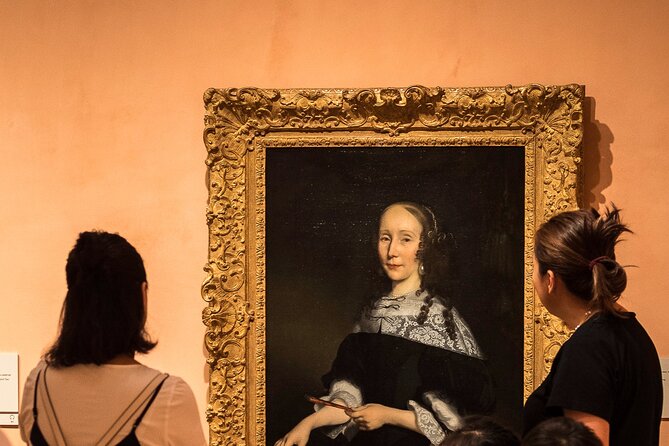
If you like your art history with a steering wheel, this small-group visit to the Thyssen-Bornemisza Museum is a smart way to see centuries of painting without getting lost in the rooms. I like that you get a structured path through 13th to 20th century highlights, not a random wander.
One possible drawback: the museum is packed with masterpieces, so a tour that tries to hit too many stops can feel a bit fast near the end.
This is also a great value because the admission ticket is included and you’ll have an expert guide plus high-quality radio guides inside the galleries. You’ll love how guides connect movements, themes, and technique across time, from Italian and Flemish early works to Picasso and Dalí. The trade-off is simple: you are still moving through a huge museum in about 1 hour 30 minutes.
Key things I’d bet on before you go
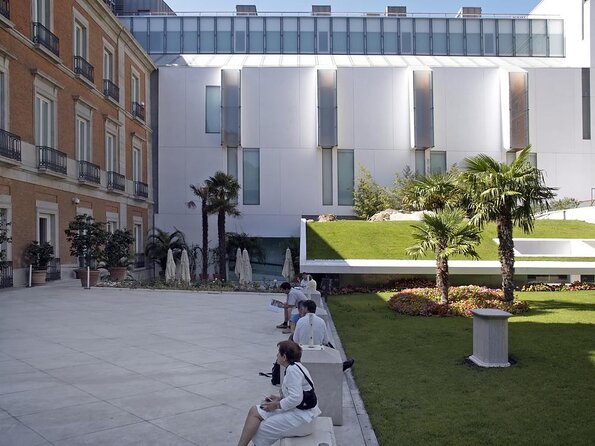
- Small groups (max 7 people), which helps you actually hear the guide and ask questions.
- Radio guides inside the museum, so distance is not an issue in louder galleries.
- Admission ticket included, so you pay once and walk in ready to go.
- A timeline approach, where your route is meant to make the collection feel connected.
- A sweep from early European painting to 20th-century styles, including Fauvism, Expressionism, Surrealism, Abstraction, and Pop Art.
- Guides who bring the artwork down to human size, with clear explanations and good pacing in many departures.
Thyssen-Bornemisza in 90 Minutes: the good kind of speed
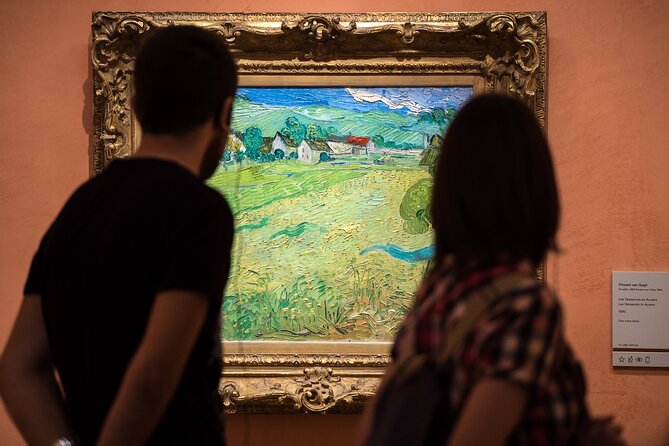
This guided visit is built for travelers who want structure. The total time is about 1 hour 30 minutes, and the experience includes the museum ticket plus an expert guide throughout. You’ll also use radio guides inside the museum, which is a big deal in a place where rooms can be crowded and your group can spread out.
The price is $77.08 per person, which feels steep if you think you’re only paying for someone to point at paintings. But when you factor in that your entry ticket is included and you’re getting guided context plus radios, it starts to look like you’re buying time and clarity. At a museum like this, that matters. You can absolutely DIY it. Still, if you want the collection to make sense faster, a guide helps you avoid the common problem of seeing famous works without understanding why they belong together.
One logistics note that affects your day: the tour starts and ends at P.º del Prado, 8, Centro, 28014 Madrid, and the activity ends back at the meeting point. So you’re not taking a long transit detour, which keeps your art time focused.
A few more Madrid tours worth comparing
- Madrid: Prado Museum Entry Ticket
★ 4.6 · 17,509 reviews - Madrid: Reina Sofía Museum Entrance Ticket
★ 4.5 · 6,889 reviews - Madrid: Small Group of Prado Museum Tour & Optional Tapas
★ 4.6 · 2,437 reviews
Why this museum sits at the center of Madrid’s art triangle
The Thyssen-Bornemisza Museum opened in 1992, and it helped complete Madrid’s famous “art triangle” along Paseo del Prado. The idea is simple: the Prado, the Reina Sofía, and the Thyssen together cover major chapters of Western art, and you can build a strong art day by walking between them.
This matters for your planning because the Thyssen’s collection is not just “Spanish art” or just “modern art.” It’s a carefully assembled span from the 13th to the 20th century, with major names from Italy, Flanders, the Netherlands, France, and beyond. That breadth means your visit works even if it’s your first time in Madrid. You’ll get a feel for how European painting evolved, without needing a full museum marathon.
Also, being on Paseo del Prado is convenient. You’re close to public transportation, and you’re right where many visitors naturally want to be anyway: between the big hitters. If your goal is a concentrated art day, this location helps you do it with less hassle.
Your mini-route: how the collection’s timeline is supposed to click
The collection spans nearly a thousand works, and the tour is designed to let you experience it as a story. You’re not expected to see everything. Instead, you’re guided through a sequence that covers major periods and styles, so the museum doesn’t feel like a random stack of masterpieces.
Here’s the arc you’ll keep running into as you move:
- Italian Primitives and Flemish painters, where early European art has a different texture and focus.
- Key works from the Renaissance, when composition and technique start to follow more recognizable rules.
- The Impressionist era, with stars like Monet, Degas, Van Gogh, and Gauguin.
- Major 20th-century avant-garde movements like Fauvism, Expressionism, Surrealism, Abstraction, and Pop Art.
- Spanish powerhouses, including Picasso and Dalí.
The practical benefit for you is that you start noticing patterns. You can compare brushwork and color choices across eras. You can see how artistic goals change, from portraying the visible world to exploring emotion, ideas, and even everyday life. A good guide keeps this readable, so you leave with a mental map, not just photos.
Stop inside the galleries: what you can expect during the guided visit
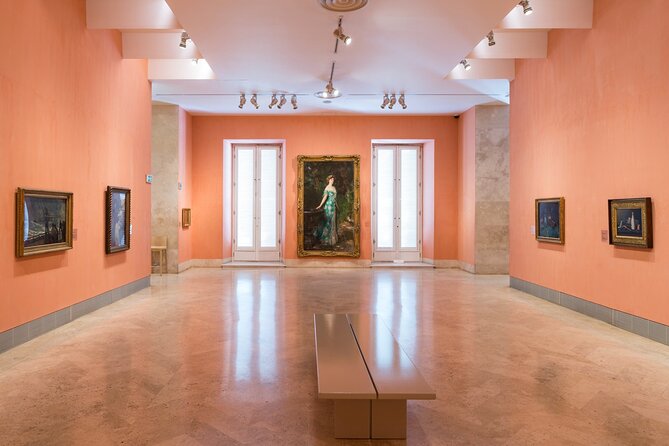
There’s one core stop: the Museo Nacional Thyssen-Bornemisza. After meeting at P.º del Prado, 8, your group goes in together for the guided session. The tour ends back at the meeting point, so the route is planned to keep you moving efficiently through the museum.
What makes this experience work is the way the guide typically selects works and explains them. In the experience you’re booking, many guides are praised for walking people through art history in a way that feels digestible. One guide named Miguel is highlighted for being patient, knowledgeable, and for taking time with explanations. Ana Cristina Carvajal is praised for giving a strong overview that connects early Flemish works to later masterpieces. Laura gets consistent credit for energy and passion, and for making the museum feel like you have more of it to yourself during certain time slots.
On the ground, this usually means you’ll see a meaningful chunk of the museum rather than a couple of token paintings. Some descriptions mention guides pointing out around 15 to 20 works and touching art movements from the Renaissance to the present. You’ll also use the radio guides to keep the commentary clear even when you can’t stand shoulder-to-shoulder.
One caution from the other side: at least one person felt the guide tried to cover too much and the pace moved quickly. That’s the main drawback to watch for with any 90-minute museum tour. The museum contains so much that a larger-than-planned selection can leave you without time to stare long enough to really feel a painting.
My practical take: if you’re the type who likes a slow look, you can still enjoy this tour, just plan to do one extra self-guided loop after the tour if you have energy. The guide gives you the map. You decide how much time to spend afterward.
Still in Madrid, a different sort of afternoon:
- Madrid: Tour Bernabéu Entry Ticket
★ 4.5 · 21,573 reviews - Madrid: “Emociones” Live Flamenco Performance
★ 4.8 · 12,866 reviews - Madrid: Panoramic Route City Tour
★ 4.1 · 12,259 reviews - Madrid: Live Flamenco Show with Food and Drinks Options
★ 4.5 · 9,901 reviews
The artists and movements you’ll keep meeting (and what to look for)
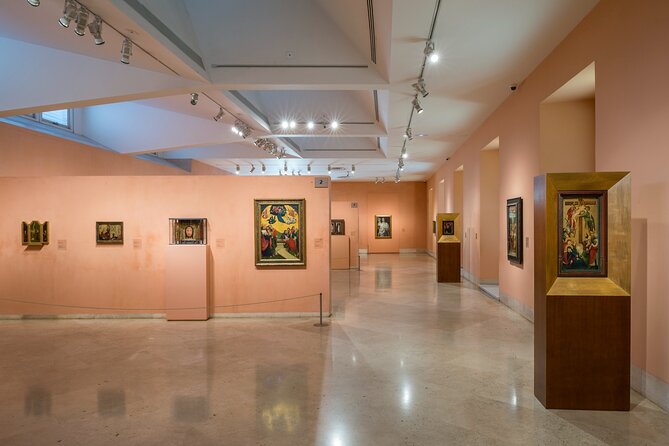
This is a museum where you can’t just chase famous names. You’ll also want to pay attention to how style changes from room to room. Even if you only catch a slice of the collection, you can learn a lot by looking for these things:
- Color as a signal: In Impressionist works, color shifts with light and air. In later avant-garde movements, color can become the point, not just the surface.
- Composition goals: Renaissance painting often pushes balance and proportion. Later movements may distort or reorganize space to tell a stronger emotional or conceptual story.
- Subject choices: From religious and classical themes to modern subjects, the collection shows how painters began treating everyday life and personal perception as worthy of art.
You’ll likely encounter big names across that timeline, including Titian, Rubens, Rembrandt, Caravaggio, Manet, Renoir, Van Gogh, Gauguin, Kandinsky, Hopper, Picasso, and Dalí. That list is impressive, but the real payoff is how the guide connects them to the “why” behind the style. For example, you can compare how Impressionists handle atmosphere, then jump forward to see how 20th-century styles break away from realistic representation in order to express something more internal or experimental.
And yes, the movements listed here are the ones you want to remember: Fauvism, Expressionism, Surrealism, Abstraction, and Pop Art. If those terms look like textbook words to you, a good guide turns them into visible choices you can spot quickly.
Guide quality: why names like Miguel and Laura show up again and again
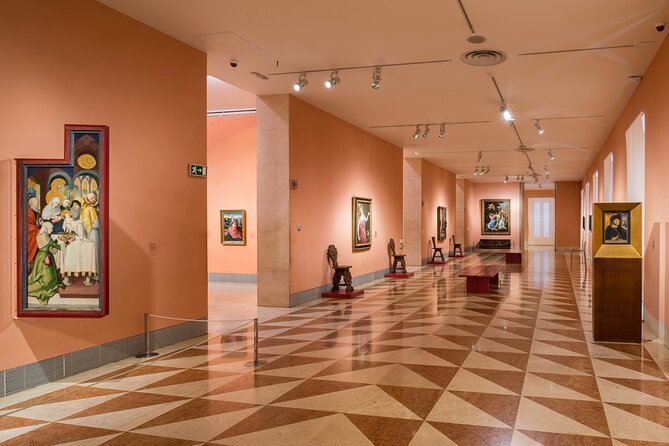
In a museum tour, the guide is the whole product. Here, you can see a clear theme in the feedback: guides are praised for being engaging, passionate, and good at making the timeline understandable. Names that appear include Miguel, Ana Cristina Carvajal, Ana, Pablo, Laura, Erea, and a mention of a younger guide named Myra.
What’s consistent across those experiences is not just knowing facts. It’s the delivery. People describe guides who give a complete timeline, who make information digestible, and who keep a good pace. One comment mentions that a guide took time for questions and detours, which is exactly what you want. You don’t need the guide to read every label. You want them to pick a few key works and explain what’s happening, then allow you to react.
If you’re choosing a time slot, consider that atmosphere can affect your experience. One person specifically noted that a 4:00 pm tour felt like they had the museum to themselves, which is a great reminder: quieter conditions let the guide do better work and helps you actually enjoy the art instead of competing with a crowd.
Timing and crowd reality inside the Thyssen
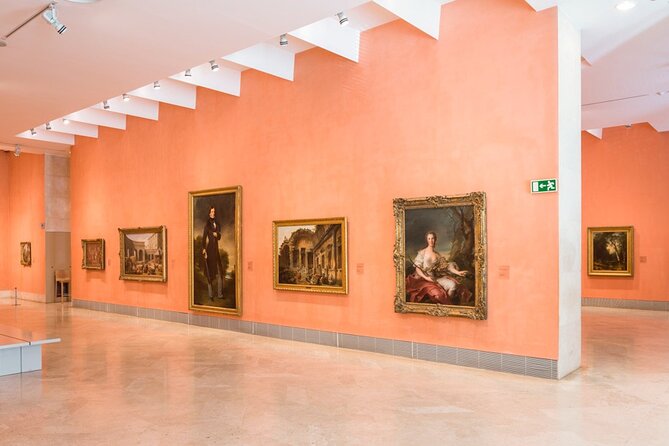
This museum can feel busy, especially near peak hours. The good news is that this is a small-group format, and your guide is supported by radio guides, so you’re not stuck in a giant herd.
If you have flexibility, I’d lean toward a time that avoids the heaviest traffic. The data you have here includes at least one note that a later afternoon departure felt much calmer. Even if your specific time slot is not identical, later can often mean better listening conditions.
Also, remember that 1 hour 30 minutes is short for a museum with nearly a thousand works. Your strategy should be simple: treat the tour as your overview. After the tour, if you still want more, use your new timeline map to go back to a few paintings that actually grabbed you.
Pair it with your Prado and Reina Sofía plans on foot
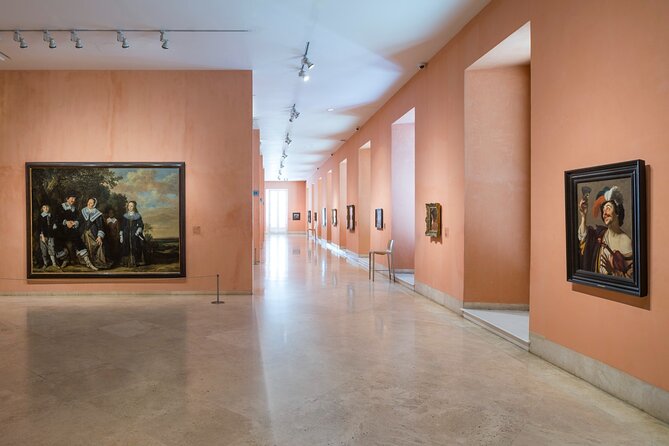
You’re in the Art Triangle area, which makes it easy to build a smart museum day. Even if you only do one guided visit, you can use the same theme across the others: how painting changes over time and how different museums cover different chapters.
A practical approach:
- Use the Thyssen tour to learn the timeline and spot major movements.
- If you have energy after, pick one additional museum to match your new interests, rather than choosing randomly.
Because your Thyssen visit already introduces Impressionism and 20th-century movements, you’ll likely be ready for how the Prado and Reina Sofía treat classic and modern themes in their own ways. It’s not about checking boxes. It’s about making the museum circuit feel connected.
Who should book this guided Thyssen visit, and who should skip it
Book it if:
- You want structure and a clear art-historical path in a short time.
- You’re visiting for the first time and want a quick way to understand how styles shift from early European painting to the modern era.
- You like small groups and better listening conditions, not a large, noisy tour.
Skip or consider a different format if:
- You hate feeling rushed. One piece of feedback was that the guide tried to show too much. If you’re the type who needs long, quiet looking time, you might prefer a slower self-guided plan.
- You only want one or two specific painters and don’t care about the timeline.
If you’re somewhere in the middle, this tour is a strong compromise. The museum is huge, but the guide helps you make choices fast and understand what you’re seeing.
Should you book? My take on value for a first-class Madrid museum
Yes, I’d book this guided Thyssen-Bornemisza visit if your goal is to leave with a real sense of how the collection connects across centuries. You’re paying for ticket + expert guidance + radio clarity inside a museum that can easily overwhelm you if you go in cold. The small-group size (up to 7) also boosts the odds you’ll get good explanations and manageable pacing.
Aim to pick a time that fits your tolerance for crowds. If you’ve got a flexible schedule, later departures like 4:00 pm have been reported as especially calm. If you want to slow down, plan a short follow-up self-walk after the tour to return to the works that stayed with you.
If you want, tell me your travel dates and preferred time of day, and I’ll suggest an art-day plan for the Thyssen area on Paseo del Prado.
FAQ
How long is the guided visit to the Thyssen-Bornemisza Museum?
The tour lasts about 1 hour 30 minutes (approx.).
What is included in the price?
The price includes the museum ticket, an expert guide throughout the tour, and high-quality radio guides during the visit inside the museum.
How large is the group?
The group is small, with a maximum of 7 travelers.
Where do we meet for the tour?
You meet at P.º del Prado, 8, Centro, 28014 Madrid, Spain. The activity ends back at the meeting point.
What is the cancellation policy?
You can cancel for a full refund if you cancel at least 24 hours in advance of the experience start time. If you cancel less than 24 hours before, the amount you paid will not be refunded.
When should I book?
On average, this experience is booked about 31 days in advance.
Recently reviewed around Madrid
- Madrid: Treasure Hunt Experience★ 5.0 · 4 reviews
- Madrid Spanish Omelet Cooking Class and Bottomless Wine brunch★ 5.0 · 50 reviews
- Avila and Segovia private day trip with hotel pick up from Madrid★ 5.0 · 68 reviews
- Prado Museum Tour with ticket, small group & expert guide★ 5.0 · 6 reviews
- Bernabeu Stadium Private Guided Tour★ 3.5 · 4 reviews
- Spanish Group Course in Madrid, Spain: 20 Lessons★ 5.0 · 11 reviews
- Self-Guided Audio Tour – Cervantes Literary Experience in Madrid★ 4.0 · 6 reviews
- Madrid Bike Tour with Churros and Wine, Ham, and Cheese Upgrade★ 5.0 · 8 reviews
Museums, compared.

Small Group of Prado Museum Tour & Optional Tapas
Read our review →
Prado Museum Guided Tour with Skip-the-Line Ticket
Read our review →
Prado Museum Small Group Tour with Skip the Line Ticket
Read our review →