
Reviewed · MADRID TUK-TUK TOURS
Madrid Expert Plus Tour with Local Guide in Eco Tuk Tuk Private
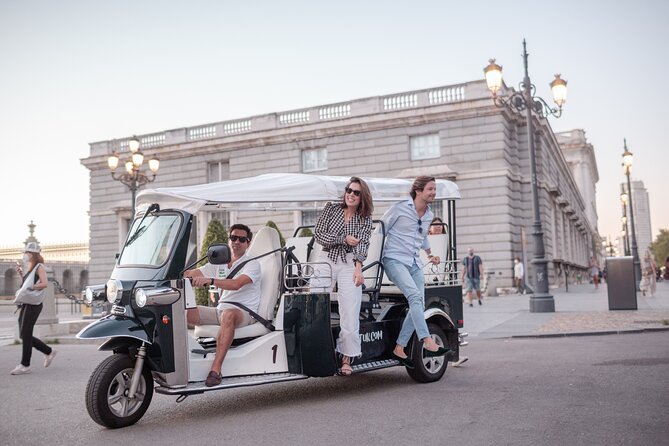
Madrid is big, spread out, and full of “how do I even fit this in” moments. This private electric eco tuk-tuk tour is interesting because you glide between neighborhoods and viewpoints without the stress of parking or buses stuck in traffic.
I like that you start with a plan and skip the usual hassle. Stops are set for fast photo moments, and the ride is covered, plus you get blankets and protective layers in cold or windy weather.
One possible drawback: you cannot change the route or add extra time at specific places. If you want lots of time inside museums or long walks at every stop, a 2 to 4 hour circuit can feel a bit tight.
Key things to know before you ride
- Covered, weather-ready comfort: It is built for rain and heat, with side protection when needed.
- Private vehicle for your group: Only your group rides, and each tuk-tuk has a legal max of 4 passengers.
- No waiting built into the flow: The tour is designed to start without queues or delays.
- Photo stops are preselected: You get set viewpoints, and you cannot request different ones.
- Classic Madrid, plus modern highlights: You mix old-center monuments with places like Las Ventas and the Bernabeu area.
- Guides can tailor the pace within the route: Guides often keep things moving efficiently, especially when streets get crowded.
Finding the Plaza de Oriente start and getting rolling
The ride starts near the Royal Palace area, at the bus station underground of Plaza de Oriente, right beside the Royal Palace. Your real-world trick is finding the Puerta del Príncipe spot on Google Maps, then looking for the stairs that lead down to the station. From there, the Eco Tuk Tuk signage helps you line up fast.
Why that matters: you avoid wasting the first hour figuring out logistics. Madrid sightseeing is smoother when you can park yourself at a smart launch point, then let the route connect the dots.
More tuk-tuk tours in Madrid:
- Madrid Welcome Tour with Local Guide in Eco Tuk Tuk Private
★ 5.0 · 2,936 reviews - Madrid: Private City Tour by Eco Tuk Tuk
★ 4.9 · 2,876 reviews - Madrid Historical Tour with Local Guide in Eco Tuk Tuk Private
★ 5.0 · 876 reviews
Covered Market and Atocha Station: food culture meets commuter Madrid
You may begin with the covered market dating to around 1916. This is the kind of place where Madrid feels lived-in, not staged. Expect local food and delicatessen vibes, plus a sense of everyday rhythm in an elegant setting. Even if you do not stop for a full meal, the market gives you a quick feel for how locals eat and shop.
Then you hit Atocha Station, a major railway complex and the busiest station in Spain, with huge importance across Europe too. This is not just a transit stop. It is a snapshot of Madrid as a city that moves people constantly, and the scale is part of the story. If you love architecture and public spaces, you’ll appreciate seeing how the rail hub shapes the surrounding city.
Practical note: in a short tuk-tuk tour, you usually see these places from the outside or at quick stops. Still, the value is in the context, so even a brief moment feels like something.
Spanish Courts, Neptune Fountain, and the city’s power signals
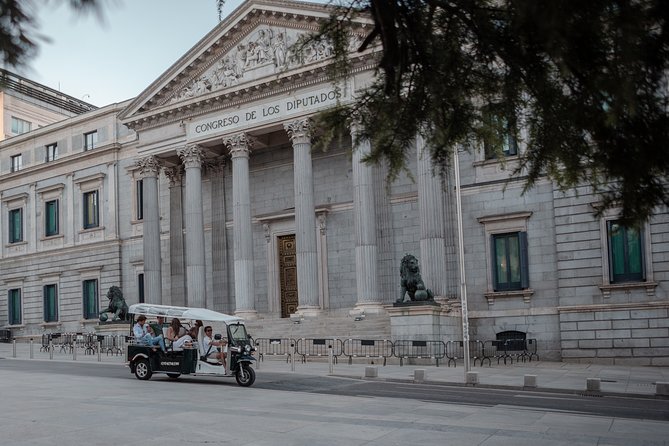
Next up is the Palace of the Spanish Courts. It sits on the historic site of a former convent that once housed Congress. On the front facade, you’ll spot the dramatic neoclassical stairway, six tall columns, and the triangular pediment with reliefs. There are also lions flanking the entrance, created from iron connected to captured cannons, which is a striking detail that helps you understand how symbolism gets built into public architecture.
From there, the route commonly sweeps toward the Fountain of Neptune in Plaza de Cánovas del Castillo. This fountain is a central landmark in the traffic circle, proposed in 1777 and finished in 1786. Seeing it in motion matters. Madrid’s big monuments are not always quiet museum objects, they are built right into daily circulation.
If you like learning “why this exists,” this section is strong. You get a politics-and-symbols storyline without needing to read an encyclopedia.
Prado Museum and San Jerónimo el Real: art weight plus royal ceremony
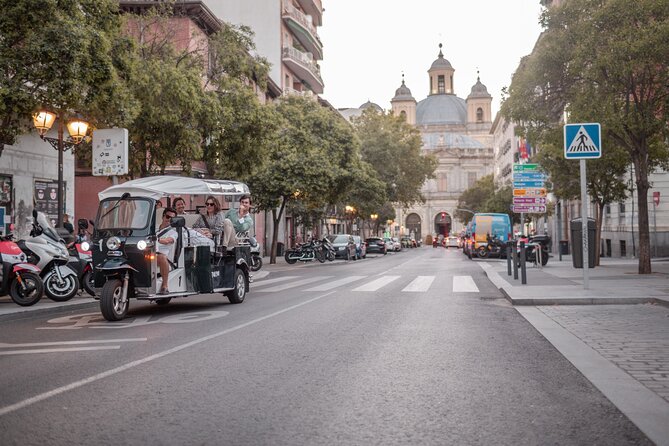
The Prado Museum is one of the world’s heavy hitters in European painting. In a tuk-tuk tour, you typically view it as a major exterior anchor and get an overview of what makes the museum special. The key point for you: the tour helps you understand what to notice, so if you later buy a ticket for inside, you are not starting from zero.
This route also often pairs the Prado area with Templo de San Jerónimo el Real (often called San Jerónimo el Real, near the Prado). It is late Gothic with Renaissance influence from the early 1500s, and much of the original building has been restored over time. You’ll also hear the story of the relationship between this church and Spain’s kings, including royal spiritual retreat and major ceremonies in the absence of a cathedral.
For me, this pairing works well. Prado gives you the big art name, and San Jerónimo gives you the big court and ceremony name. Together, it shows how Madrid links culture to power.
Still in Madrid, a different sort of afternoon:
- Madrid: Tour Bernabéu Entry Ticket
★ 4.5 · 21,573 reviews - Madrid: Prado Museum Entry Ticket
★ 4.6 · 17,509 reviews - Madrid: “Emociones” Live Flamenco Performance
★ 4.8 · 12,866 reviews - Madrid: Panoramic Route City Tour
★ 4.1 · 12,259 reviews
Puerta de Alcalá, Barrio Salamanca streets, and Madrid’s “grand” side
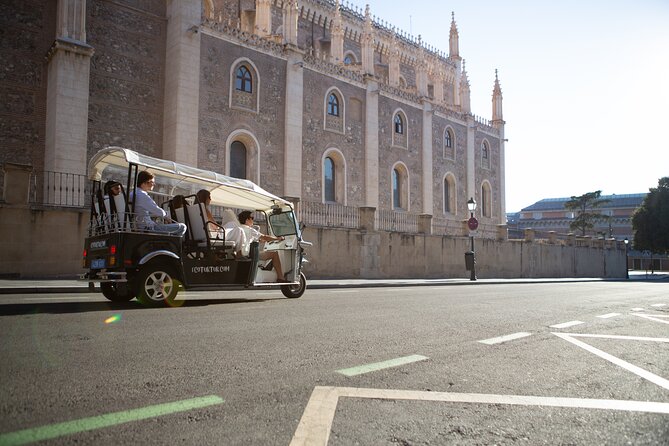
The Puerta de Alcalá is one of Madrid’s most recognizable neoclassical gate monuments, designed by Francesco Sabatini. It is also described as the first triumphal arch built in Europe after the fall of the Roman Empire, a good fact to drop into your mental map. It has five openings, not the usual three, and the two faces of the structure differ in decoration so you see more detail depending on which direction you approach.
After that, you may ride into Barrio Salamanca, along streets like Velázquez, Ortega y Gasset, and Serrano. This is a good contrast after the older core. You get a feel for Madrid’s upscale, wide-street identity, and it helps you avoid the common first-time mistake of thinking Madrid is only one kind of neighborhood.
The value here is pacing. By the time you reach these streets, you’ve already learned the city’s old-world backbone, so the modern elegance does not feel random.
Las Ventas and the Bernabéu corridor: sports, crowd energy, and scale
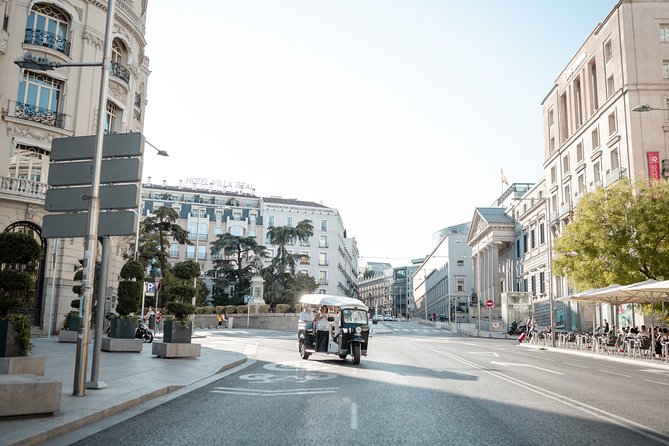
This route can include Las Ventas, Madrid’s famous bullring. It is among the largest in the world by spectator capacity, and it is also huge by ring diameter. Even if you are not a bullfighting person, the building’s scale and design are the point. It is a Madrid landmark built for spectacle.
The tour can then move toward Santiago Bernabéu Stadium along the Paseo de la Castellana. If you have ever seen football hype online, this area is where that energy looks real. The square-by-stadium feeling is part of why this works on a tuk-tuk. You get to see how Madrid organizes big crowd spaces along a main corridor.
You may also pass the Christopher Columbus monument and the Gardens of Discovery, plus sculptures tied to the discovery of America. It is a good way to add a cultural layer that is not only about religion and art.
National Library of Spain and the Cibeles corridor: memory, money, and football icons
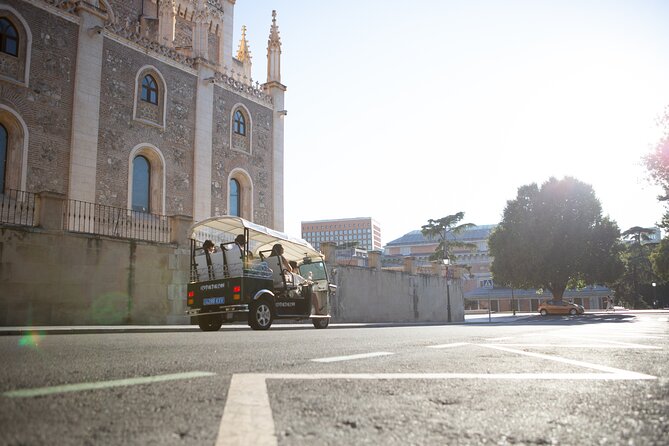
The National Library of Spain (BNE) is next on the type of route you might see. It is responsible for collecting and preserving Spain’s bibliographic and documentary heritage, with collections dating back to the early 1700s. If you like the idea of a city caring for its written record, this is a satisfying stop. You will also learn that the library shares its story through museum and exhibition spaces.
Then comes Cibeles, with the fountain representing the Roman goddess Cibeles, land, agriculture, and fertility, pulled by two lions. In Madrid, this spot becomes a social marker too, especially for Real Madrid celebrations. Even from the street, you can feel how people treat Cibeles as a meeting point.
A related stop can include the grand Bank of Spain building outside. The important detail for you: interior access is limited, mainly for educational centers, universities, and some exceptional cases for nonprofit cultural entities. So if you care about entering, plan your own separate visit.
Plaza Santa Ana, San Francisco el Grande, and Almudena Cathedral: churches with big-city roles
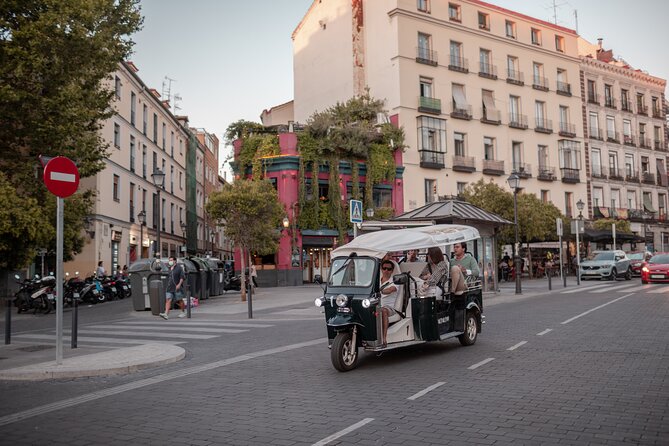
You may spend time around Plaza de Santa Ana, a historic open square in the Cortes neighborhood. It is a nice mid-tour pause because it feels like Madrid’s everyday social stage. Even without a long stop, the square helps you reset your eyes after monuments and big building fronts.
Then the tour can include Royal Basilica of San Francisco el Grande (officially Basilica of Our Lady of the Angels). It is a major Catholic church in the historic center area. The value here is not only religious architecture, it is how the city uses large churches as identity landmarks.
After that, you may see Almudena Cathedral. The cathedral was consecrated in 1993 by Pope John Paul II, a memorable modern milestone. The cathedral museum also gathers objects tied to the diocese of Madrid, spread across multiple rooms with mosaics and episcopal shields.
In a short ride, these places matter because they add depth. Madrid is not only monuments, it is also ritual, tradition, and civic meaning stacked on top of each other.
Royal Palace area and Campo del Moro gardens: where Madrid slows down
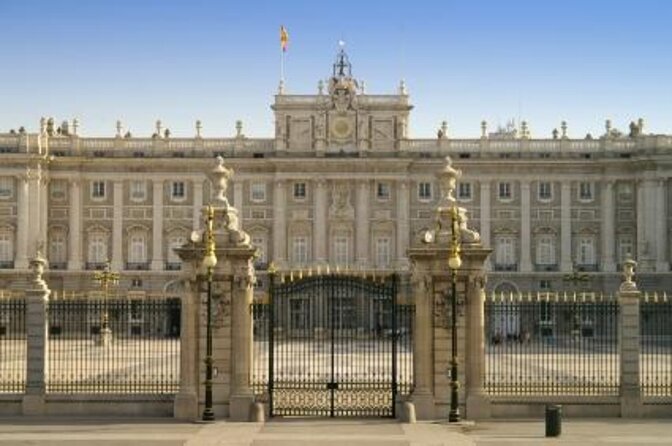
The highlight list for this tour includes the Royal Palace, and this is where it can feel most “wow” even from outside. The Royal Palace, also called Palacio de Oriente, began construction in 1738 and took seventeen years. Later, Carlos III made it a habitual residence in 1764.
The surrounding Campo del Moro gardens are part of the experience too. The tour route often works these viewpoints into the plan because you get a sense of how palaces and landscape connect to the city.
If you like gardens, you’ll appreciate the fact that Campo del Moro can be visited during the day. Even if your tuk-tuk stop is quick, you’ll likely want to return later for a longer wander.
Templo de Debod: ancient Egypt in modern Madrid, free and quick
One of the most memorable stops is Templo de Debod, an ancient Egyptian temple in Madrid. It is located west of Plaza de España, next to the Paseo del Pintor Rosales on a hill where the Mountain Barracks once stood.
The big practical win: the admission ticket is free, and the stop time listed is about 15 minutes. That makes it ideal for a half-day tour. You get the shock of seeing Egyptian stone in Madrid without needing to plan a full museum-style visit.
If you go, look past the novelty. Notice the way it sits on a small hill, giving you a different angle on the city.
Price, duration, and getting your money’s worth in 2 to 4 hours
At $28.67 per person, you are paying for three things: a local guide, a private eco tuk-tuk, and a route that connects major points efficiently.
For value, the private part matters. A big bus tour can put everyone on the same clock, and you still spend time walking. Here, you get a flexible ride within the fixed itinerary, so you spend more of your limited hours actually seeing.
What to choose?
- If you only have a short time window, lean toward the 2 to 3 hour end. You’ll still hit major anchors like the Royal Palace area and at least a few key stops.
- If you can afford the extra time, go closer to 4 hours so you fit in more of the spread, especially art and cathedral zones plus the Debod contrast.
Two things can affect how satisfying it feels. First, the route cannot be modified, so you are committing to the tour’s mix. Second, weather protection can reduce sightlines when side coverings go down. That is normal in cold or rainy conditions, just know it can change what you can see.
The guide makes or breaks it, and this one often delivers
This is where the reviews come alive in your planning. Guides often make the facts stick, and they also focus on practical tips, not just dates. Names that show up across guide experiences include Christian, Lucia, Juan, Enrique, Laura, Lluis, Camilo, Ivan, Clara, Julian, David, Lechia, Alex, and Carlos.
Even within the same route, that human touch changes the mood. You can expect a conversational, story-driven flow that helps you understand why a gate looks the way it does, why a fountain sits in a roundabout, and how a church became tied to royal ceremony.
If you care about eating and shopping tips, these guides typically add it into the tour. That is hard to get from a simple audio guide.
Should you book this Madrid Expert Plus eco tuk-tuk tour?
If you are in Madrid for the first time, or you have limited time and want a confident overview across neighborhoods, this tour is a strong fit. The private electric tuk-tuk, the weather-ready comfort, and the expert local storytelling make it feel like a smart start to a longer itinerary.
I would skip or at least lower expectations if you want long museum time, because the plan is designed around set stops and photo points. Also, if you expect to redesign your own route on the fly, this format will not work that way.
My take: book it early in your trip. It gives you bearings fast, then you can return later for the places that pull you in.
FAQ
How long is the Madrid Expert Plus tour?
The tour lasts about 2 to 4 hours.
Is this a private tour?
Yes. It is private, and only your group participates.
What language is the tour offered in?
It is offered in English.
Is the vehicle eco-friendly?
Yes. The tour uses a 100% electric and sustainable vehicle.
Will I stay warm or dry?
In winter, you are provided with a blanket, and you also get protective layers against rain and wind to avoid cold weather.
Can I change the stops or where we take photos?
No. The itinerary may vary due to closed streets or demonstrations, but you cannot modify the route, and stops for photographs are prearranged.
Is there an entrance fee for Templo de Debod?
The Debod Temple admission ticket is listed as free, and the stop time is about 15 minutes.
Are there age or weight limits?
Yes. The minimum age is 2 years, and babies are not allowed. There is also a minimum weight requirement of 9 kg.
Recently reviewed around Madrid
- Tour en Tuk Tuk por lo mejor de Madrid★ 3.4 · 13 reviews
- From Madrid: Toledo Day Trip with Cathedral and 8 Monuments★ 4.3 · 32 reviews
- From Madrid: Toledo Guided Day Trip with Cathedral Admission★ 4.4 · 79 reviews
- Madrid: Tasty Tapas Tour & Visit to a Terrace with Views★ 4.5 · 118 reviews
- From Madrid: Best of Sevilla Day Tour with Train Transfers★ 4.6 · 40 reviews
- Madrid: Spanish Tapas Tour★ 4.3 · 7 reviews
- Tapas Food Tour with Dinner in Madrid★ 5.0 · 6 reviews
- Small Group Prado Museum Guided Tour with Skip the Line★ 4.2 · 106 reviews
Madrid Tuk-Tuk Tours, compared.
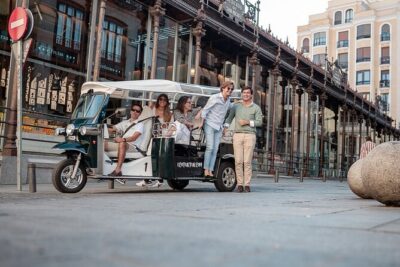
Madrid Welcome Tour with Local Guide in Eco Tuk Tuk Private
Read our review →
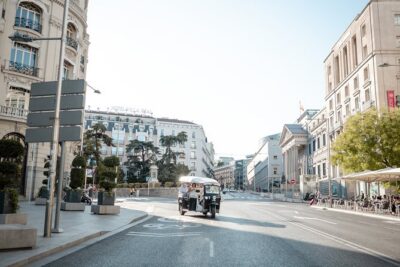
Madrid Historical Tour with Local Guide in Eco Tuk Tuk Private
Read our review →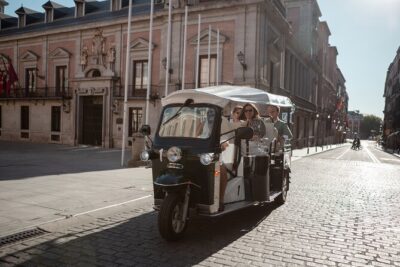
Madrid Express Tour with Local Guide in Eco Tuk Tuk Private
Read our review →
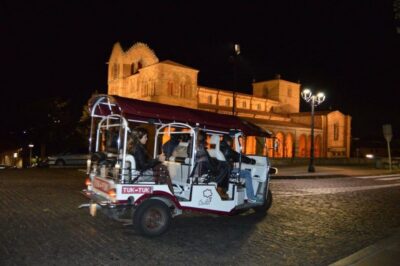
Tour Guiado En Tuk Tuk Recorre Avila De La Forma Mas Comoda
Read our review →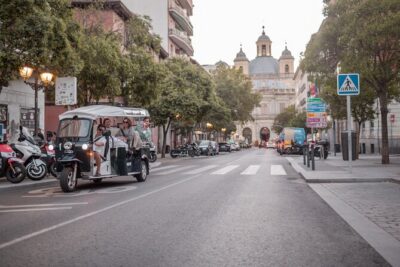
Madrid Expert Tour with Local Guide in Eco Tuk Tuk Private
Read our review →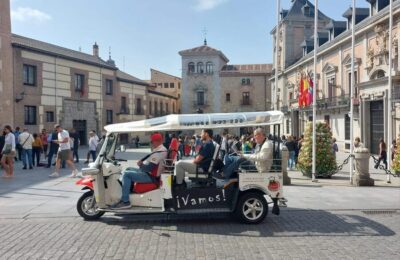
Browse the lists this tour appears in