
Reviewed · TOLEDO DAY TRIPS
Tour of the Inquisition and Witchcraft in Toledo
Toledo can be an eye-opener at night, but this tour turns the lights on to a darker chapter. I like that it’s a focused, street-level history lesson tied to real places, not spooky theater. I also like the careful tone and sensitivity the guide brings to a heavy subject.
One thing to consider: the topic is intense, and the tour is short. If you want lots of theatrical myths about witches, this isn’t built that way, and cancellations can happen when group minimums are not met.
Key highlights worth your attention
- Zocodover Square autos de fe: You start where public trials and penances were staged
- A guided route through the “system”: from accusation to the machinery behind punishment
- Inquisition hierarchy explained: you’ll learn who ran the Holy Office and how it operated
- Witchcraft treated as heresy: you get the historical logic, not fantasy folklore
- Jewish Quarter context: the city’s religious tensions are part of the story
- A short, doable 1.5 hours: strong for a tight itinerary without losing the thread
Why Toledo fits the Inquisition story so well
Toledo wasn’t just a pretty medieval city on a hill. It was a major religious and cultural center, and that mattered because the Spanish Inquisition was all about authority, control, and fear. This tour uses Toledo’s streets as a timeline, so you feel how power moved through the city, block by block.
You’ll hear about the Inquisition starting in the 15th century and continuing for centuries, with an official ecclesiastical court tied to Catholic Monarchs Ferdinand and Isabella. In Toledo, the tribunal’s influence was visible, and public trials and executions took place in prominent squares like Plaza de Zocodover. It’s the kind of history that can feel abstract until you stand where people were judged in public.
Also, this tour doesn’t treat witchcraft as a Hollywood topic. Witchcraft was considered heresy, and accusations could lead to arrest, interrogation, and torture to force confessions. The goal here is to show you the atmosphere of suspicion and superstition that made those accusations travel fast.
More Toledo day trips from Madrid:
- Guided Walking Tour of Immortal Toledo
★ 5.0 · 1,116 reviews - Toledo Private Tour with Licensed Local Guide
★ 5.0 · 884 reviews - Toledo: City Sightseeing Hop-On Hop-Off Bus Tour & Extras
★ 4.3 · 683 reviews
Zocodover to Calle Armas: where the walk begins
You’ll meet at Calle Armas 3, right opposite the RODILLA café, at the start of Plaza de Zocodover. The guide carries a small colored flag, which is helpful because Zocodover is a natural meeting hub and it can get busy.
From there, you’re set up for the emotional rhythm of the tour. You start at the heart of the city’s public stage, then you gradually move into the structures around it: prisons, headquarters, and the religious institutions that backed the process. It’s not a long museum crawl. It’s a connected route meant to keep the story straight.
The group size is kept small, with a maximum of 6 people per group (family or friends). That matters for a theme like this. You’re more likely to hear explanations clearly, and your questions can actually be answered without the guide rushing.
Plaza de Zocodover: public punishment and the autos de fe
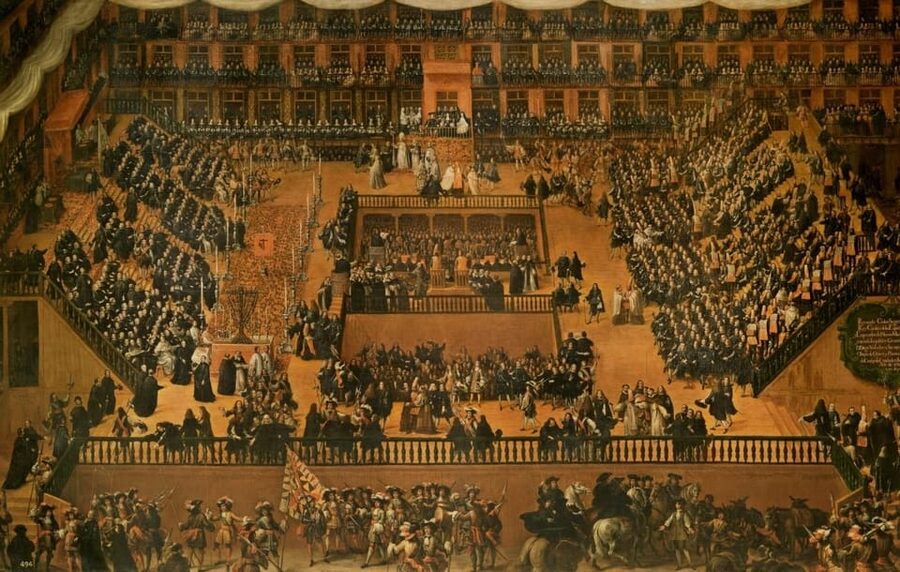
Plaza de Zocodover is where the tour really snaps into focus. The autos de fe were public acts where the condemned abjured their sins and showed repentance as a way to reconcile with the Church. Even if you’ve heard the term before, being in the square helps you understand what public theater did in those days.
The tour frame here is simple: when an authority wants control, it often uses spectacle. Public proceedings sent a message to everyone watching. They weren’t only about punishing individuals. They were also about shaping behavior across the whole population.
If you’re the kind of traveler who likes to connect history to urban space, you’ll appreciate how quickly the tour anchors the big ideas. You’re not just told that fear spread. You’re shown how it spread in a place where people naturally gathered.
Posada de la Hermandad: prisons, penalties, and the methods used
As you move toward the next stops, you’ll talk about prisons and punishment systems tied to the Holy Inquisition. The tour explains that after detection of a crime, there was a process that could end in extreme sentences. Some included confiscation of property, public penance, and, in the most severe cases, execution.
You’ll also learn why this part of the story is hard, but important. Accusations could spiral because confession was treated as the proof that mattered most. That created a system where interrogation and coercion could determine the outcome.
This is one of the most valuable parts of the tour because it turns rumors into mechanics. Instead of treating the Inquisition as a single monster, you see it as a bureaucracy backed by religious authority and enforced through procedure.
Still in Toledo, a different sort of afternoon:
- Madrid: Full-Day Guided Tour of Toledo with Cathedral Visit
★ 4.6 · 647 reviews - Toledo: Tourist Bracelet with Entry to 7 Attractions
★ 4.3 · 597 reviews - Night Guided Tour of Magical Toledo
★ 4.5 · 459 reviews - City Sightseeing Toledo Hop-On Hop-Off Bus Tour
★ 4.5 · 439 reviews
Toledo Cathedral: faith, power, and what people believed
You’ll pass through and get guided context around Toledo Cathedral. Even if you’ve visited cathedrals before, don’t treat this stop as a typical sightseeing pause. Here, it’s part of the same story, because the Inquisition was an ecclesiastical court, meaning it drew legitimacy from Church structures.
This stop also helps you understand how fear could coexist with deep religious conviction. The Catholic Monarchs established the Inquisition to pursue and eradicate heresy and practices seen as contrary to the faith. Whether you agree with that logic or not, the tour aims to show how it was rationalized at the time.
If your usual travel style is history-first, you’ll enjoy how the guide keeps the connections tight. The goal isn’t to shock you with graphics. It’s to explain how the system worked and why people felt trapped inside it.
The Jewish Quarter: a city where tensions were not theoretical
Toledo’s Jewish Quarter is part of the route, and it matters because the Inquisition’s reach affected more than one group. The tour gives context for how religious identity became a fault line in that era.
You’ll want to approach this section with a respectful mindset. This isn’t presented as a rumor hunt, and it isn’t a lesson in blame without context. It’s about seeing how a city’s neighborhoods can become tied to power, suspicion, and enforcement.
There’s another reason this stop can feel especially meaningful. One of the most praised elements of the tour is the guide’s sensitivity when dealing with a religiously charged topic. In particular, the guide Vanesa was noted for being careful and considerate even when a Jewish person was in the group. That kind of tone helps you stay focused on learning rather than getting defensive.
Convento de San Pedro Mártir: from detection to the first auto-da-fé
Next is Convento de San Pedro Mártir, and the tour uses it to explain timeline and organization. This is where the story scales up from local tension to documented procedure. You’ll hear that the first auto-da-fé left from this area in the 15th century, with more than 700 people involved.
That number is staggering, and it’s also the point. It shows you that the Inquisition wasn’t only occasional violence. It was planned and public, and it moved in large waves.
Here, the tour emphasizes the organization behind the Holy Office: the chain of events from detection of the alleged crime to the ultimate sentence. That focus on process is what separates this tour from simple horror storytelling. You come away understanding that fear wasn’t random, it was organized.
Iglesia de los Jesuitas: understanding the hierarchy
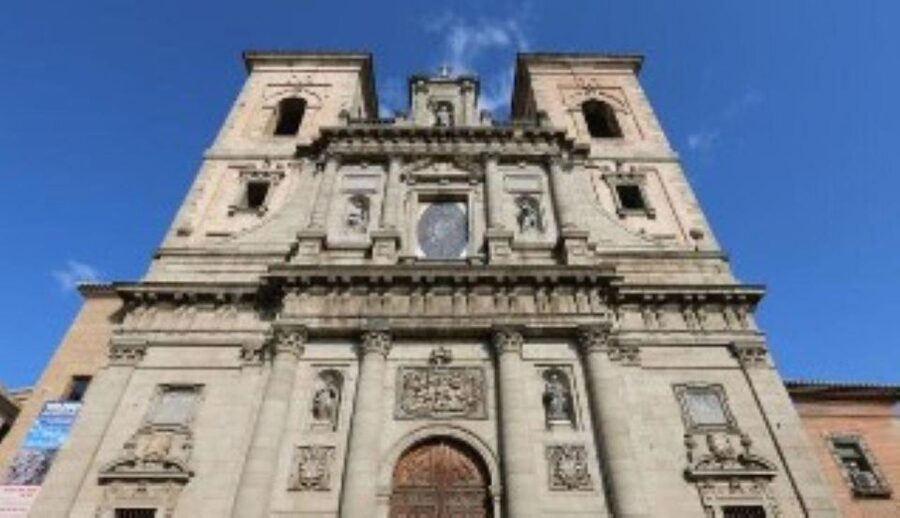
The route also includes Iglesia de los Jesuitas, Toledo. This stop supports the part of the tour that discusses the Inquisition’s hierarchy.
Why does hierarchy matter to you as a traveler? Because it changes how you interpret the period. If the system has levels, roles, and procedures, then wrongdoing is easier to carry out under the shield of authority. It also means responsibility doesn’t sit in one place. It spreads across positions and decisions.
The guide’s approach, based on the tone people praised, tends to keep things grounded. You’re learning the historical structure, not getting a free-for-all mix of myths and sensational legends.
Plaza de San Vicente: the end of the Inquisition, and why it lingers
You’ll finish back up near Plaza de San Vicente, where the tour talks about the end of the Inquisition in Spain and some stories of famous prisoners tied to Toledo. This is the emotional release point of the walk.
It’s also the part that helps you connect past to present. Even after the Inquisition ended, Toledo kept the physical reminders. Religious buildings, and the city’s older streets, still carry echoes of what happened there. Walking away, you’ll start noticing how easily normal tourist life can sit right next to terrible events.
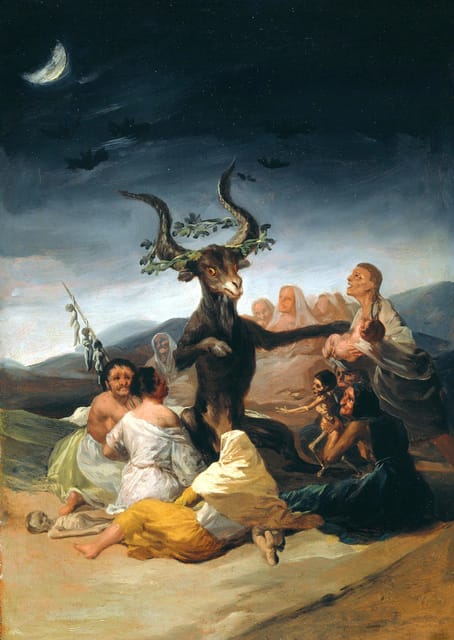
There’s also a more subtle takeaway here. Legends and folklore about witches and secret meetings were common in Toledo. The tour explains that many stories may be exaggerated or fictitious, but they reflect a climate of fear and superstition. In other words, even when the supernatural claims weren’t true, the social conditions that produced them were.
Witchcraft as heresy: what the tour does and does not do
This tour tackles witchcraft in its historical role, not as a fantasy. You’ll learn that accusations could bring arrest, interrogation, and torture aimed at obtaining confessions. You’ll also hear what sentences could include, ranging from property confiscation to public penance, and sometimes execution at the stake.
What you likely won’t get is a modern ghost-hunt style of storytelling. One thing people praised is that the guide focuses on the historical question, not mystery and myth. That can be a relief if you’re tired of tours that use dark themes as a gimmick.
Still, the subject is heavy. If you’re sensitive to violence and coercion, you may want to mentally prepare before you go in. This isn’t a light afternoon stroll, even though it’s only 1.5 hours.
Price, time, and whether it’s good value
At $10 per person for 1.5 hours, this is strong value if your goal is a high-impact introduction to how the Inquisition shaped Toledo. You’re not paying museum-ticket prices, and you’re getting guided context that can be hard to piece together on your own without turning into a full research project.
The short duration matters too. Toledo can chew up your time fast, and this tour fits into a packed day without forcing you to make it your whole trip. It’s also a good fit if you want one guided thread that connects multiple parts of the old city.
One practical note: the tour requires a minimum of 6 people to run, and it does not accept large group reservations. So if your schedule is tight and your group is small, double-check your booking timing so you aren’t caught in uncertainty.
How the guide style shapes your experience
A walking tour lives or dies on the guide’s delivery. Here, the standout positive is enthusiasm and energy, paired with serious knowledge of the city. People also praised how sensitively the guide handled the topic, which is crucial with subjects like persecution.
If you’re hoping for a calm, thoughtful history explanation that keeps the facts connected to locations, this tour seems to deliver that. It’s not just a collection of scary stories. It’s a guided route that keeps explaining the system and the logic behind accusations.
And because the group is small, you’re more likely to get human interaction rather than just background narration. That matters when you’re learning about religious courts, torture methods, and public punishment. You want clarity, not blur.
Who should book this tour, and who should think twice
This tour is a great match if you want history with place-based detail. You’ll enjoy it if you like walking through old cities and learning why the buildings and squares are more than decoration.
It also fits well if you’re traveling with a partner or a small group and you want one solid guided explanation of the Inquisition and witchcraft persecution in Toledo. The small group size supports that kind of attention.
Think twice if you prefer tours that lean hard into mystery, entertainment, or supernatural storytelling. This is built for the historical reality: courts, procedure, punishment, and belief systems that drove the fear.
Also, if you’re booking on a plan where cancellations would cause major problems, you’ll want a bit of buffer. The minimum group requirement can affect whether the tour runs.
Should you book the Inquisition and Witchcraft tour in Toledo?
If you’re curious about Toledo’s dark side and you want a short guided route that explains how the Inquisition worked in this specific city, I’d book it. The meeting point near Zocodover makes it easy to connect with other sights, and the structure gives you a clear beginning, middle, and end, from autos de fe to the end of the Inquisition in Spain.
Choose it with the right expectations. You’re signing up for a serious topic in real public spaces, not a spooky mythology walk. If that sounds like your kind of travel, and you can handle uncomfortable history for 1.5 hours, this tour is good value.
FAQ
Where is the meeting point for the tour?
You meet at Calle Armas 3, opposite the RODILLA café, at the beginning of Plaza de Zocodover. The guide carries a small colored flag.
How long is the tour?
The tour lasts about 1.5 hours.
What language is the tour guide?
The tour guide speaks Spanish.
Is the tour wheelchair accessible?
Yes, the tour is wheelchair accessible.
What is included in the price?
The tour includes a tour with an official and local guide. No additional ticket costs are required.
What is the price per person?
The price is listed as $10 per person.
Are there group size limits?
Large group reservations are not accepted, and the maximum allowed per group (family or friends) is 6.
Is there a minimum number of people needed for the tour?
Yes, a minimum of 6 people is required for the tour to take place.
What is the cancellation policy?
You can cancel up to 24 hours in advance for a full refund.
Recently reviewed around Toledo
- TOUR TOLEDO 3 CULTURAS ⭐⭐⭐⭐⭐★ 4.8 · 16 reviews
- TOUR “ TOLEDO TODO EN UNO ”★ 4.6 · 67 reviews
- The Enchanted City: A Mysterious Tour of Toledo★ 4.2 · 29 reviews
- Toledo: Three Cultures Walking Tour in Spanish★ 4.4 · 66 reviews
- TOLEDO: Private Tour With Official Guide★ 5.0 · 6 reviews
- Toledo: Guided Walking Tour with Cathedral Ticket and Tour★ 4.2 · 98 reviews
- Toledo: Private Walking Tour with a Local Guide★ 5.0 · 5 reviews
- Toledo : Private Walking Tour with a Pro guide★ 4.6 · 4 reviews
Toledo Day Trips, compared.

Three Cities in One Day: Segovia, Avila and Toledo from Madrid
Read our review →
Segovia and Toledo Tour, Alcazar, and Cathedral
Read our review →
Toledo Tour from Madrid: Cathedral, Synagogue & St. Tome’s Church
Read our review →
Toledo Half or Full Day Tour with Optional Lunch from Madrid
Read our review →
Toledo & Segovia Full Day Guided Tour with Alcázar
Read our review →

Toledo Tour & Vineyard Walk with Wine Tasting from Madrid
Read our review →Browse the lists this tour appears in